 Pocket Botanist
Symptoms by part
Leaves
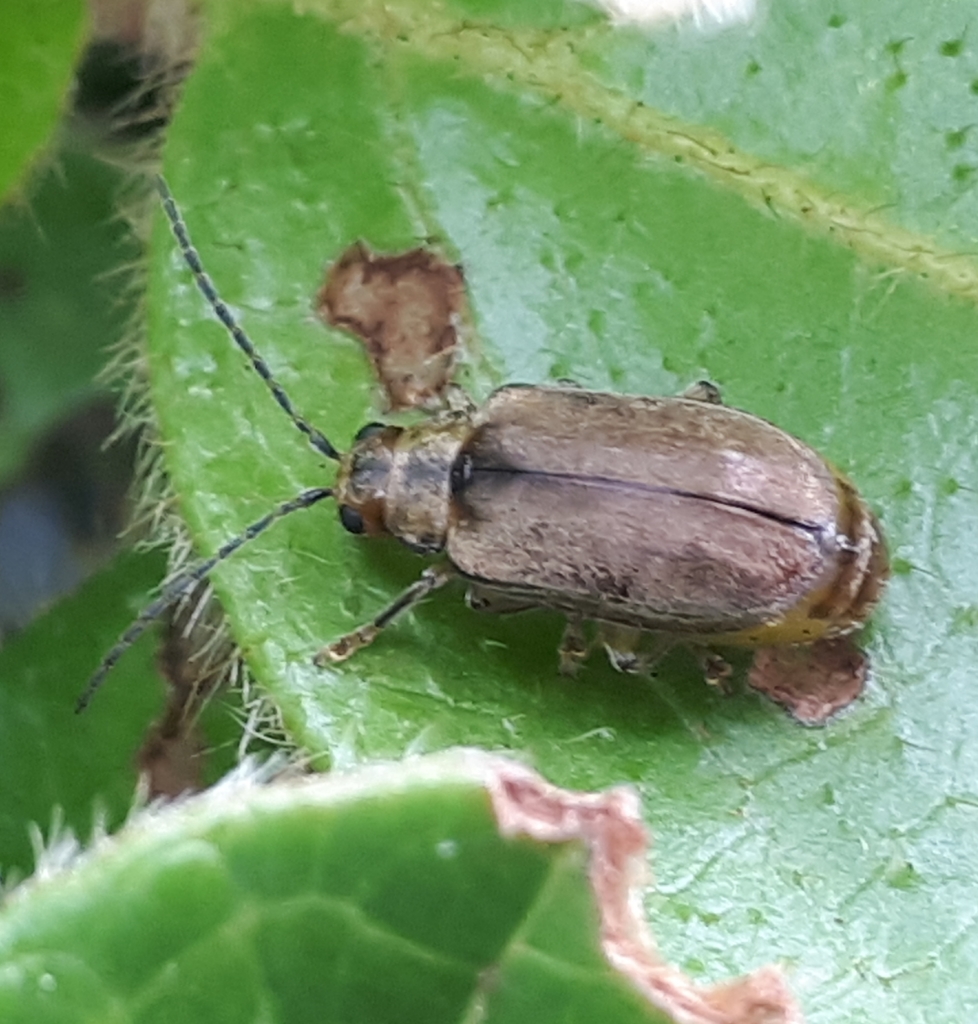
Small, circular holes appear in early spring as larvae feed, eventually progressing to skeletonized leaves where only the veins remain.
Causes
- The presence of susceptible viburnum species in the landscape.
- Mild winters that allow a higher percentage of overwintering eggs to survive.
- Lack of natural predators in the immediate garden environment.
Could be confused with
- Japanese Beetle · Japanese beetles leave irregular, jagged holes and are much larger than the small, dull brown viburnum leaf beetle.
- Viburnum Leaf Spot · Leaf spot is a fungal issue that creates discolored patches or lesions rather than the distinct skeletonizing caused by insect chewing.
Find out what's really wrong with your plant
Problems that look alike are easy to mix up. Pocket Botanist looks at a photo of your actual plant and tells you what's going on, how serious it is, and what to try first. Identification and a health check are free.



Scan with your phone's camera to get the app
Or go to pocketbotanist.app/get on your phone
Treatment
- Prune and destroy infested twigs containing egg masses during the dormant winter season.
- Hand pick larvae from the undersides of leaves in early spring and drop them into a bucket of soapy water.
- Apply spinosad to the foliage when larvae are actively feeding in spring, follow the label.
Without chemicals
- Pruning out twigs with egg sites in winter.
- Hand picking larvae.
- Encouraging birds and predatory insects that eat the beetles.
Chemical options
- Spinosad, spray on foliage when larvae are present, follow the label.
Preventing it
- Choose viburnum varieties known to be resistant to the beetle, such as Viburnum rhytidophyllum.
- Inspect twigs carefully in late autumn or winter to remove and destroy any egg-laden stems before they hatch.
- Maintain plant vigor to help the shrub withstand minor feeding damage.
Season
The warm growing season, starting with larval activity in early spring and adult feeding throughout the summer.
Spread risk
High
Severity
High
When to act
Act as soon as you see the first signs of skeletonized leaves in spring to prevent the population from exploding. If the shrub has been defoliated for several years in a row and shows significant dieback, it may be best to remove the plant entirely.
Keep your plants healthy from here
Save your plants in Pocket Botanist and you get care reminders timed for each one, plus a care history that shows what worked. Identification and a health check are free.
Questions people ask
- Will my viburnum die if it gets these beetles?
- If the plant is defoliated repeatedly over several seasons, it will likely weaken and eventually die.
- Can I just wash the beetles off with a hose?
- A strong stream of water can dislodge some larvae, but it is rarely enough to control a heavy infestation on its own.
Plants it affects
Answers plant by plant
This guide was generated with AI on and is general information, not horticultural advice. Read about how we build these guides.