 Pocket Botanist
Plant guide
Laurustinus.
Viburnum tinus
Pronounced vy-BUR-num TY-nus
Also known as Laurestine, Laurustinus, Laurustinus viburnum



Scan with your phone's camera to get the app
Or go to pocketbotanist.app/get on your phone
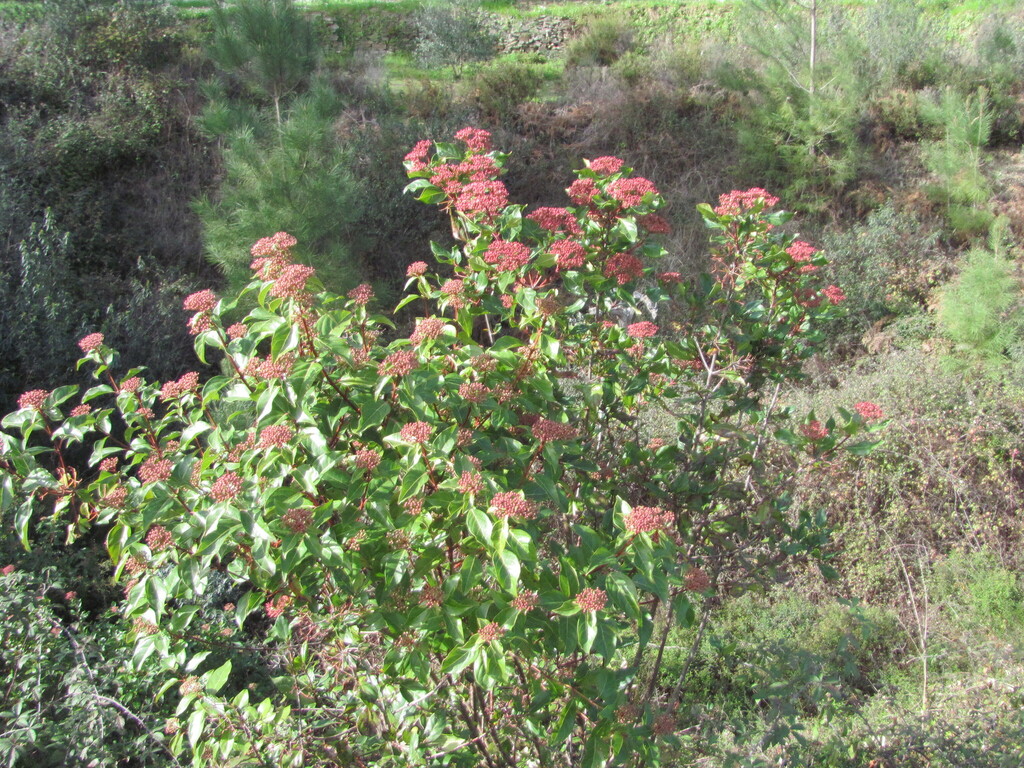
The Laurustinus is a lovely evergreen shrub that brings life to your garden during the colder months. It produces clusters of fragrant white flowers that emerge from pink buds. You will enjoy its dark, glossy foliage all year round.

At a glance
- Care level
- Easy
- Plant type
- Evergreen shrub
- Light
- Full sun to partial shade
- Indoor light
- Bright indirect
- Water
- Every 7 to 14 days
- Mature size
- 10 feet
- Growth rate
- Medium
- Hardiness
- USDA 8 to 10
- Bloom time
- Late winter to mid spring
Care
Plant this shrub in a spot with good drainage to keep the roots happy. Watch for wilting leaves, which can signal that the soil is too dry. It is quite resilient, but keep an eye out for aphids during the spring growth flush.
- Watering
- Water deeply once the top inch of soil feels dry to the touch.
- Feeding
- Apply a balanced, slow-release fertilizer in early spring to support new growth.
- Pruning
- Prune lightly after flowering finishes to maintain a tidy shape.
- Repotting
- Repot only when the plant has clearly outgrown its container or the soil has become depleted.
- Soil
- Well-draining, fertile soil
- Soil pH
- Neutral to slightly acidic
- Temperature
- -10 to 35°C
- Humidity
- 40 to 70%
- Drought tolerance
- Moderate
- Lifespan
- Perennial, typically 20 to 50 years
- Fragrance
- Light
- Deer and rabbits
- Moderate
Signs it needs repotting
- Roots growing out of drainage holes
- Water running straight through the pot
- Stunted growth during the active season
Safety
- People
- Ingesting the berries can cause mild gastrointestinal distress.
- Pets
- This plant is generally considered non-toxic to cats and dogs.
- Children
- The berries look attractive to children but should not be eaten as they can cause sickness.
- Contact allergens
- Handling the foliage may cause mild skin irritation in sensitive individuals.
- Airborne allergens
- The pollen is generally not considered a major allergen.
- Edibility
- The berries are generally considered inedible and may cause stomach upset if consumed.
How to identify it
- Dark, glossy, oval shaped evergreen leaves
- Clusters of small, fragrant white flowers
- Deep blue to black metallic berries
- Dense, rounded shrub growth habit
- Height
- 1.8 to 3.6m
- Spread
- 1.8 to 3m
- Leaves
- dark green, evergreen
- Flowers
- white, pink, 0.5 to 1cm
- Fruit
- metallic blue, black, Summer
Problems to watch for
- Powdery MildewCommon
- Viburnum Leaf BeetleCommon
- AphidsUncommon
- Leaf SpotUncommon
Check your laurustinus from a photo
Pocket Botanist looks at a photo of your plant and tells you what's wrong and what to try first.
Scan with your phone's camera to get the app
Or go to pocketbotanist.app/get on your phone
Growing it
- Propagation
- cuttings, seed
- When to plant
- spring, autumn
- Overwintering
- In very cold regions, provide a thick layer of mulch around the base to protect the roots from freezing. If grown in a pot, move it to a sheltered location away from harsh winds.
- In containers
- It grows well in large containers of at least 40 liters, provided the pot has excellent drainage.
Semi-ripe cuttings
- 1. Take 10 cm cuttings in late summer.
- 2. Remove lower leaves.
- 3. Dip in rooting hormone.
- 4. Place in a well draining mix.
- 5. Keep humid until rooted.
Plant near early spring bulbs to create a layered display that transitions from winter flowers to spring color.
Grows well with
- Hellebore · They share similar light requirements and bloom during the same winter months.
- Japanese Pieris · Both shrubs appreciate similar soil conditions and provide year round structure.
Similar species
- Laurustinus · A popular cultivar with more compact growth and deeper pink buds.
Science
- Family
- Viburnaceae
- Genus
- Viburnum
- Order
- Dipsacales
- Class
- Magnoliopsida
- Native range
- Mediterranean basin
- Conservation
- This species is not of conservation concern.
It thrives in scrubland and woodland edges where it provides essential winter shelter for local wildlife.
- Value to wildlife
- nectar source, provides winter cover for birds, fruit food source
- Pollinators
- bees, butterflies
- Uses
- hedging, screening, winter interest, pollinator garden
Through the year
Ecological indicators
- Salinity
- 2/9
- Soil reaction
- 6/9
- Light
- 6/9
- Temperature
- 6/9
- Moisture
- 5/9
- Nutrients
- 5/9
Taxonomy resolved against GBIF.
Questions people ask
- Does it need pruning?
- Only if you want to maintain a specific shape or size.
- Can it grow in shade?
- Yes, it is quite tolerant of partial shade.
Where the name comes from
The genus name Viburnum is the classical Latin name for these plants, while the specific epithet tinus refers to the plant's similarity to the laurustinus.
Good to know
- It is native to the Mediterranean region.
- The name tinus refers to its resemblance to the bay laurel.
- It is highly tolerant of urban pollution.
Keep your laurustinus growing
This page is a general guide. Save your plant in Pocket Botanist and you get care reminders timed for this plant, plus a care history that shows what worked.
Scan with your phone's camera to get the app
Or go to pocketbotanist.app/get on your phone
This guide was generated with AI on and checked against GBIF taxonomy. It is general information, not horticultural or veterinary advice. Read about how we build these guides.