 Pocket Botanist

Check these first
- Rub the white spots to see if they wipe off easily.
- Check if the plant is crowded by other shrubs.
- Look for signs of moisture trapped in the center of the plant.
Likely causes
Powdery mildew
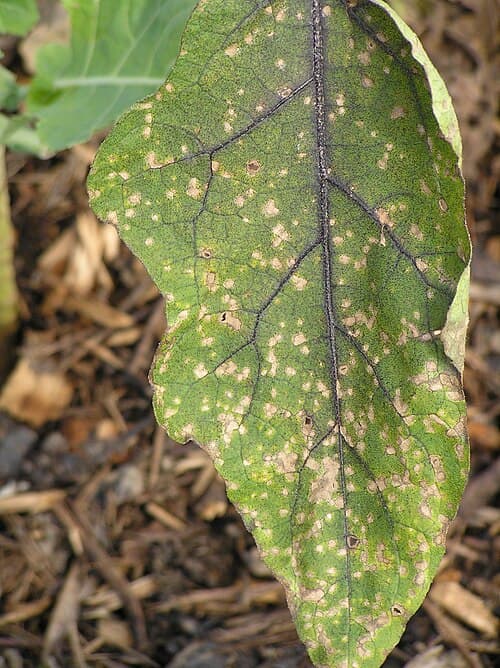
Most likelyHow to tell: You will see a white or gray dusty substance on the surface of the leaves. In severe cases, the leaves may curl or turn yellow.
What to do: Prune away the most heavily infected branches to improve airflow. Spray the remaining foliage with a mixture of one tablespoon of baking soda in a gallon of water.
Leaf spot fungi
PossibleHow to tell: These appear as distinct brown or black spots with yellow halos. They often occur after long periods of wet weather.
What to do: Remove and destroy all fallen leaves from around the base of the plant. Avoid overhead watering to keep the foliage dry.
Find out what's wrong with your laurustinus
The list above covers the usual causes. Pocket Botanist looks at a photo of your actual plant and tells you the likely cause, how serious it is, and what to try first. Identification and a health check are free.



Scan with your phone's camera to get the app
Or go to pocketbotanist.app/get on your phone
When to worry
Powdery mildew is rarely fatal but it looks unsightly and can stunt growth. If the entire plant is covered, it needs immediate treatment.
Stopping it coming back
Plant your Laurustinus in a spot with good air movement and avoid wetting the leaves when you water. Prune the center of the shrub occasionally to keep it open.
Laurustinus: spots? Check yours with a photo
Every plant is a little different. Take a photo of your laurustinus and Pocket Botanist tells you which cause is most likely, how serious it is, and what to try first. A few checks a day are free. Save the plant and you get care reminders timed for it.
Scan with your phone's camera to get the app
Or go to pocketbotanist.app/get on your phone
Get the app · Or check it from a photo now, free
Questions people ask
- Is this fungus contagious to other plants?
- Yes, powdery mildew spores travel easily on the wind. Keep an eye on nearby susceptible plants like roses or lilacs.
- Should I cut off all the spotted leaves?
- Only if the infection is severe. If only a few leaves are spotted, you can leave them or remove just those specific leaves to keep the plant looking tidy.
Guides to these causes
More problems with Laurustinus
- Why are there holes in my Laurustinus leaves?
- Why are my Laurustinus leaves turning yellow?
- Why are my Viburnum tinus leaves getting brown tips?
- Why is my Viburnum tinus drooping?
- Why is my Viburnum tinus losing its leaves?
- Why is my Viburnum tinus not flowering?
- Why is my Viburnum tinus showing signs of root rot?
- Why is my Viburnum tinus looking leggy?
- Why are my Viburnum tinus leaves curling?
This article was generated with AI on from the plant’s care profile and is general information, not horticultural advice. Read about how we build these guides.