 Pocket Botanist
Plant guide
Hare's foot clover.
Trifolium arvense
Pronounced try-FOH-lee-um ar-VEN-see
Also known as Hare's Foot Clover, Hare's-foot Clover, Hare-foot Clover, Hare-foot Trefoil, Haresfoot Clover, Haresfoot Trefoil, Rabbit-foot Clover, Rabbitfoot Clover


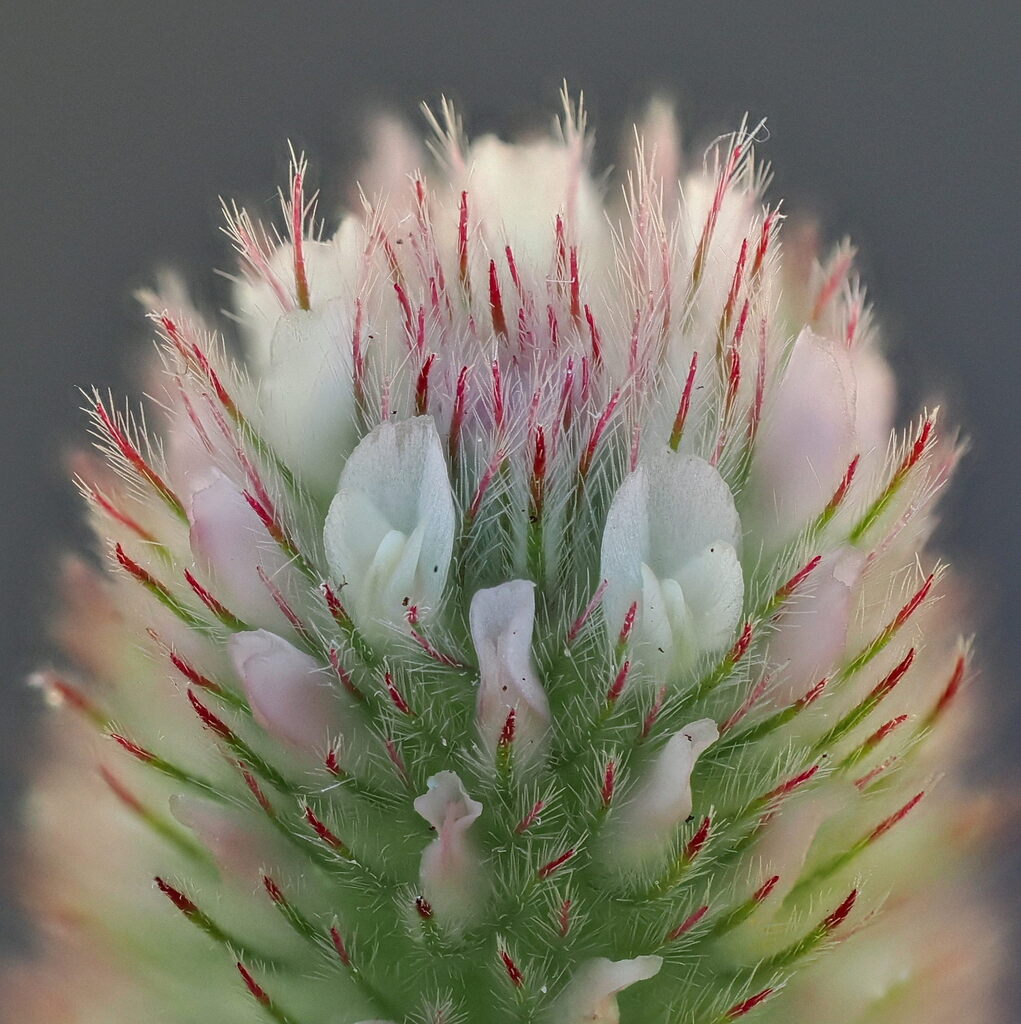
This charming annual herb is known for its soft, fuzzy flower heads that look just like tiny rabbit feet. It thrives in sandy, dry soils and is often found in fields or along roadsides. You will love how it adds a delicate, wild texture to your garden space.

At a glance
- Care level
- Easy
- Plant type
- Annual herb
- Light
- Full sun
- Indoor light
- Direct sun
- Water
- Every 5 to 10 days
- Mature size
- 12 inches
- Growth rate
- Fast
- Hardiness
- USDA 3 to 9
- Bloom time
- Late spring to early autumn
Care
Keep this plant in a sunny spot with well draining soil to mimic its natural open habitat. Watch for wilting if the soil stays too wet, as it prefers to dry out between drinks. It is a hardy grower that rarely needs much fuss.
- Watering
- Allow the top inch of soil to dry out completely before watering again.
- Feeding
- Apply a light, balanced liquid fertilizer sparingly during the growing season.
- Pruning
- Trim back spent flower heads to encourage a tidy appearance.
- Repotting
- As an annual, you will typically sow fresh seeds each year rather than repotting.
- Soil
- Sandy or gravelly soil
- Soil pH
- Neutral to slightly acidic
- Temperature
- -20 to 35°C
- Humidity
- 30 to 70%
- Drought tolerance
- High
- Lifespan
- Annual, typically 1 year
- Deer and rabbits
- Moderate
Signs it needs repotting
- Roots growing out of the drainage holes
- Water running straight through the pot
Safety
- People
- This plant is not known to be toxic to humans.
- Pets
- This plant is not considered toxic to cats or dogs.
- Children
- The small, dry seed heads could pose a minor choking hazard if ingested by small children.
- Contact allergens
- The fine hairs on the stems and leaves may cause mild skin irritation in sensitive individuals.
- Airborne allergens
- Pollen from this plant can be a minor trigger for those with seasonal allergies.
- Edibility
- While not toxic, the plant is generally considered unpalatable and is not consumed by humans.
How to identify it
- Soft, cylindrical, greyish pink flower heads
- Small trifoliate leaves with fine hairs
- Slender, branching, hairy stems
- Grows in low, spreading clumps
- Height
- 0.05 to 0.4m
- Spread
- 0.1 to 0.3m
- Leaves
- green, gray-green, deciduous
- Flowers
- pink, white, 0.5 to 1.5cm
- Fruit
- brown, late summer
Problems to watch for
- AphidsCommon
- Powdery MildewCommon
- Leaf SpotUncommon
- Root RotUncommon
- RustUncommon
- Slugs and SnailsUncommon
Check your hare's foot clover from a photo
Pocket Botanist looks at a photo of your plant and tells you what's wrong and what to try first.
Growing it
- Propagation
- seed
- When to plant
- spring, autumn
- Overwintering
- As an annual, the plant dies back completely after setting seed in autumn. You can leave the dried remains to provide winter interest or clear them away once the seeds have dispersed.
- In containers
- It grows well in shallow containers, but ensure the pot has excellent drainage.
Direct Sowing
- 1. Clear a patch of soil in a sunny location.
- 2. Scatter seeds thinly over the surface in spring.
- 3. Lightly rake the soil to cover the seeds.
- 4. Keep the area moist until germination occurs.
Pair this clover with other low growing, sun loving wildflowers to create a resilient meadow patch.
Grows well with
- Common Yarrow — They both thrive in similar dry, sunny conditions.
- Field Poppy — They create a beautiful, naturalistic meadow aesthetic together.
Similar species
- Red Clover — It is a larger, more robust relative with similar flower structures.
Science
- Family
- Fabaceae
- Genus
- Trifolium
- Order
- Fabales
- Class
- Magnoliopsida
- Native range
- Europe, Western Asia, and Northern Africa.
- Conservation
- It is a common, widespread species and is not of conservation concern.
It survives in nutrient poor, sandy soils by forming symbiotic relationships with nitrogen fixing bacteria.
- Value to wildlife
- nectar source, larval host plant
- Pollinators
- bees, butterflies
- Uses
- ground cover, meadow planting, soil stabilization
Through the year
Ecological indicators
- Light
- 8/9
- Temperature
- 5/9
- Nutrients
- 2/9
- Salinity
- 2/9
- Soil reaction
- 5/9
- Moisture
- 3/9
Taxonomy resolved against GBIF.
Questions people ask
- Is rabbitfoot clover a weed?
- It is often considered a weed in manicured lawns but is a valuable native plant in meadows.
- Does it need much water?
- No, it is quite drought tolerant once established.
Where the name comes from
The name Trifolium comes from the Latin for three leaves, while arvense means of the field.
Good to know
- It thrives in poor, sandy soils where other plants struggle.
- The plant is an annual that completes its entire life cycle in one season.
- It is often found growing in disturbed areas like roadsides and sandy fields.
Also in
Keep your hare's foot clover growing
This page is a general guide. Save your plant in Pocket Botanist and you get care reminders timed for this plant, plus a care history that shows what worked.
This guide was generated with AI and checked against GBIF taxonomy. It is general information, not horticultural or veterinary advice. Read about how we build these guides.