 Pocket Botanist
Guide botanique
Hare's foot clover.
Trifolium arvense
Prononciation try-FOH-lee-um ar-VEN-see
Aussi appelée Trèfle patte de lièvre, Trèfle patte de lièvre, Trèfle patte de lièvre, Trèfle petit patte de lièvre, Trèfle patte de lièvre, Trèfle patte de lièvre, Trèfle patte de lapin, Trèfle patte de lapin


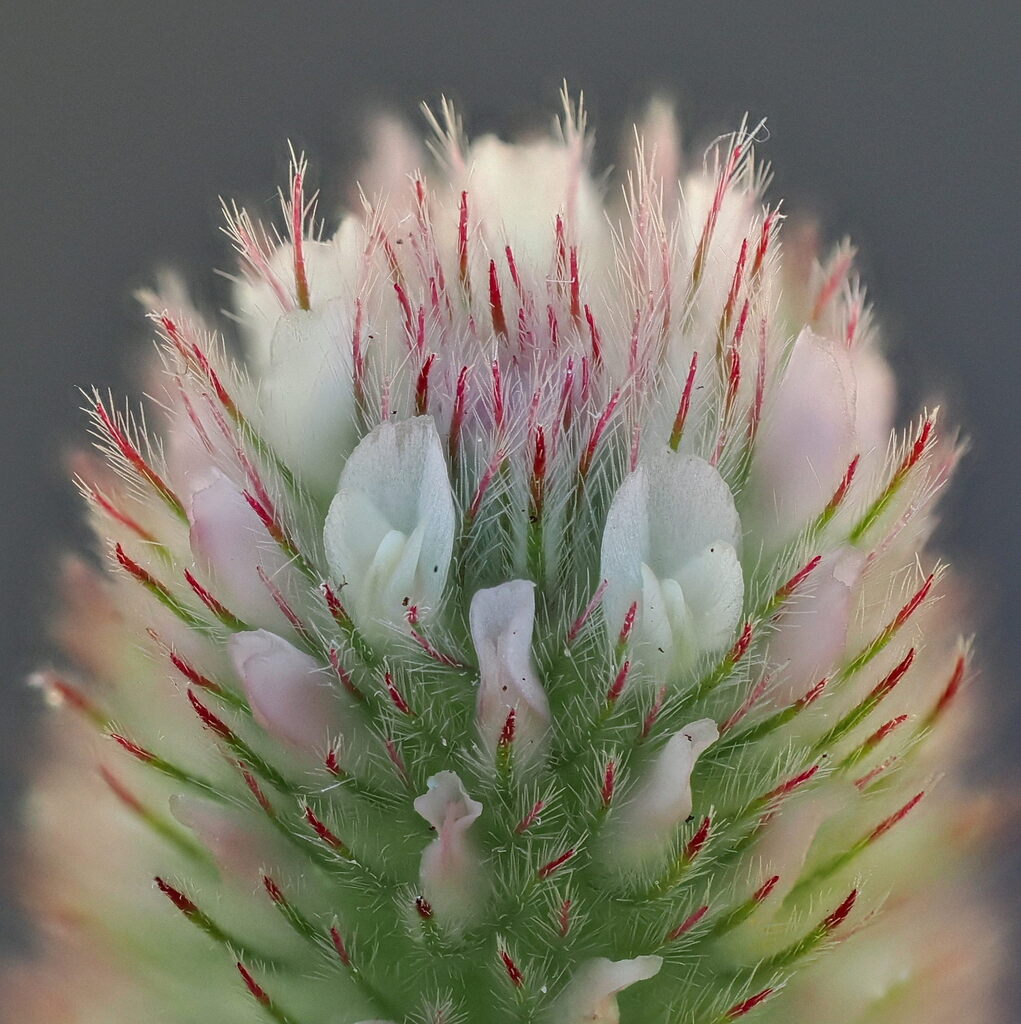
Le trèfle patte de lapin est une charmante légumineuse annuelle connue pour ses têtes de fleurs douces et duveteuses qui ressemblent à de petites pattes de lapin. Il prospère dans les sols secs et sablonneux et se trouve souvent dans les champs ouverts ou les zones perturbées. Cette plante ajoute une touche unique et tactile aux bordures de jardin naturalistes.

En un coup d'œil
- Niveau d'entretien
- Facile
- Type de plante
- Herbe annuelle
- Lumière
- Plein soleil
- Lumière en intérieur
- Soleil direct
- Arrosage
- Tous les 5 à 10 jours
- Taille adulte
- 30 cm de haut
- Croissance
- Rapide
- Rusticité
- USDA 3 à 9
- Floraison
- Fin du printemps au début de l'automne
Entretien
Offrez-lui beaucoup de soleil et assurez-vous que le sol reste bien drainé pour éviter les problèmes de racines. Surveillez les signes de flétrissement si le sol reste trop humide ou si la plante est ombragée par des voisines plus grandes. Couper les fleurs fanées peut encourager une période de floraison plus longue.
- Arrosage
- Laissez le premier centimètre de terre sécher entre les arrosages.
- Engrais
- Appliquez un engrais liquide léger et équilibré une fois pendant la saison de croissance active.
- Taille
- Taillez les fleurs fanées pour garder la plante nette.
- Rempotage
- En tant qu'annuelle, cette plante termine généralement son cycle de vie en une saison.
- Sol
- Sol sablonneux ou rocheux, bien drainé
- pH du sol
- Neutre à légèrement acide
- Température
- -20 à 35°C
- Humidité
- 30 à 70%
- Résistance à la sécheresse
- Élevée
- Durée de vie
- Annuelle, typiquement 1 an.
- Résistance aux chevreuils et lapins
- Moyenne
Signes qu'il faut rempoter
- Racines enroulées au fond du pot.
- Croissance ralentie malgré une lumière adéquate.
Sécurité
- Humains
- Il n'y a pas de rapports significatifs de toxicité humaine pour cette espèce.
- Animaux
- Cette plante est généralement considérée comme non toxique pour les chats et les chiens.
- Enfants
- Les petites têtes florales duveteuses pourraient présenter un léger risque d'étouffement si elles sont ingérées par de très jeunes enfants.
- Allergènes de contact
- Les poils fins sur les tiges et les feuilles peuvent provoquer une légère irritation cutanée chez les personnes sensibles.
- Allergènes aéroportés
- Le pollen peut déclencher de légères réactions allergiques chez les personnes sensibles aux pollens de graminées ou de trèfle.
- Comestibilité
- Bien que pas strictement toxique, il est généralement considéré comme peu appétissant et pas une source alimentaire standard.
Comment l'identifier
- Têtes de fleurs douces, cylindriques, gris rosé
- Petites feuilles trifoliées vert gris
- Fins poils soyeux recouvrant les tiges
- Port dressé et ramifié
- Hauteur
- 0,05 à 0,4m
- Envergure
- 0,1 à 0,3m
- Feuilles
- vert gris, caduc
- Fleurs
- rose, gris, 0,5 à 1,5cm
- Fruits
- brown, late summer
Problèmes à surveiller
- OïdiumCourant
- PuceronsCourant
- Limaces et escargotsPeu courant
- Pourriture des racinesPeu courant
- RouillePeu courant
- Taches foliairesPeu courant
- Mildiou poudreux — Une croissance fongique blanche apparaît sur les feuilles pendant les périodes de forte humidité.
Par symptôme
Vérifie la santé de ta plante en photo
Pocket Botanist analyse une photo de ta plante et te dit ce qui ne va pas et quoi essayer en premier.
La cultiver
- Multiplication
- semis
- Quand planter
- printemps
- Hivernage
- En tant qu'annuelle, elle mourra complètement après avoir produit des graines à l'automne.
- En pot
- Il pousse bien dans des conteneurs peu profonds ou des pots de jardin de rocaille tant que le drainage est excellent.
Semis
- Récoltez les graines des têtes florales séchées à la fin de l'été.
- Dispersez les graines directement sur un sol nu et sableux à l'automne.
- Ratissez légèrement le sol pour assurer un bon contact graine-sol.
- Gardez la zone légèrement humide jusqu'à la germination.
Associez ce trèfle à d'autres plantes tolérantes à la sécheresse et aimant le soleil pour créer un jardin de prairie nécessitant peu d'entretien.
Bonnes associations
- Achillée millefeuille — Les deux plantes prospèrent dans des conditions similaires, sèches et ensoleillées.
- Coquelicot — They create a beautiful, naturalistic meadow aesthetic together.
À éloigner de
- Hosta — Les hostas nécessitent beaucoup plus d'ombre et d'humidité que ce trèfle.
Espèces similaires
- Red clover — Il a des têtes florales plus grandes et plus arrondies par rapport au trèfle à queue de lapin allongé.
Science
- Famille
- Fabaceae
- Genre
- Trifolium
- Ordre
- Fabales
- Classe
- Magnoliopsida
- Région d'origine
- Europe, Asie occidentale et Afrique du Nord.
- Préservation
- Il est considéré comme une espèce commune, non menacée, dans la majeure partie de son aire de répartition.
Il survit dans des environnements rudes et secs en terminant son cycle de vie rapidement avant que la chaleur estivale ne s'installe.
- Intérêt pour la faune
- source de nectar, fixateur d'azote
- Pollinisateurs
- abeilles, papillons
- Utilisations
- couvre-sol ornemental, amélioration du sol, habitat pour la faune
Au fil des saisons
Repères écologiques
- Lumière
- 8/9
- Température
- 5/9
- Nutriments
- 2/9
- Salinité
- 2/9
- Réaction du sol
- 5/9
- Humidité
- 3/9
Taxonomie vérifiée avec le GBIF.
Ce qu'on demande souvent
- Le trèfle à queue de lapin est-il une mauvaise herbe?
- Il est souvent classé comme une mauvaise herbe dans les pelouses car il se propage facilement dans les gazons clairsemés.
- A-t-il besoin d'engrais?
- Non, il fixe son propre azote et préfère les sols maigres et pauvres en nutriments.
D'où vient le nom
Le nom du genre Trifolium fait référence aux feuilles à trois folioles, tandis que le nom de l'espèce arvense signifie « des champs ».
Bon à savoir
- C'est une plante annuelle qui prospère dans les sols pauvres et sableux.
- La plante est originaire d'Europe mais s'est naturalisée dans une grande partie de l'Amérique du Nord.
- Elle tolère très bien la sécheresse une fois établie.
Aussi dans
Garde ta plante en pleine forme
Cette page est un guide général. Enregistre ta plante dans Pocket Botanist et tu reçois des rappels d'entretien adaptés à cette plante, ainsi qu'un historique d'entretien qui montre ce qui a marché.
Ce guide a été généré par IA et vérifié avec la taxonomie du GBIF. Il s'agit d'informations générales, et non de conseils horticoles ou vétérinaires. Découvre comment nous concevons ces guides.