 Pocket Botanist
Plant guide
Teak.
Tectona grandis
Pronounced tek-TOH-nuh GRAN-diss
Also known as Bankok teak, Indian Oak, Indian-oak, Segun, Teak, common teak



Scan with your phone's camera to get the app
Or go to pocketbotanist.app/get on your phone
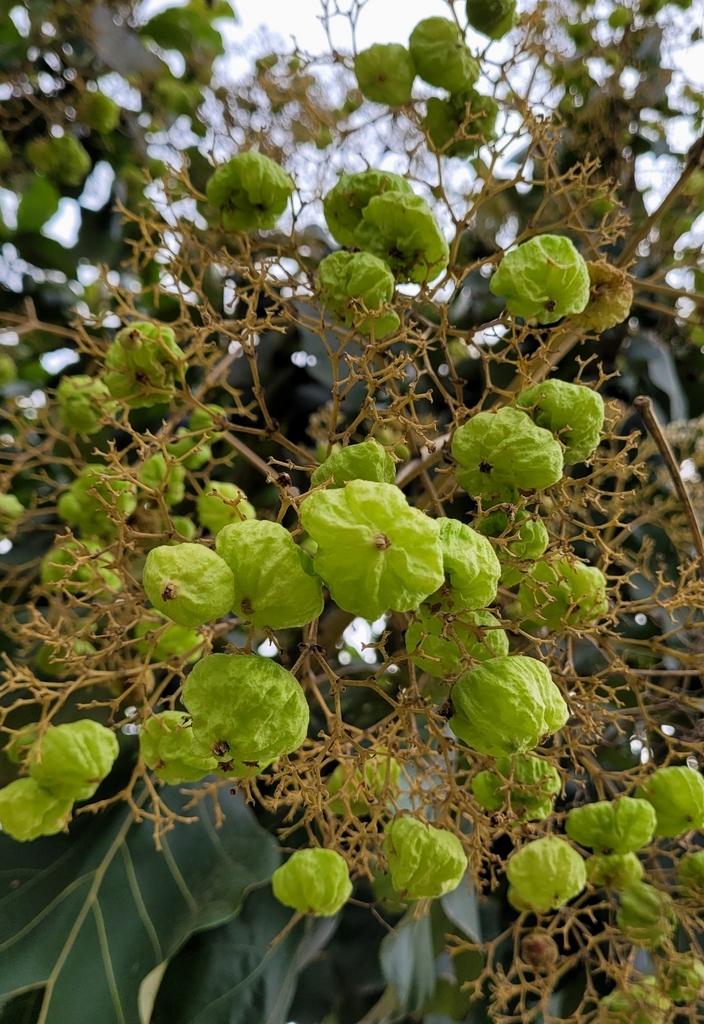
Teak is a majestic tropical hardwood tree known for its incredibly durable and weather resistant timber. It grows quite large and is typically found in warm, humid climates. While it is a staple in forestry, it is rarely kept as a houseplant due to its massive size.
At a glance
- Care level
- Difficult
- Plant type
- Deciduous tree
- Light
- Full sun
- Indoor light
- Direct sun
- Water
- Every 3 to 7 days
- Mature size
- 100 to 130 feet
- Growth rate
- Fast
- Hardiness
- USDA 10 to 12
- Bloom time
- Late summer to early autumn
Care
This tree needs plenty of space and intense, direct sunlight to thrive. Keep an eye out for yellowing leaves which often indicate poor drainage or insufficient light. It requires a warm, humid environment to mimic its native tropical habitat.
- Watering
- Keep the soil consistently moist but never waterlogged.
- Feeding
- Apply a balanced fertilizer during the active growing season.
- Pruning
- Prune during the dormant season to maintain shape and remove dead wood.
- Repotting
- Repot only while the tree is young and small enough to manage.
- Soil
- Well draining, deep, fertile soil
- Soil pH
- 6.5 to 7.5
- Temperature
- 15 to 40°C
- Humidity
- 60 to 90%
Safety
- People
- The leaves and bark contain compounds that can cause mild skin irritation in sensitive individuals.
- Children
- The large, coarse leaves can be abrasive to young children's skin.
- Contact allergens
- Contact with the sawdust or fresh leaves may cause dermatitis in some people.
- Airborne allergens
- Fine wood dust generated during processing can act as a respiratory irritant.
- Edibility
- The plant is not considered edible for humans.
How to identify it
- Large, ovate, opposite leaves
- Rough, papery leaf texture
- Small, fragrant white flowers
- Hard, woody fruit capsules
- Greyish brown, fissured bark
- Height
- 20 to 40m
- Spread
- 10 to 20m
- Leaves
- green, deciduous
- Flowers
- white, 0.5 to 1cm
- Fruit
- brown, Winter
Problems to watch for
- CaterpillarsCommon
- RustCommon
- Teak DefoliatorCommon
- Leaf SpotUncommon
- Root RotUncommon
- Stem BorersUncommon
Check your teak from a photo
Pocket Botanist looks at a photo of your plant and tells you what's wrong and what to try first.
Scan with your phone's camera to get the app
Or go to pocketbotanist.app/get on your phone
Growing it
- Propagation
- seed, cuttings
- When to plant
- Spring, Early rainy season
Teak is best grown in large scale forestry settings rather than small garden guilds.
Grows well with
- Coffee · Coffee often grows well in the light shade provided by teak plantations.
Similar species
- African Teak · It is often used as a substitute for true teak in woodworking.
Science
- Family
- Lamiaceae
- Genus
- Tectona
- Order
- Lamiales
- Class
- Magnoliopsida
- Native range
- South and Southeast Asia
- Conservation
- While widely cultivated, wild populations are increasingly threatened by habitat loss.
It thrives in monsoon forests where it drops its leaves during the dry season to conserve water.
- Value to wildlife
- nectar source, habitat for forest birds
- Pollinators
- bees, butterflies
- Uses
- timber production, ornamental shade tree, traditional medicine
Through the year
Ecological indicators
- Salinity
- 2/9
- Soil reaction
- 7/9
- Light
- 8/9
- Temperature
- 9/9
- Moisture
- 6/9
- Nutrients
- 6/9
Taxonomy resolved against GBIF.
Questions people ask
- Can I grow teak in a pot?
- It is not practical due to the tree's massive size and deep root system.
- How fast does teak grow?
- It is a relatively fast growing tree in optimal tropical conditions.
Where the name comes from
The name Tectona comes from the Portuguese word teca, which is derived from the Malayalam word tekka.
Good to know
- Teak is one of the most valuable timbers on the planet.
- The leaves are often used as plates or food wrappers in parts of Southeast Asia.
- Teak trees can live for over 100 years in their native environment.
- The wood contains natural oils that make it highly resistant to termites.
Keep your teak growing
This page is a general guide. Save your plant in Pocket Botanist and you get care reminders timed for this plant, plus a care history that shows what worked.
Scan with your phone's camera to get the app
Or go to pocketbotanist.app/get on your phone
This guide was generated with AI on and checked against GBIF taxonomy. It is general information, not horticultural or veterinary advice. Read about how we build these guides.