 Pocket Botanist
Plant guide
Hedge woundwort.
Stachys sylvatica
Pronounced STAY-kiss sil-VAT-ih-kuh
Also known as Hedge Woundwort, Whitespot


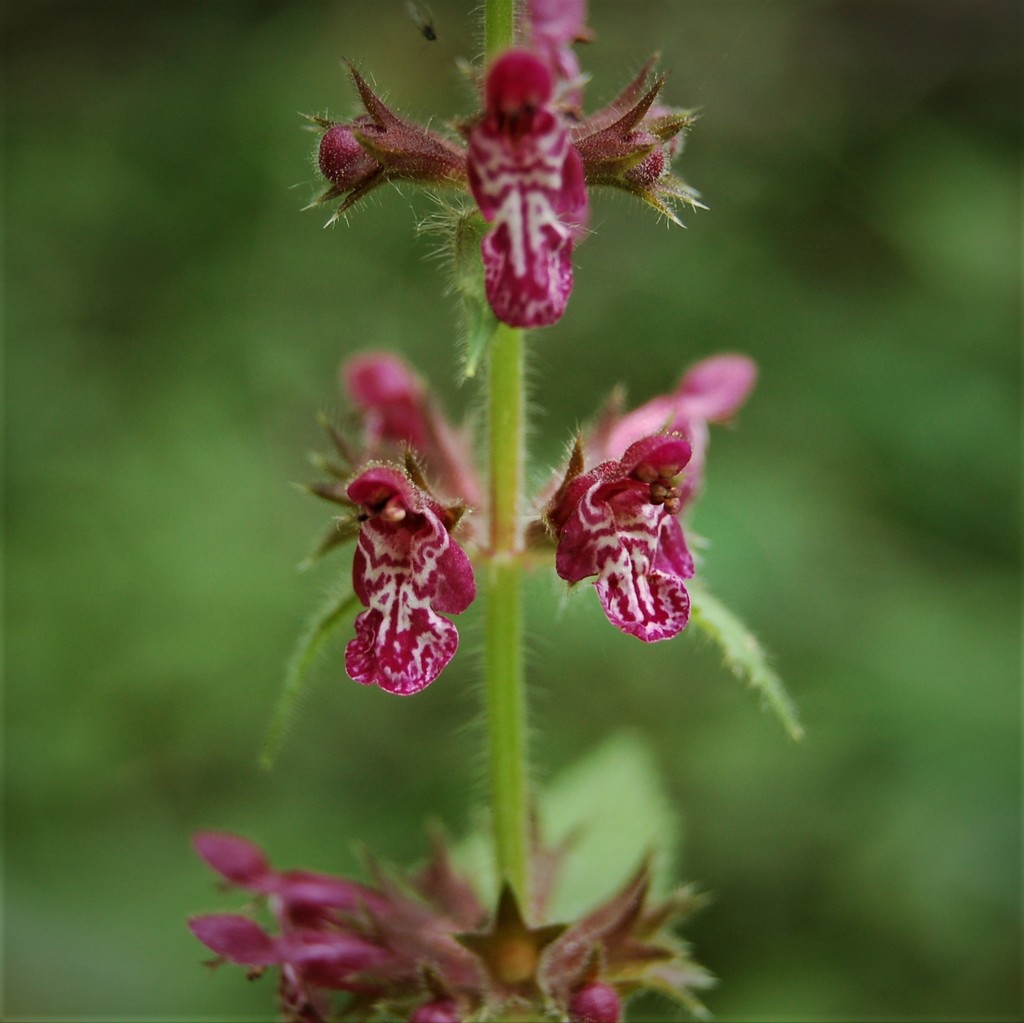
This woodland perennial is a lovely addition to shady garden spots. It spreads through rhizomes and produces spikes of deep purple flowers. You will find it enjoys moist, rich soil in its natural habitat.

At a glance
- Care level
- Easy
- Plant type
- Perennial herb
- Light
- Partial shade to full shade
- Indoor light
- Medium light
- Water
- Every 3 to 7 days
- Mature size
- 3 feet
- Growth rate
- Fast
- Hardiness
- USDA 5 to 9
- Bloom time
- Early to late summer
Care
Keep the soil consistently moist to mimic its native woodland environment. Watch for wilting during dry spells, as this plant does not tolerate drought well. It can be quite vigorous, so keep an eye on its spread if you have limited space.
- Watering
- Keep the soil damp but not waterlogged.
- Feeding
- Apply a balanced liquid fertilizer during the active growing season.
- Pruning
- Deadhead spent flower spikes to encourage a tidy appearance.
- Repotting
- Divide the plant in spring if it becomes too crowded.
- Soil
- Moist, humus rich soil
- Soil pH
- Neutral to slightly alkaline
- Temperature
- -20 to 30°C
- Humidity
- 40 to 70%
Safety
- People
- The plant is not considered toxic, but it is not intended for culinary use.
- Children
- Keep children away from the foliage as the fine hairs can be irritating to the skin.
- Contact allergens
- The leaves have fine hairs that can cause mild skin irritation in sensitive individuals.
- Airborne allergens
- The pollen may cause mild reactions in those with seasonal allergies.
- Edibility
- This plant is generally considered non-edible and may cause digestive upset if consumed.
How to identify it
- Heart shaped, serrated green leaves
- Spikes of dark purple flowers
- Square stems typical of mint family
- Distinctive unpleasant odor when crushed
- Height
- 0.3 to 1m
- Spread
- 0.3 to 0.6m
- Leaves
- green, deciduous
- Flowers
- purple, maroon, 1 to 2cm
Common problems
- Powdery mildew — A fungal infection that appears as white dusty spots on the leaves during humid weather.
Growing it
- Propagation
- division, seed
- When to plant
- spring, autumn
Plant this in a woodland border where it can naturalize alongside other shade-loving perennials.
Grows well with
Similar species
- Marsh woundwort — It is a close relative that prefers wetter soil conditions.
Science
- Family
- Lamiaceae
- Genus
- Stachys
- Order
- Lamiales
- Class
- Magnoliopsida
- Native range
- Europe and parts of Asia.
- Conservation
- It is a common woodland plant and is not currently under threat.
It grows in moist, shaded woodland soils where it competes with other understory plants.
- Value to wildlife
- nectar source
- Pollinators
- bees, butterflies
- Uses
- woodland gardens, shade groundcover, pollinator habitat
Through the year
Ecological indicators
- Salinity
- 1/9
- Soil reaction
- 6/9
- Light
- 3/9
- Temperature
- 5/9
- Moisture
- 6/9
- Nutrients
- 6/9
Taxonomy resolved against GBIF.
Questions people ask
- Does it spread aggressively?
- It can spread by rhizomes, so it is best suited for areas where it has room to roam.
- Can I grow it in full sun?
- It prefers partial to full shade and may wilt in intense, direct sunlight.
Where the name comes from
The genus name Stachys comes from the Greek word for ear of grain, referring to the flower spike shape. The species name sylvatica refers to its natural woodland habitat.
Good to know
- It is commonly known as hedge woundwort.
- The specific epithet sylvatica means of the woods.
- It thrives in the dappled shade of deciduous forests.
- The flowers are arranged in whorls along the stem.
Also in
Is your hedge woundwort looking unwell?
This page is a general guide. Pocket Botanist diagnoses problems from a photo of your actual plant, works out watering for your light and conditions, and reminds you when care is due.
This guide was generated with AI and checked against GBIF taxonomy. It is general information, not horticultural or veterinary advice. Read about how we build these guides.