 Pocket Botanist
Plant guide
Foxglove.
Digitalis purpurea
Pronounced dih-jih-TAL-iss pur-PUR-ee-uh
Also known as Common Foxglove, Digitalis, Foxglove



Scan with your phone's camera to get the app
Or go to pocketbotanist.app/get on your phone

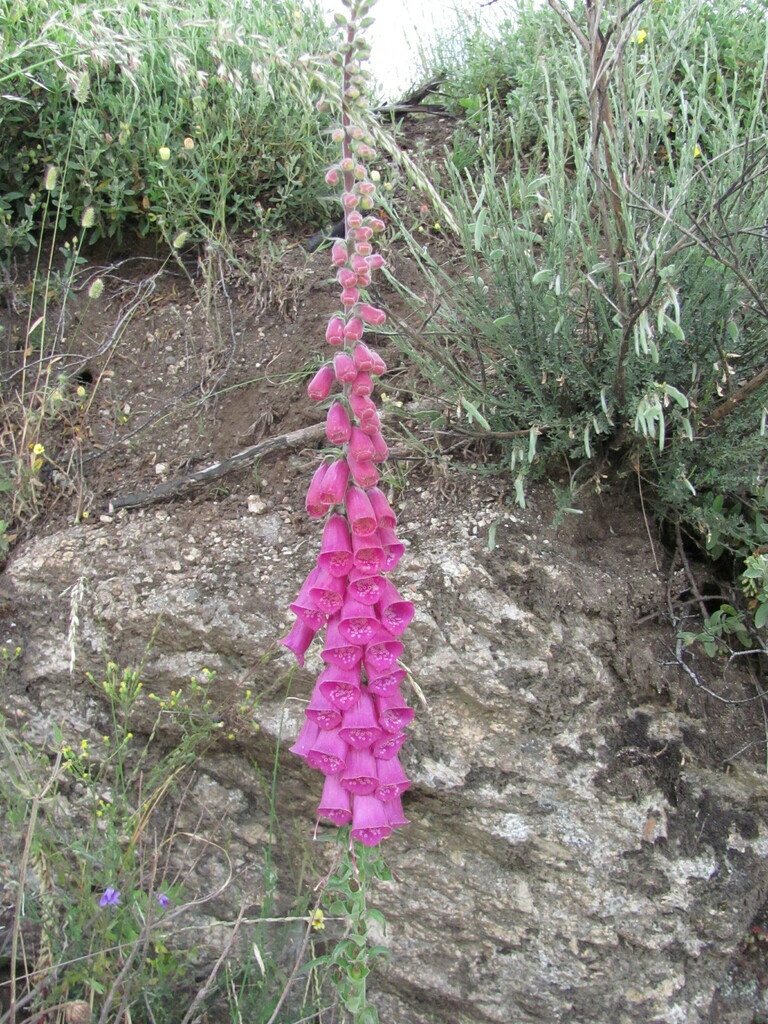
Foxgloves are iconic biennial plants that produce tall, dramatic spikes of bell shaped flowers. They add a classic cottage garden feel to shady borders. Keep in mind that these plants are toxic if ingested.
At a glance
- Care level
- Moderate
- Plant type
- Biennial
- Light
- Partial shade to full sun
- Indoor light
- Bright indirect
- Water
- Every 3 to 7 days
- Mature size
- 150cm tall by 60cm wide
- Growth rate
- Medium
- Hardiness
- USDA 4 to 9
- Bloom time
- Late spring to mid summer
Care
Plant in well draining soil and keep it consistently moist but not waterlogged. Watch for signs of wilting which indicate a need for water, and remove spent flower spikes to encourage a tidy appearance. Ensure good air circulation to prevent fungal issues on the foliage.
- Watering
- Keep the soil consistently moist but never soggy.
- Feeding
- Apply a balanced liquid fertilizer during the growing season.
- Pruning
- Cut back spent flower stalks to keep the plant neat.
- Repotting
- Repotting is rarely needed as these are typically grown in garden beds.
- Soil
- Loamy, humus rich, well draining
- Soil pH
- Acidic to neutral
- Temperature
- -34 to 30°C
- Humidity
- 40 to 70%
- Drought tolerance
- Moderate
- Lifespan
- Biennial, typically 2 years.
- Deer and rabbits
- High
Signs it needs repotting
- Roots growing out of the drainage holes
- Stunted growth during the active season
Safety
- People
- All parts of the plant contain cardiac glycosides that are dangerous to humans and pets.
- Pets
- This plant is toxic to cats and dogs if ingested.
- Children
- Keep this plant away from children because the attractive, bell shaped flowers are tempting to pick and potentially fatal if eaten.
- Contact allergens
- Handling the foliage may cause skin irritation in sensitive individuals due to fine hairs.
- Airborne allergens
- The pollen is not typically considered a major airborne allergen.
- Edibility
- This plant is highly toxic if ingested and can cause serious heart rhythm disturbances.
How to identify it
- Tall spikes of tubular bell flowers
- Basal rosettes of fuzzy green leaves
- Flowers often feature speckled throats
- Biennial growth habit
- Height
- 0.6 to 1.5m
- Spread
- 0.3 to 0.6m
- Leaves
- dark green, deciduous
- Flowers
- purple, pink, white, 3 to 6cm
Problems to watch for
- AphidsCommon
- Leaf SpotCommon
- Root RotUncommon
- Slugs and SnailsUncommon
Check your foxglove from a photo
Pocket Botanist looks at a photo of your plant and tells you what's wrong and what to try first.
Scan with your phone's camera to get the app
Or go to pocketbotanist.app/get on your phone
Growing it
- Propagation
- seed
- When to plant
- spring, autumn
- Overwintering
- Leave the basal rosette of leaves intact through the winter to protect the crown. Mulch lightly around the base if you live in a very cold climate.
- In containers
- It grows well in large pots, provided they are at least 30 centimeters deep to accommodate the root system.
Seed sowing
- Sow seeds on the surface of moist, well draining soil in late spring.
- Do not cover the seeds as they require light to germinate.
- Keep the soil consistently moist until seedlings emerge.
- Thin the seedlings once they are large enough to handle.
Plant them in groups to create a striking vertical display that draws pollinators into the garden.
Grows well with
- Columbine · They share similar light and moisture requirements in woodland settings.
- Ferns · The contrasting textures look lovely together in a shaded border.
Similar species
- Yellow Foxglove · A perennial relative that offers similar height and flower shape.
Science
- Family
- Plantaginaceae
- Genus
- Digitalis
- Order
- Lamiales
- Class
- Magnoliopsida
- Native range
- Western and southwestern Europe.
- Conservation
- It is a common garden plant and not of conservation concern in its native range.
It thrives in forest clearings and disturbed soils where it can take advantage of increased light.
- Value to wildlife
- nectar source
- Pollinators
- bees, hummingbirds
- Uses
- cottage garden, pollinator garden, woodland edge
Through the year
Ecological indicators
- Salinity
- 1/9
- Soil reaction
- 5/9
- Light
- 5/9
- Temperature
- 5/9
- Moisture
- 5/9
- Nutrients
- 5/9
Taxonomy resolved against GBIF.
Questions people ask
- Will it bloom the first year?
- Usually not, as it is a biennial that focuses on foliage growth in its first season.
- Does it need full sun?
- It prefers partial shade, especially in warmer climates.
Where the name comes from
The genus name Digitalis comes from the Latin word for finger, referring to the flower shape, while purpurea refers to its typical purple color.
Good to know
- Foxgloves are biennial, meaning they grow leaves the first year and flowers the second.
- The plant produces thousands of tiny seeds that easily self sow in the garden.
- The name foxglove likely comes from folk tales about foxes wearing the flowers as gloves.
- Digitalis extract was historically used to treat heart conditions.
Also in
Keep your foxglove growing
This page is a general guide. Save your plant in Pocket Botanist and you get care reminders timed for this plant, plus a care history that shows what worked.
Scan with your phone's camera to get the app
Or go to pocketbotanist.app/get on your phone
This guide was generated with AI on and checked against GBIF taxonomy. It is general information, not horticultural or veterinary advice. Read about how we build these guides.