 Pocket Botanist
Plant guide
spiny sowthistle.
Sonchus asper
Pronounced SON-kus AS-per


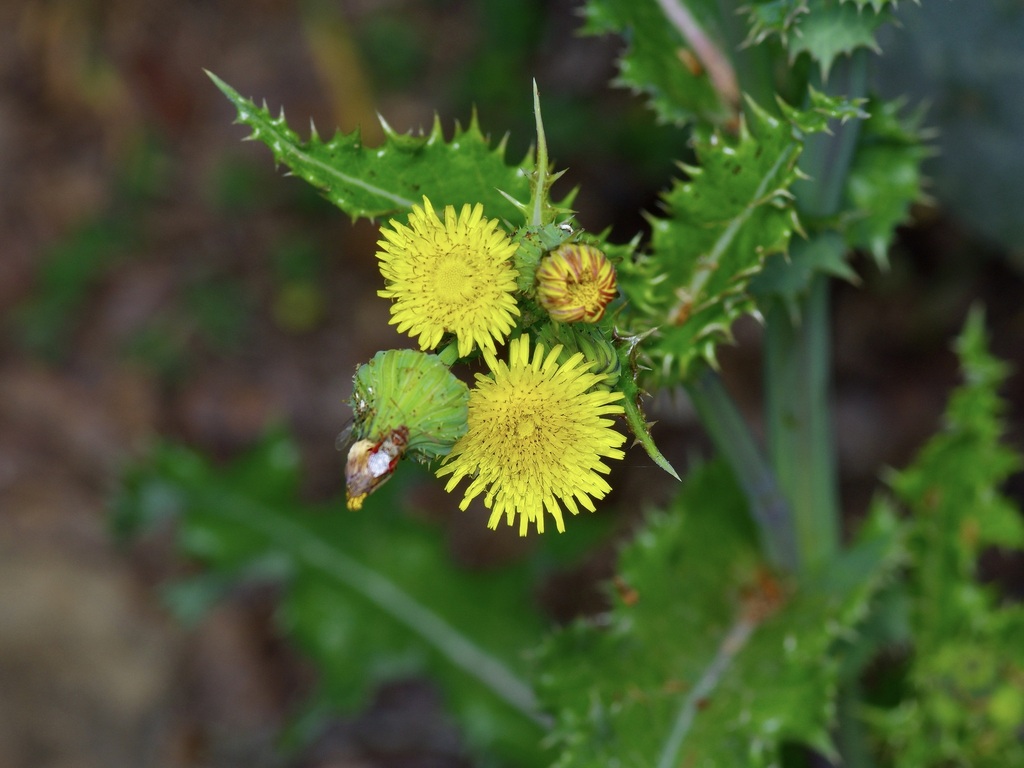
The spiny sowthistle is a hardy annual herb often found in disturbed soils and gardens. It produces yellow, dandelion-like flowers that eventually turn into fluffy seed heads. You will likely see it popping up as a weed in many temperate regions.

At a glance
- Care level
- Easy
- Plant type
- Annual herb
- Light
- Full sun
- Indoor light
- Direct sun
- Water
- Every 3 to 7 days
- Mature size
- 3 to 4 feet
- Growth rate
- Fast
- Hardiness
- USDA 4 to 9
- Bloom time
- Spring to autumn
Care
This plant thrives in full sun and tolerates a wide range of soil conditions. Watch for rapid spread, as it produces many wind-dispersed seeds. It is generally considered a weed and requires no special care.
- Watering
- Keep the soil consistently moist while the plant is establishing.
- Feeding
- Fertilizer is not necessary as this plant grows readily in most soils.
- Pruning
- Remove flower heads before they go to seed to prevent unwanted spread.
- Repotting
- This plant is typically grown in the ground and does not require repotting.
- Soil
- Well-draining, disturbed soil
- Soil pH
- 6.0 to 7.5
- Temperature
- -10 to 35°C
- Humidity
- 30 to 80%
- Drought tolerance
- Moderate
- Lifespan
- Annual, typically 1 year
- Deer and rabbits
- Moderate
Signs it needs repotting
- Roots growing out of the drainage holes.
- Plant growth slowing significantly.
Safety
- People
- It is generally considered non toxic, though the milky sap may cause mild irritation in sensitive individuals.
- Children
- The plant is not inherently dangerous, but the prickly leaf margins can scratch delicate skin if handled roughly.
- Contact allergens
- The milky latex sap can cause skin irritation or contact dermatitis in sensitive individuals.
- Airborne allergens
- The pollen may cause mild hay fever symptoms in susceptible people during the peak flowering season.
- Edibility
- While the young leaves are sometimes eaten, they can be bitter and are often considered a famine food rather than a culinary staple.
How to identify it
- Prickly, jagged leaf margins
- Yellow dandelion-like flower heads
- Milky sap inside stems
- Basal rosette of leaves
- Fluffy white seed heads
- Height
- 0.3 to 1m
- Spread
- 0.2 to 0.45m
- Leaves
- green, deciduous
- Flowers
- yellow, 1.5 to 2.5cm
- Fruit
- brown, Summer to autumn
Common problems
- Aphids — Small insects that cluster on new growth and flower buds.
Growing it
- Propagation
- seed
- When to plant
- spring, autumn
- Overwintering
- It typically dies back in winter, leaving seeds to germinate in the following spring.
- In containers
- It grows well in containers, but its rapid growth and seed production make it a poor choice for most pots.
Seed
- 1. Collect seeds when the fluffy heads turn white.
- 2. Scatter seeds directly onto disturbed soil in spring or autumn.
- 3. Keep the soil lightly moist until germination occurs.
Because it is a vigorous grower, it is best kept away from delicate garden beds where it may outcompete desired plants.
Grows well with
- Common Dandelion — They share similar environmental preferences and often grow in the same disturbed habitats.
Similar species
- Common Sowthistle — It looks very similar but has less prickly, more deeply lobed leaves.
Science
- Family
- Asteraceae
- Genus
- Sonchus
- Order
- Asterales
- Class
- Magnoliopsida
- Native range
- Europe, North Africa, and Western Asia.
- Conservation
- It is a common, widespread weed and is not of conservation concern.
It is a pioneer species that quickly colonizes disturbed ground and open areas.
- Value to wildlife
- nectar source
- Pollinators
- bees, butterflies
- Uses
- foraging, wildlife habitat
Through the year
Ecological indicators
- Salinity
- 2/9
- Soil reaction
- 6/9
- Light
- 7/9
- Temperature
- 5/9
- Moisture
- 5/9
- Nutrients
- 6/9
Taxonomy resolved against GBIF.
Questions people ask
- Is this plant a weed?
- Yes, it is widely considered an agricultural and garden weed due to its aggressive seed dispersal.
- Can I eat it?
- Young leaves are edible when cooked, but they are often bitter and not commonly consumed.
Where the name comes from
The genus name Sonchus comes from the Greek word for hollow, referring to the stems, while asper is Latin for rough, describing the prickly leaves.
Good to know
- It is often called spiny sowthistle because of its prickly leaves.
- The seeds have fluffy white bristles that help them travel long distances on the wind.
- It is a member of the daisy family.
- It thrives in disturbed soil and is often found in gardens and along roadsides.
Is your spiny sowthistle looking unwell?
This page is a general guide. Pocket Botanist diagnoses problems from a photo of your actual plant, works out watering for your light and conditions, and reminds you when care is due.
This guide was generated with AI and checked against GBIF taxonomy. It is general information, not horticultural or veterinary advice. Read about how we build these guides.