 Pocket Botanist
Plant guide
Black nightshade.
Solanum nigrum
Pronounced so-LAY-num NY-grum
Also known as Black Nightshade, European black nightshade, Poisonberry, blackberry nightshade, common nightshade



Scan with your phone's camera to get the app
Or go to pocketbotanist.app/get on your phone

Black nightshade is a fascinating plant often found growing as a weed in disturbed soils. It produces small white flowers followed by dark berries that ripen to a deep black. While it has a long history of use, it is important to handle it with care due to its toxicity.
At a glance
- Care level
- Easy
- Plant type
- Annual herb
- Light
- Full sun to partial shade
- Indoor light
- Direct sun
- Water
- Every 3 to 7 days
- Mature size
- 2 to 3 feet
- Growth rate
- Fast
- Hardiness
- USDA 3 to 10
- Bloom time
- Mid summer to early autumn
Care
This plant thrives in sunny spots with well draining soil. Watch for yellowing leaves which might indicate poor drainage or overwatering. Keep an eye out for common garden pests like aphids that might settle on the stems.
- Watering
- Keep the soil consistently moist but never waterlogged.
- Feeding
- Apply a balanced liquid fertilizer once a month during the growing season.
- Pruning
- Trim back leggy growth to encourage a bushier shape.
- Repotting
- Repot annually if growing in a container to refresh the soil.
- Soil
- Rich, moist, well draining soil
- Soil pH
- 6.0 to 7.5
- Temperature
- 5 to 30°C
- Humidity
- 40 to 70%
- Drought tolerance
- Moderate
- Lifespan
- Annual, typically 1 year
- Deer and rabbits
- Moderate
Signs it needs repotting
- Roots growing out of drainage holes
- Stunted growth
Safety
- People
- All parts of the plant contain toxic alkaloids that can cause gastrointestinal distress if ingested.
- Pets
- This plant is toxic to cats and dogs if ingested.
- Children
- Keep children away from the berries as they are easily mistaken for edible fruit and can cause illness.
- Contact allergens
- Handling the foliage may cause mild skin irritation in sensitive individuals.
- Airborne allergens
- The pollen is not considered a significant allergen.
- Edibility
- The plant contains solanine and can be toxic if consumed raw or if the berries are unripe.
How to identify it
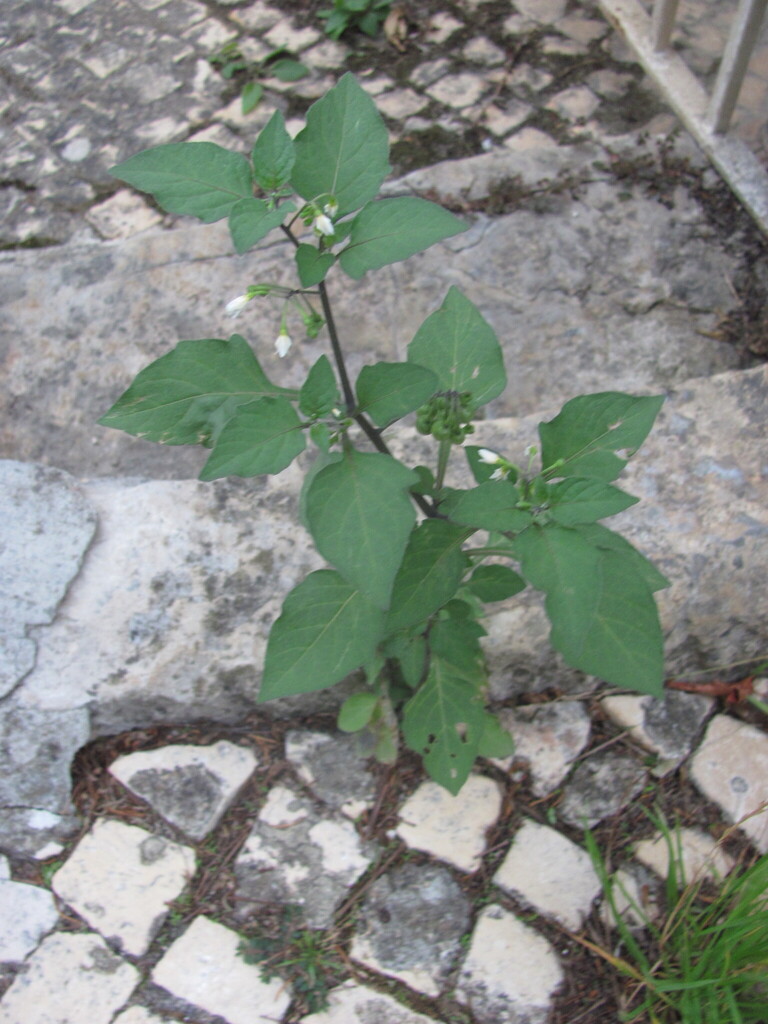
- Small star shaped white flowers
- Dark purple to black berries
- Oval leaves with wavy margins
- Smooth green stems
- Height
- 0.3 to 1.2m
- Spread
- 0.3 to 0.6m
- Leaves
- green, deciduous
- Flowers
- white, 0.5 to 1cm
- Fruit
- black, purple, Late summer to autumn
Problems to watch for
- AphidsCommon
- Flea BeetlesCommon
- Potato BlightCommon
- Powdery MildewUncommon
- Root RotUncommon
- Tobacco Mosaic VirusUncommon
- Tomato HornwormUncommon
Check your black nightshade from a photo
Pocket Botanist looks at a photo of your plant and tells you what's wrong and what to try first.
Scan with your phone's camera to get the app
Or go to pocketbotanist.app/get on your phone
Growing it
- Propagation
- seed
- When to plant
- spring
- Overwintering
- It is an annual and will die back completely after the first frost.
- In containers
- It grows well in containers, though it is rarely cultivated intentionally.
Seed
- 1. Collect ripe black berries.
- 2. Extract seeds and dry them.
- 3. Sow in spring in moist soil.
It is best grown in a controlled area as it can easily become a nuisance in a garden.
Grows well with
- Potato · They share similar environmental needs but should be monitored for shared pests.
Similar species
- Bittersweet nightshade · It is a related vining plant with similar toxic properties.
Science
- Family
- Solanaceae
- Genus
- Solanum
- Order
- Solanales
- Class
- Magnoliopsida
- Native range
- Eurasia
- Conservation
- This species is widespread and not of conservation concern.
It thrives in nitrogen rich soils and disturbed areas where it can quickly establish itself.
- Value to wildlife
- nectar source, bird food source
- Pollinators
- bees, butterflies
- Uses
- traditional medicine, culinary use in specific cultures
Through the year
Ecological indicators
- Salinity
- 2/9
- Soil reaction
- 6/9
- Light
- 7/9
- Temperature
- 6/9
- Moisture
- 5/9
- Nutrients
- 8/9
Taxonomy resolved against GBIF.
Questions people ask
- Is it safe to eat?
- Only fully ripe berries are consumed in certain cultures after careful preparation, but it is generally best to avoid eating it.
- Does it spread easily?
- Yes, it produces many seeds that are spread by birds.
Where the name comes from
The name Solanum is derived from the Latin word for quiet or soothing, while nigrum refers to the black color of the ripe berries.
Good to know
- It is a close relative of the potato and tomato.
- The berries turn from green to shiny black when fully ripe.
- It is often found growing in disturbed soil or garden beds.
Also in
Keep your black nightshade growing
This page is a general guide. Save your plant in Pocket Botanist and you get care reminders timed for this plant, plus a care history that shows what worked.
Scan with your phone's camera to get the app
Or go to pocketbotanist.app/get on your phone
This guide was generated with AI on and checked against GBIF taxonomy. It is general information, not horticultural or veterinary advice. Read about how we build these guides.