 Pocket Botanist
Plant guide
Common greenbrier.
Smilax rotundifolia
Pronounced SMI-laks ro-tun-di-FO-lee-uh
Also known as Bullbriar, Bullbrier, Catbrier, Common Catbriar, Common Greenbrier, Greenbrier, Horsebriar, Roundleaf Greenbriar



Scan with your phone's camera to get the app
Or go to pocketbotanist.app/get on your phone
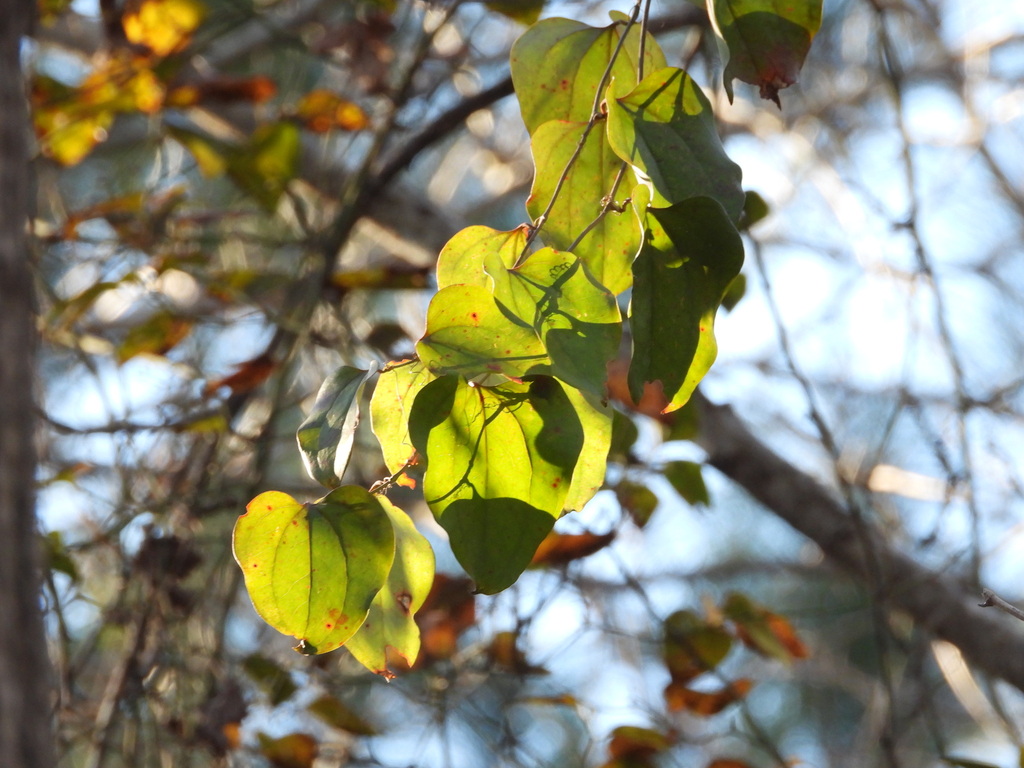
This woody vine is a tough native plant that grows quickly in woodlands and thickets. It is known for its thorny stems and ability to form dense, impenetrable tangles. You will often spot it climbing over other shrubs or trees in the wild.
At a glance
- Care level
- Easy
- Plant type
- Perennial vine
- Light
- Partial shade to full sun
- Indoor light
- Bright indirect
- Water
- Every 7 to 14 days
- Mature size
- 20 to 30 feet
- Growth rate
- Fast
- Hardiness
- USDA 4 to 9
- Bloom time
- Late spring to early summer
Care
This plant is incredibly hardy and rarely needs human intervention in its natural habitat. Watch for it spreading aggressively, as its vigorous growth can easily overwhelm smaller garden plants. Keep an eye on the thorns when you are working near it.
- Watering
- Water deeply during dry spells to keep the soil consistently moist.
- Feeding
- It generally does not require fertilizer if planted in healthy soil.
- Pruning
- Prune back in late winter to control its size and manage its thorny spread.
- Repotting
- If grown in a container, move it to a larger pot every few years as it outgrows its space.
- Soil
- Well draining, moist soil
- Soil pH
- Acidic to neutral
- Temperature
- -25 to 35°C
- Humidity
- 40 to 70%
- Drought tolerance
- Moderate
- Lifespan
- Perennial, can live for many decades.
- Deer and rabbits
- High
Signs it needs repotting
- Roots growing out of drainage holes
- Stunted growth despite regular watering
Safety
- People
- The plant is generally considered non-toxic, but the sharp thorns can cause significant skin injury.
- Children
- Keep children away from this plant because the sharp, woody thorns pose a serious risk of puncture wounds.
- Contact allergens
- The sharp thorns can cause mechanical skin irritation and potential infection if scratched.
- Airborne allergens
- There is no significant evidence of respiratory allergies associated with this plant.
- Edibility
- While the young shoots are edible, ensure positive identification as many vining plants can be mistaken for this species.
How to identify it
- Woody stems with sharp prickles
- Rounded or heart shaped leaves
- Parallel leaf veins
- Small greenish flowers in clusters
- Dark blue to black berries
- Height
- 3 to 6m
- Spread
- 2 to 5m
- Leaves
- green, deciduous
- Flowers
- greenish, yellow, 0.5 to 1cm
- Fruit
- blue, black, Autumn
Problems to watch for
- Thorn injury · The plant's natural defense mechanism can cause painful scratches to humans and pets.
Check your common greenbrier from a photo
Pocket Botanist looks at a photo of your plant and tells you what's wrong and what to try first.
Scan with your phone's camera to get the app
Or go to pocketbotanist.app/get on your phone
Growing it
- Propagation
- seed, division, cuttings
- When to plant
- spring, autumn
- Overwintering
- The plant goes dormant and loses its leaves in winter. No special protection is needed as it is very hardy.
- In containers
- It is not recommended for containers due to its aggressive growth habit and extensive root system.
Division
- 1. Locate the tuberous root system in early spring.
- 2. Carefully dig up the roots without damaging them.
- 3. Use a sharp spade to divide the root mass into smaller sections.
- 4. Replant the sections immediately in well-draining soil.
Give this plant plenty of space to sprawl, as it will quickly overgrow smaller, more delicate garden companions.
Grows well with
- American Holly · They share similar woodland edge habitats and provide layered cover for wildlife.
- Virginia Creeper · Both are vigorous native vines that can coexist in large, wild garden spaces.
Similar species
- Smooth Carrion Flower · It is a related species but lacks the woody, persistent thorns of rotundifolia.
Science
- Family
- Smilacaceae
- Genus
- Smilax
- Order
- Liliales
- Class
- Liliopsida
- Native range
- Eastern and central North America.
- Conservation
- This plant is common and widespread throughout its native range and is not of conservation concern.
It thrives in forest edges and thickets, where it uses its tendrils to climb toward sunlight.
- Value to wildlife
- nectar source, nesting cover, bird food
- Pollinators
- bees, beetles
- Uses
- wildlife habitat, natural fencing, foraging
Through the year
Ecological indicators
- Salinity
- 2/9
- Soil reaction
- 5/9
- Light
- 6/9
- Temperature
- 5/9
- Moisture
- 5/9
- Nutrients
- 4/9
Taxonomy resolved against GBIF.
Questions people ask
- Is this plant invasive?
- It is native to North America, but it can be aggressive and difficult to control in a small garden setting.
- How do I get rid of it?
- You must dig out the entire root system, as even small pieces of the tuberous root can resprout.
Where the name comes from
The name Smilax comes from an ancient Greek word for a climbing plant, while rotundifolia refers to its rounded leaves.
Good to know
- It is commonly known as catbrier due to its sharp, claw-like thorns.
- The berries are a vital food source for many bird species during the winter months.
- It is an incredibly tough plant that can quickly colonize disturbed areas.
- The stems were historically used in some regions to make rustic baskets.
Also in
Keep your common greenbrier growing
This page is a general guide. Save your plant in Pocket Botanist and you get care reminders timed for this plant, plus a care history that shows what worked.
Scan with your phone's camera to get the app
Or go to pocketbotanist.app/get on your phone
This guide was generated with AI on and checked against GBIF taxonomy. It is general information, not horticultural or veterinary advice. Read about how we build these guides.