 Pocket Botanist
Plant guide
American holly.
Ilex opaca
Pronounced EYE-leks oh-PAY-kuh
Also known as American Holly, Christmas Holly, White Holly



Scan with your phone's camera to get the app
Or go to pocketbotanist.app/get on your phone

The American holly is a classic evergreen tree known for its spiny leaves and bright red berries. It adds a festive touch to landscapes and provides excellent cover for local birds. You'll love how it keeps your garden looking green all winter long.
At a glance
- Care level
- Easy
- Plant type
- Evergreen tree
- Light
- Full sun to partial shade
- Indoor light
- Bright indirect
- Water
- Every 7 to 14 days
- Mature size
- 15 to 50 feet
- Growth rate
- Slow
- Hardiness
- USDA 5 to 9
- Bloom time
- Late spring
Care
Plant this tree in well draining soil and keep it mulched to retain moisture. Watch for yellowing leaves which might indicate poor drainage or nutrient issues. It prefers a spot protected from harsh winter winds.
- Watering
- Keep the soil consistently moist but never soggy.
- Feeding
- Apply a balanced fertilizer for acid loving plants once in early spring.
- Pruning
- Prune in late winter or early spring to maintain shape.
- Repotting
- Repot only if necessary as these trees prefer to stay in the ground.
- Soil
- Acidic, moist, well drained soil
- Soil pH
- 5.0 to 6.5
- Temperature
- -23 to 35°C
- Humidity
- 40 to 70%
- Drought tolerance
- Moderate
- Lifespan
- Perennial, often living over 100 years.
- Deer and rabbits
- Moderate
Signs it needs repotting
- Roots growing out of the drainage holes
- Water running straight through the pot
- Stunted growth despite regular feeding
Safety
- People
- Ingesting the berries can cause nausea, vomiting, and diarrhea.
- Pets
- The berries and leaves are toxic to cats and dogs if ingested.
- Children
- Keep the bright red berries out of reach of children as they look like candy but are poisonous.
- Contact allergens
- The stiff, spiny leaves can cause skin irritation or scratches upon contact.
- Airborne allergens
- The pollen is generally not considered a significant allergen.
- Edibility
- The berries are toxic to humans and should never be consumed.
How to identify it
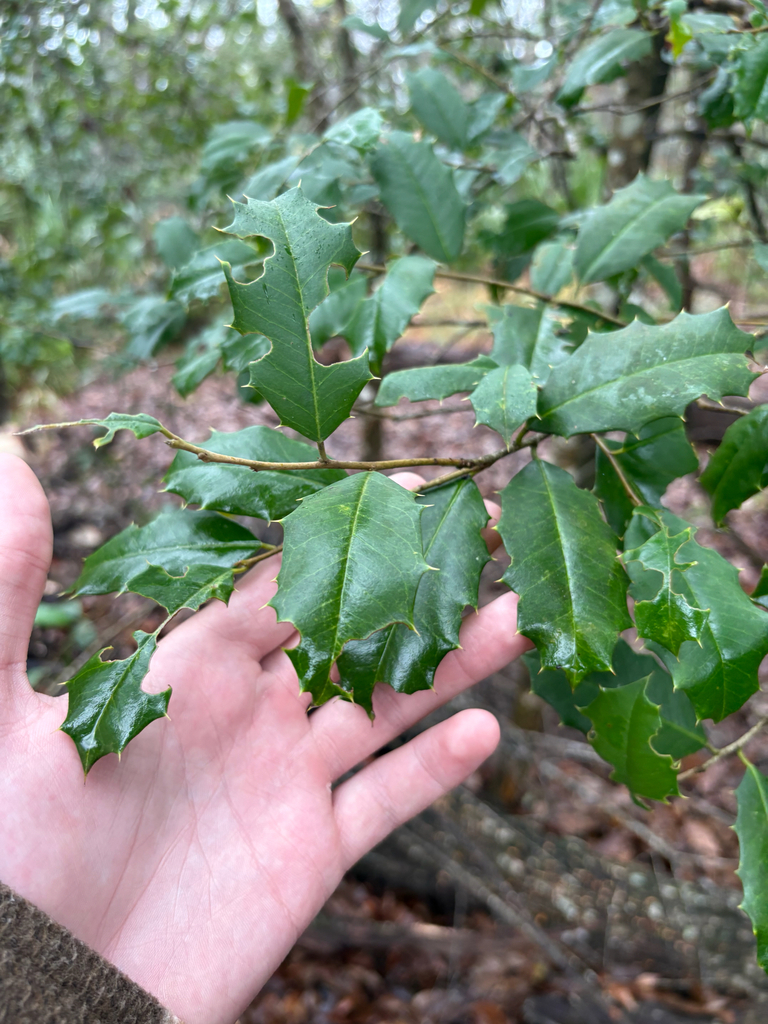
- Spiny, dark green evergreen leaves
- Bright red berries on female trees
- Grayish, smooth bark texture
- Pyramidal growth habit
- Height
- 4.5 to 15m
- Spread
- 3 to 6m
- Leaves
- dark green, evergreen
- Flowers
- white, greenish white, 0.5 to 1cm
- Fruit
- red, Late autumn to winter
Problems to watch for
- Leaf MinersCommon
- Scale InsectsCommon
- ChlorosisUncommon
- Leaf SpotUncommon
- Root RotUncommon
- Sooty MoldUncommon
Check your american holly from a photo
Pocket Botanist looks at a photo of your plant and tells you what's wrong and what to try first.
Scan with your phone's camera to get the app
Or go to pocketbotanist.app/get on your phone
Growing it
- Propagation
- seed, cuttings
- When to plant
- spring, early autumn
- Overwintering
- Apply a layer of mulch around the base to retain moisture and protect roots from freezing temperatures.
- In containers
- It can grow in large containers for a few years, but it prefers being in the ground.
Semi-hardwood cuttings
- 1. Take 15 centimeter cuttings in late summer.
- 2. Remove lower leaves and dip the base in rooting hormone.
- 3. Place in a moist, well draining medium.
- 4. Cover with plastic to maintain humidity.
- 5. Transplant once roots are established.
Plant your holly in acidic, well drained soil to keep it happy and healthy.
Grows well with
- Mountain Laurel · They share similar acidic soil requirements and thrive in partial shade.
- Southern Magnolia · These provide a classic evergreen backdrop for the holly.
Similar species
- English Holly · It has glossier, sharper leaves and is often confused with the native American species.
Science
- Family
- Aquifoliaceae
- Genus
- Ilex
- Order
- Aquifoliales
- Class
- Magnoliopsida
- Native range
- Eastern and central United States.
- Conservation
- It is not currently listed as endangered, but wild collection of branches for holiday decor should be done sustainably.
It thrives in the understory of moist forests where it provides critical winter shelter for birds.
- Value to wildlife
- nectar source, winter food source for birds, nesting cover
- Pollinators
- bees
- Uses
- ornamental specimen, privacy screen, holiday greenery, wildlife habitat
Through the year
Ecological indicators
- Salinity
- 2/9
- Soil reaction
- 4/9
- Light
- 5/9
- Temperature
- 6/9
- Moisture
- 6/9
- Nutrients
- 5/9
Taxonomy resolved against GBIF.
Questions people ask
- Do I need two trees for berries?
- Yes, you need at least one male tree nearby to pollinate the female tree.
- How fast does it grow?
- It is quite slow, typically adding only 30 to 60 centimeters per year.
Where the name comes from
The genus name Ilex is the classical Latin name for holm oak, while opaca means opaque or dull, referring to the matte finish of the leaves.
Good to know
- American holly is the state tree of Delaware.
- The wood is very white and is often used for fine woodworking or piano keys.
- Only female trees produce the iconic red berries.
- It is a slow growing tree that can live for over a century.
Also in
Keep your american holly growing
This page is a general guide. Save your plant in Pocket Botanist and you get care reminders timed for this plant, plus a care history that shows what worked.
Scan with your phone's camera to get the app
Or go to pocketbotanist.app/get on your phone
This guide was generated with AI on and checked against GBIF taxonomy. It is general information, not horticultural or veterinary advice. Read about how we build these guides.