 Pocket Botanist

Check these first
- Inspect the undersides of the leaves for small beetles or fuzzy growth.
- Check if the soil has been staying too wet for too long.
- Look at the surrounding plants to see if the issue is spreading.
Likely causes
Flea beetles
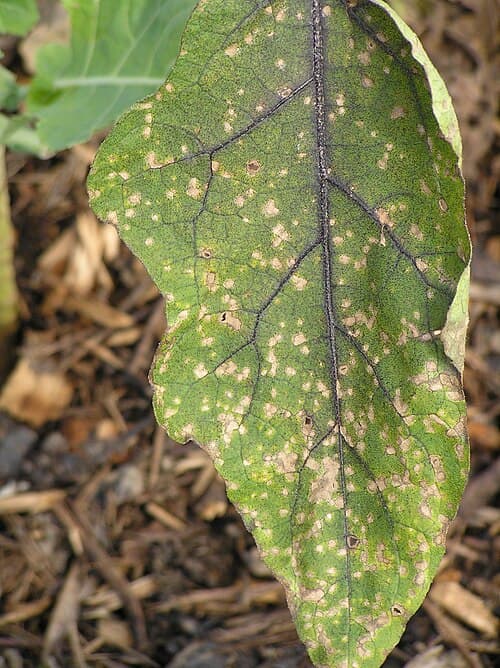
Most likelyHow to tell: You will see tiny, round holes scattered across the leaves, often looking like someone used a miniature hole puncher. The leaves may look ragged if the infestation is heavy.
What to do: Spray the foliage with neem oil or insecticidal soap every 5 to 7 days. You can also cover the plants with a fine mesh row cover to physically block the beetles.
Downy mildew
Most likelyHow to tell: This shows up as yellow or pale patches on the top of the leaves, often with a fuzzy gray growth on the underside. It thrives when the weather is cool and damp.
What to do: Improve air circulation around your plants by spacing them further apart. Avoid overhead watering to keep the foliage dry, and remove any heavily infected leaves immediately.
Find out what's wrong with your wild mustard
The list above covers the usual causes. Pocket Botanist looks at a photo of your actual plant and tells you the likely cause, how serious it is, and what to try first. Identification and a health check are free.



Scan with your phone's camera to get the app
Or go to pocketbotanist.app/get on your phone
When to worry
Worry if the holes cover more than half of the leaf surface or if the yellowing patches spread rapidly across the entire plant. A few small holes are normal for outdoor plants.
Stopping it coming back
Keep your garden tidy by removing weeds and debris where pests hide. Ensure your plants get plenty of direct sun to keep the foliage dry.
Wild mustard: spots? Check yours with a photo
Every plant is a little different. Take a photo of your wild mustard and Pocket Botanist tells you which cause is most likely, how serious it is, and what to try first. A few checks a day are free. Save the plant and you get care reminders timed for it.
Scan with your phone's camera to get the app
Or go to pocketbotanist.app/get on your phone
Get the app · Or check it from a photo now, free
Questions people ask
- Will these spots kill my plant?
- Usually not, unless the infestation is severe. Most wild mustard plants can handle minor damage and keep growing.
- Can I eat the leaves if they have spots?
- It is best to avoid eating leaves with heavy insect damage or fungal growth. Stick to the clean, healthy leaves for your kitchen.
Guides to these causes
More problems with Wild mustard
Back to the Wild mustard guide
This article was generated with AI on from the plant’s care profile and is general information, not horticultural advice. Read about how we build these guides.