 Pocket Botanist
Plant guide
Russel's Holiday Cactus.
Schlumbergera bridgesii
Pronounced shlum-BER-ger-uh rus-el-ee-AY-nuh
Also known as Epiphyllum russellianum



Scan with your phone's camera to get the app
Or go to pocketbotanist.app/get on your phone
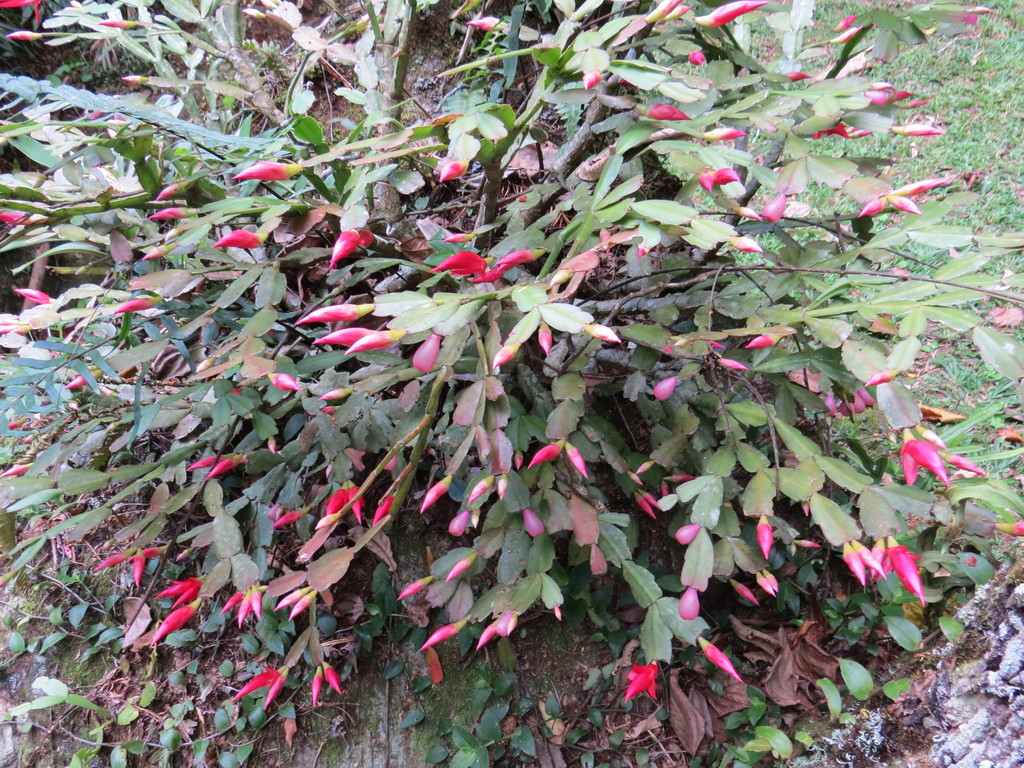
This lovely epiphyte is a unique member of the holiday cactus family. It features distinct, rounded stem segments that set it apart from its more common cousins. It is a wonderful choice if you enjoy watching delicate, pendulous flowers bloom in the cooler months.
At a glance
- Care level
- Moderate
- Plant type
- Epiphytic cactus
- Light
- Bright, filtered light is best.
- Indoor light
- Bright indirect
- Water
- Every 7 to 14 days
- Mature size
- 1 to 2 feet
- Growth rate
- Medium
- Hardiness
- USDA 10 to 12
- Bloom time
- Late winter to early spring
Care
Keep the soil lightly moist during the growing season, but let it dry out slightly between waterings to prevent root rot. Watch for shriveling stems, which often signal that the plant needs a bit more hydration. Ensure it gets cooler temperatures in the fall to encourage those beautiful blooms.
- Watering
- Water when the top inch of soil feels dry to the touch.
- Feeding
- Use a balanced liquid fertilizer during the active growing season.
- Pruning
- Trim back long stems after flowering to encourage a bushier shape.
- Repotting
- Repot only when the plant has become root bound.
- Soil
- Well-draining, airy potting mix.
- Soil pH
- 5.5 to 6.5
- Temperature
- 10 to 24°C
- Humidity
- 60 to 80%
- Drought tolerance
- Low
- Lifespan
- Perennial, typically 10 to 20 years with proper care.
- Deer and rabbits
- Moderate
Signs it needs repotting
- Roots growing out of the drainage holes
- Water running straight through the pot
- Stunted growth during the active season
Safety
- People
- The plant is generally considered non toxic to humans, but ingestion of any houseplant can cause mild stomach irritation.
- Pets
- This plant is considered non-toxic to cats and dogs.
- Children
- The small, segmented stems can be brittle and pose a minor choking hazard if broken off and placed in the mouth.
- Edibility
- This plant is not considered edible and may cause gastrointestinal upset if consumed.
How to identify it
- Rounded or scalloped stem segments
- Pendulous growth habit
- Magenta to pink tubular flowers
- Small, spineless succulent stems
- Height
- 0.2 to 0.4m
- Spread
- 0.3 to 0.6m
- Leaves
- green, evergreen
- Flowers
- pink, magenta, 4 to 6cm
- Fruit
- red, Late spring
Problems to watch for
- MealybugsCommon
- Root RotCommon
- Fungus GnatsUncommon
- Spider MitesUncommon
Check your russel's holiday cactus from a photo
Pocket Botanist looks at a photo of your plant and tells you what's wrong and what to try first.
Scan with your phone's camera to get the app
Or go to pocketbotanist.app/get on your phone
Growing it
- Propagation
- cuttings
- When to plant
- spring
- Overwintering
- Keep the plant in a bright, cool room away from drafts. Reduce watering significantly during the winter months to allow for a rest period.
- In containers
- It is excellent for hanging baskets, which allow its trailing stems to cascade naturally.
Stem cuttings
- 1. Gently twist off a segment of the stem.
- 2. Let the cut end callous over for two days.
- 3. Insert the calloused end into moist, well draining potting mix.
- 4. Keep the soil lightly moist until roots form.
Group this plant with other tropical epiphytes to create a microclimate that maintains higher ambient humidity.
Grows well with
- Bird's Nest Fern · They share similar requirements for high humidity and indirect light.
- Peace Lily · Both plants thrive in warm, humid indoor environments with low light.
Similar species
- Thanksgiving Cactus · It is a closely related species but features distinct pointed stem segments.
- Christmas Cactus · This is a hybrid that shares the same genus and cultural needs.
Science
- Family
- Cactaceae
- Genus
- Schlumbergera
- Order
- Caryophyllales
- Class
- Magnoliopsida
- Native range
- Coastal mountains of southeastern Brazil.
- Conservation
- It is considered vulnerable in its native habitat due to forest fragmentation.
It grows as an epiphyte in humid, shaded cloud forests, anchoring itself to tree branches.
- Value to wildlife
- nectar source
- Pollinators
- hummingbirds
- Uses
- hanging basket specimen, indoor flowering plant
Through the year
Ecological indicators
- Salinity
- 1/9
- Soil reaction
- 5/9
- Light
- 4/9
- Temperature
- 8/9
- Moisture
- 6/9
- Nutrients
- 3/9
Taxonomy resolved against GBIF.
Questions people ask
- Why are my stems turning red?
- This is often a stress response to too much direct sunlight.
- Does it need a dormant period?
- Yes, it benefits from cooler nights and drier soil in late autumn to set buds.
Where the name comes from
The genus honors the French cactus collector Frédéric Schlumberger, while the species name commemorates John Russell, 6th Duke of Bedford, in whose collection the plant first flowered.
Good to know
- It is an epiphyte that grows on trees in the wild.
- The flowers are zygomorphic, meaning they have bilateral symmetry.
- It requires cooler temperatures and shorter days to trigger blooming.
Keep your russel's holiday cactus growing
This page is a general guide. Save your plant in Pocket Botanist and you get care reminders timed for this plant, plus a care history that shows what worked.
Scan with your phone's camera to get the app
Or go to pocketbotanist.app/get on your phone
This guide was generated with AI on and checked against GBIF taxonomy. It is general information, not horticultural or veterinary advice. Read about how we build these guides.