 Pocket Botanist
Plant guide
Purple pitcher plant.
Sarracenia purpurea
Pronounced sah-rah-SEE-nee-ah pur-PUR-ee-ah
Also known as Hollow-leaved Lavender, Pitcher Plant, Pitcherplant, Purple Pitcher-plant, Side-saddle flower, Turtle socks, common pitcherplant, frog's-britches



Scan with your phone's camera to get the app
Or go to pocketbotanist.app/get on your phone
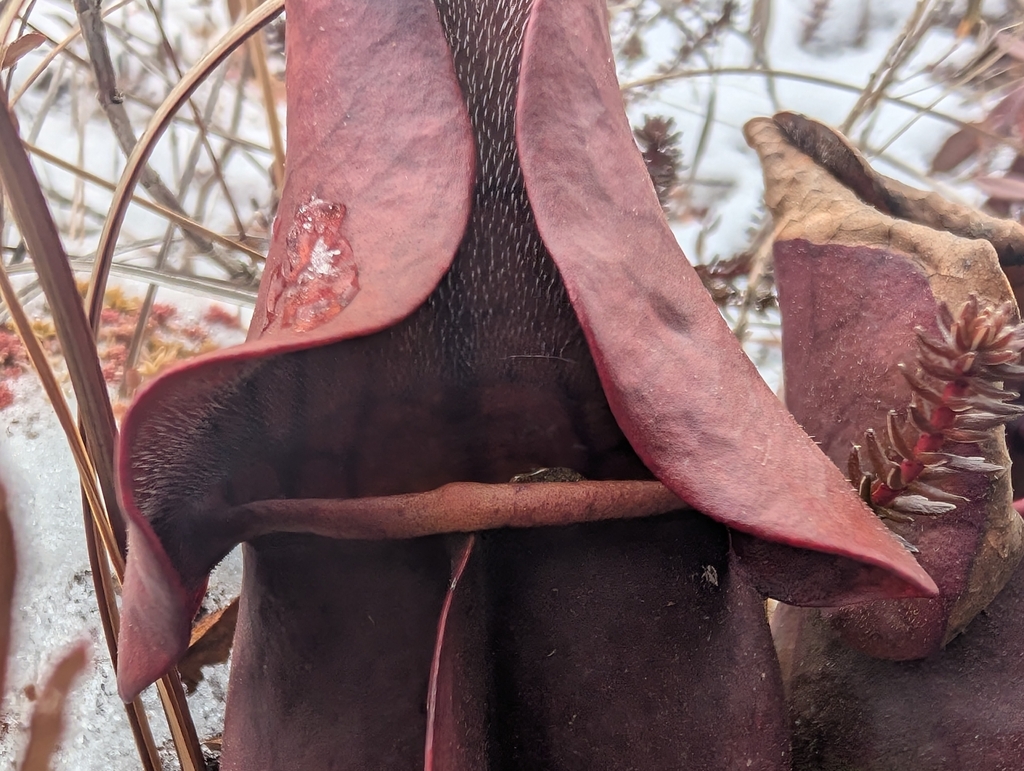
The purple pitcher plant is a fascinating carnivorous species that traps insects in its water filled leaves. It is native to boggy areas across North America and thrives in nutrient poor, acidic soil. You will love watching how it catches its own snacks.
At a glance
- Care level
- Difficult
- Plant type
- Carnivorous perennial
- Light
- Full sun
- Indoor light
- Direct sun
- Water
- Every 1 to 3 days
- Mature size
- 6 to 12 inches
- Growth rate
- Slow
- Hardiness
- USDA 3 to 8
- Bloom time
- Mid to late spring
Care
Keep the soil consistently moist using only distilled or rainwater to avoid mineral buildup. Ensure the plant sits in a tray of water to mimic its natural bog habitat. Watch for browning leaf tips, which often signal mineral burn from tap water.
- Watering
- Always keep the soil saturated with distilled water.
- Feeding
- Do not fertilize this plant as it gets nutrients from insects.
- Pruning
- Trim away dead or dried pitchers in late winter.
- Repotting
- Repot only when the plant outgrows its container.
- Soil
- Peat moss and perlite mix
- Soil pH
- Acidic
- Temperature
- -40 to 35°C
- Humidity
- 60 to 90%
- Drought tolerance
- Low
- Lifespan
- Perennial, can live for many decades.
- Fragrance
- Light
- Deer and rabbits
- High
Signs it needs repotting
- Rhizome crowding the pot edge
- Soil medium breaking down
- Reduced growth rate
Safety
- People
- The plant is not considered toxic, but it is not meant for human consumption.
- Children
- Keep away from small children to prevent them from pulling apart the pitchers or spilling the digestive fluid.
- Contact allergens
- The leaves can be slightly abrasive, but there is no known chemical irritant.
- Airborne allergens
- The pollen may cause mild reactions in sensitive individuals.
- Edibility
- This plant is not edible and should never be consumed.
How to identify it
- Tubular leaves forming a rosette
- Veined purple and green coloration
- Hooded opening to trap insects
- Large nodding reddish purple flowers
- Height
- 0.15 to 0.3m
- Spread
- 0.2 to 0.4m
- Leaves
- green, red, purple, semi-evergreen
- Flowers
- maroon, red, 5 to 8cm
- Fruit
- brown, Late summer
Problems to watch for
- AphidsCommon
- Root RotCommon
- DehydrationUncommon
- Fungus GnatsUncommon
Check your purple pitcher plant from a photo
Pocket Botanist looks at a photo of your plant and tells you what's wrong and what to try first.
Scan with your phone's camera to get the app
Or go to pocketbotanist.app/get on your phone
Growing it
- Propagation
- seed, division
- When to plant
- spring
- Overwintering
- The plant requires a cold dormant period to survive. Keep the soil moist but not waterlogged during the winter months.
- In containers
- It grows well in plastic pots placed in a tray of water, minimum 15 cm diameter.
Division
- 1. Gently unpot the plant in early spring.
- 2. Separate the rhizome into sections with roots attached.
- 3. Pot each section into fresh peat and perlite mix.
Seed
- 1. Sow seeds on the surface of moist peat moss.
- 2. Provide a cold stratification period for 4 to 6 weeks.
- 3. Keep under bright light until germination.
Group plants that all require consistent moisture and acidic, peat based soil.
Grows well with
- Sundew · They share the same boggy, nutrient poor habitat requirements.
- Bog Cranberry · This low growing plant acts as a living mulch for the bog surface.
Similar species
- Yellow Pitcher Plant · It is a taller, more upright relative with yellow flowers.
Science
- Family
- Sarraceniaceae
- Genus
- Sarracenia
- Order
- Ericales
- Class
- Magnoliopsida
- Native range
- Eastern North America from the Gulf Coast to Canada.
- Conservation
- It is protected in parts of its range and should never be collected from the wild.
It thrives in nutrient poor, acidic bogs where it captures insects to supplement its nitrogen intake.
- Value to wildlife
- nectar source, prey capture
- Pollinators
- bees, beetles
- Uses
- bog gardens, ornamental display
Through the year
Ecological indicators
- Salinity
- 1/9
- Soil reaction
- 2/9
- Light
- 8/9
- Temperature
- 4/9
- Moisture
- 9/9
- Nutrients
- 1/9
Taxonomy resolved against GBIF.
Questions people ask
- Does it need fertilizer?
- No, it gets nutrients from insects and will be harmed by standard fertilizers.
- What water should I use?
- Use only distilled, rain, or reverse osmosis water.
Where the name comes from
Sarracenia honors Dr. Michel Sarrasin, while purpurea refers to the purple color of the leaves.
Good to know
- It is the most cold hardy of all pitcher plants.
- The pitchers fill with rainwater to drown prey.
- It does not produce digestive enzymes but relies on bacteria to break down insects.
Also in
Keep your purple pitcher plant growing
This page is a general guide. Save your plant in Pocket Botanist and you get care reminders timed for this plant, plus a care history that shows what worked.
Scan with your phone's camera to get the app
Or go to pocketbotanist.app/get on your phone
This guide was generated with AI on and checked against GBIF taxonomy. It is general information, not horticultural or veterinary advice. Read about how we build these guides.