 Pocket Botanist
Plant guide
Sweet box.
Sarcococca confusa
Pronounced sar-ko-KOK-uh kon-FYOO-zuh
Also known as Sweet Box


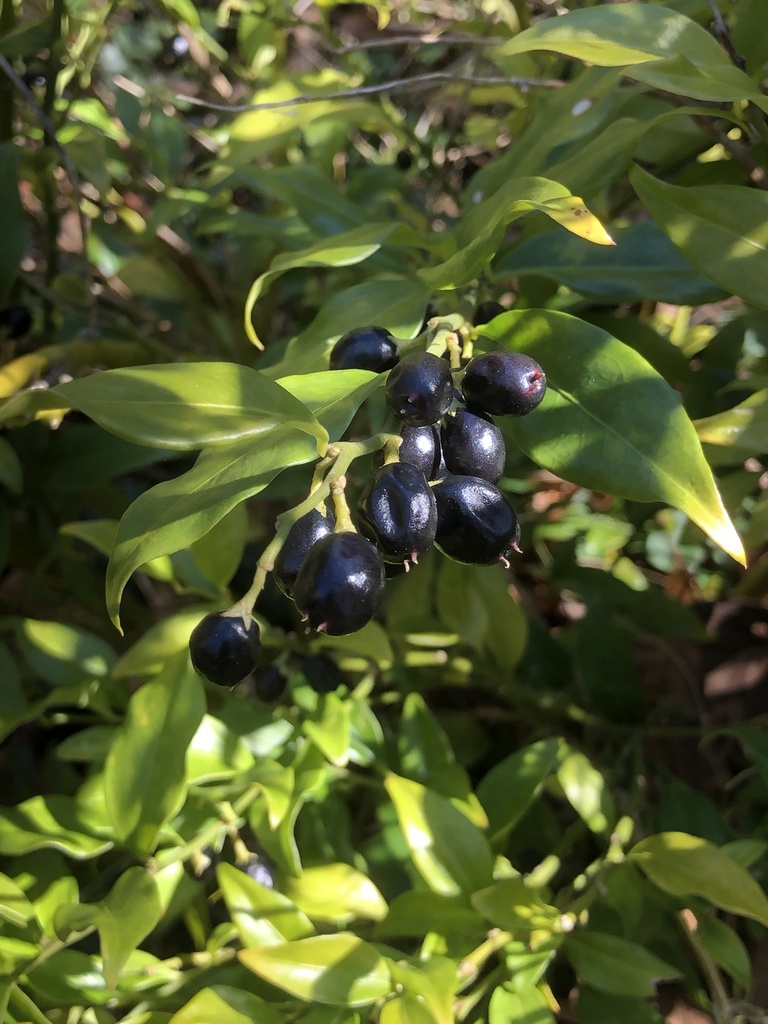
Sweet box is a fantastic evergreen shrub that brings a lovely fragrance to the garden in the middle of winter. It stays compact and works well as a hedge or a foundation plant in shady spots. You will love how its glossy leaves look great all year long.
At a glance
- Care level
- Easy
- Plant type
- Evergreen shrub
- Light
- Partial shade to full shade
- Indoor light
- medium
- Water
- Every 7 to 14 days
- Mature size
- 150cm by 150cm
- Growth rate
- slow
- Hardiness
- USDA 7 to 9
- Bloom time
- Mid winter to early spring
Care
Plant this shrub in a sheltered spot with moist, well draining soil to keep it happy. Watch for yellowing leaves which often indicate the soil is too dry or lacks nutrients. Prune lightly after flowering to maintain its shape and encourage bushier growth.
- Watering
- Keep the soil consistently moist but never waterlogged.
- Feeding
- Apply a balanced slow release fertilizer in early spring.
- Pruning
- Prune lightly immediately after the flowers fade in late winter or early spring.
- Repotting
- Repot only when the plant becomes root bound in its container.
- Soil
- Loamy, moist, well draining
- Soil pH
- Neutral to slightly acidic
- Temperature
- -15 to 30°C
- Humidity
- 40 to 70%
- Drought tolerance
- moderate
- Lifespan
- Long lived perennial shrub.
- Fragrance
- strong
- Deer and rabbits
- high
Signs it needs repotting
- Roots growing out of the bottom drainage holes.
- Water running straight through the pot without soaking in.
- Noticeable slowing of growth during the active season.
Safety
- People
- The berries are considered mildly toxic if eaten in large quantities.
- Pets
- The berries may cause mild stomach upset if ingested by pets.
- Children
- Keep small children away from the berries as they can be a choking hazard and cause stomach distress.
- Contact allergens
- Handling the foliage may cause mild skin irritation in sensitive individuals.
- Airborne allergens
- The flowers produce a small amount of pollen that might bother those with severe sensitivities.
- Edibility
- This plant is not intended for consumption and may cause digestive upset if ingested.
How to identify it
- Glossy dark green lance shaped leaves
- Small white fragrant winter flowers
- Shiny black berries in autumn
- Dense bushy evergreen growth habit
- Height
- 1 to 1.5m
- Spread
- 1 to 1.5m
- Leaves
- dark green, evergreen
- Flowers
- white, 0.5 to 1cm
- Fruit
- black, Autumn
Common problems
- Scale insects — Small sap sucking insects that appear as bumps on stems and leaves.
- Leaf spot — Fungal infection causing dark spots on foliage during wet seasons.
Growing it
- Propagation
- cuttings, seed
- When to plant
- spring, autumn
- Overwintering
- It is quite hardy, but a layer of mulch around the base helps protect the roots from extreme temperature swings.
- In containers
- It grows well in large containers of at least 15 gallons, provided the soil remains moist but well drained.
Semi-ripe cuttings
- Take 4 to 6 inch cuttings in late summer.
- Remove the lower leaves and dip the base in rooting hormone.
- Place in a moist, well draining potting mix.
- Keep in a bright, sheltered spot until roots form.
Group this shrub with other shade lovers that appreciate consistent moisture to create a lush woodland look.
Grows well with
- Hellebore — They share similar shade and moisture requirements for a beautiful winter display.
- Hostas — Their broad leaves provide a nice textural contrast to the narrow foliage of the sweet box.
- Ferns — Ferns thrive in the same shady, woodland conditions.
Similar species
- Sweet box — It is a smaller, suckering relative that also offers winter fragrance.
- Fragrant sweet box — This species has a similar habit but features slightly different leaf shapes.
Science
- Family
- Buxaceae
- Genus
- Sarcococca
- Order
- Buxales
- Class
- Magnoliopsida
- Native range
- Western China.
- Conservation
- This species is not currently listed as threatened or endangered in its native range.
It grows in the understory of forests where it relies on its shade tolerance to compete for space.
- Value to wildlife
- winter nectar source
- Pollinators
- bees
- Uses
- winter fragrance, evergreen hedging, shade garden filler
Through the year
Ecological indicators
- Salinity
- 1/9
- Soil reaction
- 6/9
- Light
- 2/9
- Temperature
- 5/9
- Moisture
- 5/9
- Nutrients
- 5/9
Taxonomy resolved against GBIF.
Questions people ask
- Does it need full sun?
- No, it actually prefers partial to full shade.
- How fast does it grow?
- It is a slow to moderate grower.
Where the name comes from
The name Sarcococca comes from the Greek words for fleshy and berry, referring to its fruit, while confusa reflects its history of being confused with other species.
Good to know
- It is commonly called sweet box.
- The flowers are tiny but pack a huge scent punch.
- It thrives in deep shade where many other plants fail.
- The glossy leaves stay green all year round.
Is your sweet box looking unwell?
This page is a general guide. Pocket Botanist diagnoses problems from a photo of your actual plant, works out watering for your light and conditions, and reminds you when care is due.
This guide was generated with AI and checked against GBIF taxonomy. It is general information, not horticultural or veterinary advice. Read about how we build these guides.