 Pocket Botanist
Symptoms by part
Leaves
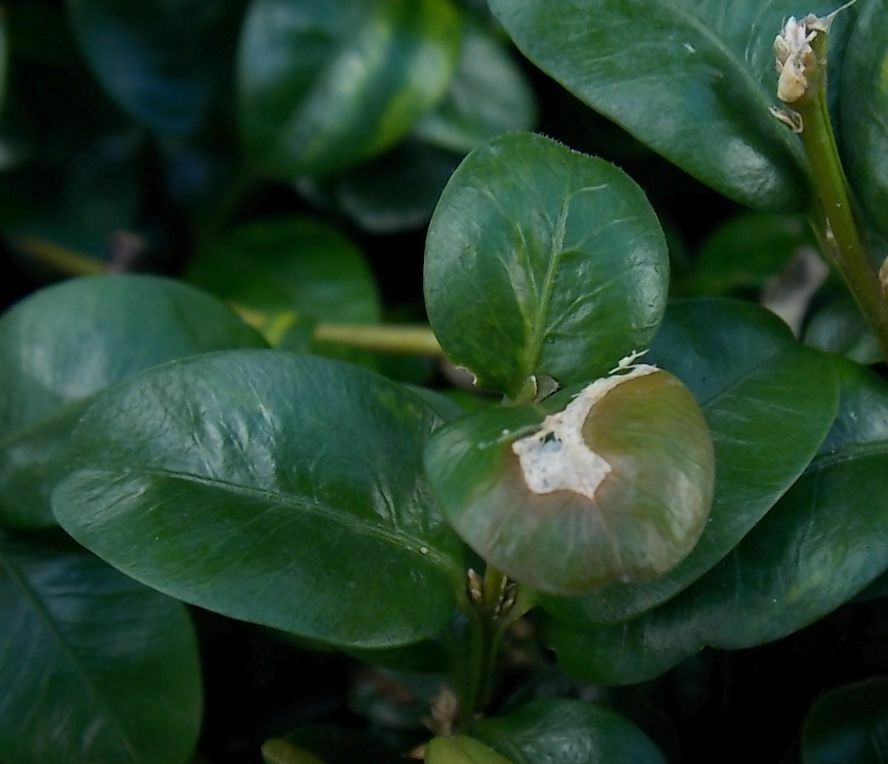
You will see light to dark brown circular spots that eventually merge, followed by the leaves turning tan or bronze before falling off prematurely.
Stems
Look for dark brown or black streaks called cankers that run along the stems, which can cause the tips of the branches to die back.
Causes
- High humidity and frequent rainfall
- Poor air circulation within the plant canopy
- Splashing water that moves fungal spores from the ground to the foliage
- Introduction of infected plant material into the garden
Could be confused with
- Volutella blight · This fungal issue typically shows pinkish spore masses on the undersides of leaves, whereas boxwood blight shows darker, more distinct stem cankers.
- Winter burn · Winter burn causes uniform browning on the outer edges of the plant exposed to wind, while boxwood blight causes random spotting and leaf drop throughout the canopy.
Find out what's really wrong with your plant
Problems that look alike are easy to mix up. Pocket Botanist looks at a photo of your actual plant and tells you what's going on, how serious it is, and what to try first. Identification and a health check are free.



Scan with your phone's camera to get the app
Or go to pocketbotanist.app/get on your phone
Treatment
- Prune out all infected branches immediately, cutting at least 6 inches below the visible cankers.
- Collect and bag all fallen leaves and debris from beneath the plant to remove the source of spores.
- Disinfect your pruning shears with a solution of 70 percent alcohol between every single cut to prevent spreading the fungus.
- Apply a fungicide containing tebuconazole to the remaining healthy foliage to protect against further infection, follow the label.
Without chemicals
- Thin out the center of the shrub to improve airflow and reduce moisture retention.
- Remove and destroy heavily infected plants entirely to protect nearby healthy boxwoods.
- Avoid overhead watering to keep the foliage dry.
- Use a layer of mulch under the plants to prevent soil and spores from splashing onto the leaves during rain.
Chemical options
- Tebuconazole applied as a foliar spray to protect healthy tissue, follow the label.
Preventing it
- Only buy boxwoods from reputable sources that guarantee disease free stock.
- Space plants far enough apart to ensure good air movement.
- Water at the base of the plant rather than over the top.
- Clean all gardening tools thoroughly after working near boxwoods.
Season
The warm growing season, especially during periods of high moisture and humidity.
Spread risk
High
Severity
High
When to act
Act the moment you spot leaf spots or stem streaks to contain the spread. If the main stems show extensive cankers or the plant is largely defoliated, remove and destroy the entire plant immediately.
Keep your plants healthy from here
Save your plants in Pocket Botanist and you get care reminders timed for each one, plus a care history that shows what worked. Identification and a health check are free.
Questions people ask
- Can my boxwood recover from blight?
- While a plant can survive if the infection is caught very early and managed aggressively, it is often difficult to fully eradicate the fungus once it is established.
- Will pruning help if the whole hedge is infected?
- If the infection is widespread, pruning is unlikely to save the hedge and may actually spread the spores further, so removal is often the best choice.
- Is there a way to tell if a new plant is infected before I buy it?
- Inspect the undersides of leaves and the stems for any dark spots or streaks, but be aware that the disease can be present without showing obvious symptoms immediately.
Plants it affects
Answers plant by plant
This guide was generated with AI on and is general information, not horticultural advice. Read about how we build these guides.