 Pocket Botanist
Plant guide
Castor bean.
Ricinus communis
Pronounced RISS-in-us kom-YOO-niss
Also known as Castor, Castor Oil, Castor Oil Plant, Castor Oil Tree, Castor Plant, Castor-Oil Bush, Castor-Oil Plant, Castor-Oil Tree



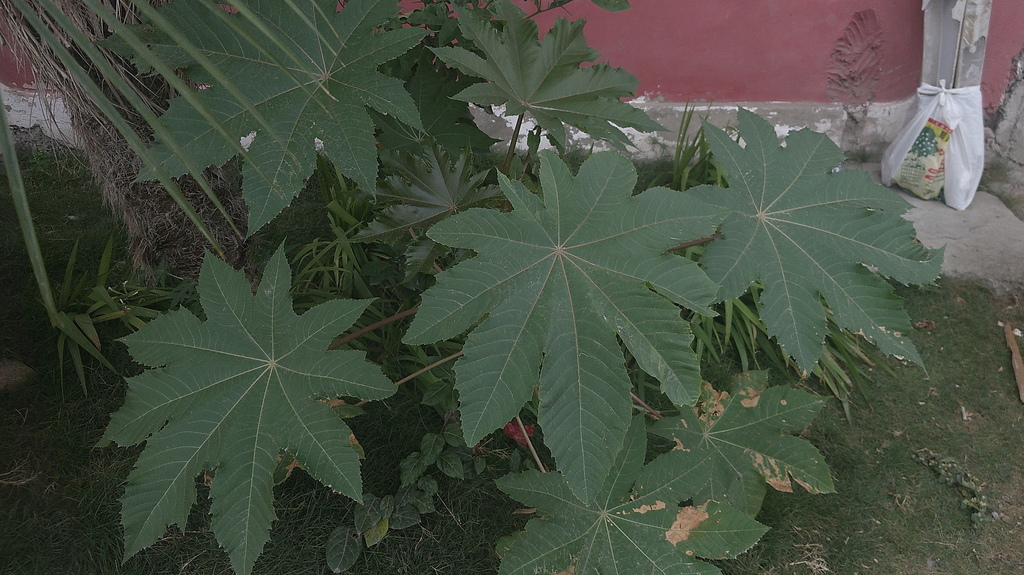
The castor bean is a fast growing tropical shrub that makes a bold statement in the garden with its massive, palmately lobed leaves. It is often grown as an annual in cooler climates because it cannot handle frost. Please be very careful, as every part of this plant is highly toxic if ingested.
At a glance
- Care level
- Easy
- Plant type
- Shrub
- Light
- Full sun
- Indoor light
- Direct sun
- Water
- Every 3 to 7 days
- Mature size
- 300 to 450 cm
- Growth rate
- Fast
- Hardiness
- USDA 9 to 11
- Bloom time
- Mid summer to early autumn
Care
Give this plant plenty of space and full sun to reach its full potential. Keep the soil consistently moist during the growing season and watch for wilting if it gets too dry. It is a heavy feeder, so provide regular nutrients to support its rapid growth.
- Watering
- Keep the soil evenly moist but not waterlogged.
- Feeding
- Apply a balanced liquid fertilizer once a month during the active growing season.
- Pruning
- Prune back dead or damaged stems in early spring if growing as a perennial.
- Repotting
- Repot annually if kept in containers to accommodate its rapid root growth.
- Soil
- Rich, well draining soil
- Soil pH
- 6.0 to 7.0
- Temperature
- 10 to 35°C
- Humidity
- 40 to 70%
- Drought tolerance
- Moderate
- Lifespan
- Tender perennial, typically grown as an annual.
- Deer and rabbits
- High
Signs it needs repotting
- Roots growing out of the drainage holes.
- Stunted growth despite regular feeding.
- Water running straight through the pot without soaking in.
Safety
- People
- The plant contains ricin and ricinine, making it extremely dangerous if consumed.
- Pets
- This plant is extremely toxic to cats and dogs if ingested.
- Children
- This plant is extremely dangerous for children because the attractive, bean like seeds are highly poisonous if swallowed.
- Contact allergens
- The sap can cause skin irritation or dermatitis in sensitive individuals.
- Airborne allergens
- The pollen may trigger allergic reactions in some people.
- Edibility
- All parts of this plant are highly toxic if ingested, especially the seeds which contain ricin.
How to identify it
- Large palmately lobed leaves
- Leaves often have reddish purple tint
- Spiky seed pods
- Tall woody stems
- Height
- 1.5 to 3m
- Spread
- 1 to 2m
- Leaves
- dark purple, bronze, green, deciduous
- Flowers
- red, green, 1 to 2cm
- Fruit
- spiny red, brown, Autumn
Problems to watch for
- Gray MoldCommon
- Spider MitesCommon
- Leaf SpotUncommon
- Root RotUncommon
By symptom
Check your castor bean from a photo
Pocket Botanist looks at a photo of your plant and tells you what's wrong and what to try first.
Growing it
- Propagation
- seed
- When to plant
- Spring
- Overwintering
- In frost free areas, cut back the stems in late winter to encourage new growth. In colder regions, the plant will die back completely with the first hard frost and should be removed.
- In containers
- It grows well in very large containers, at least 20 gallons, to accommodate its massive root system.
Seed
- Soak seeds in warm water for 24 hours to soften the hard coat.
- Plant seeds 1 inch deep in individual pots after the danger of frost has passed.
- Keep the soil warm and moist until germination occurs in 1 to 2 weeks.
Plant this as a bold focal point in the center of a bed surrounded by lower growing annuals.
Grows well with
- Canna Lily — They share similar tropical requirements and provide a nice contrast in leaf texture.
- Coleus — Coleus thrives in the partial shade cast by the large castor bean leaves.
Similar species
- Abyssinian Banana — Provides a similar bold, tropical look in the garden.
Science
- Family
- Euphorbiaceae
- Genus
- Ricinus
- Order
- Malpighiales
- Class
- Magnoliopsida
- Native range
- Tropical eastern Africa and the Mediterranean basin.
- Conservation
- Not of conservation concern, though it is considered an invasive weed in many tropical regions.
It is a fast growing pioneer species that quickly colonizes disturbed soil in warm climates.
- Value to wildlife
- nectar source
- Pollinators
- bees, butterflies
- Uses
- ornamental foliage, industrial oil production
Through the year
Ecological indicators
- Soil reaction
- 6/9
- Light
- 8/9
- Temperature
- 8/9
- Nutrients
- 7/9
- Salinity
- 2/9
- Moisture
- 6/9
Taxonomy resolved against GBIF.
Questions people ask
- Can I grow this in a pot?
- Yes, it grows well in large containers if given plenty of sun and water.
- Is it a perennial?
- It is a tender perennial that is usually grown as an annual in cooler climates.
Where the name comes from
The name Ricinus is Latin for tick, referring to the seed's resemblance to the insect, while communis means common.
Good to know
- Castor oil is extracted from the seeds for industrial and medicinal use.
- It grows incredibly fast, often reaching its full height in a single season.
- The seeds have been used for centuries in various cultures for oil.
Also in
Keep your castor bean growing
This page is a general guide. Save your plant in Pocket Botanist and you get care reminders timed for this plant, plus a care history that shows what worked.
This guide was generated with AI and checked against GBIF taxonomy. It is general information, not horticultural or veterinary advice. Read about how we build these guides.