 Pocket Botanist
Guide botanique
Ricin.
Ricinus communis
Prononciation RISS-in-us kom-YOO-niss
Aussi appelée Huile de ricin, Plante de ricin, Arbre de ricin, Buisson de ricin, Plante-huiles-de-ricin, Arbre-huiles-de-ricin



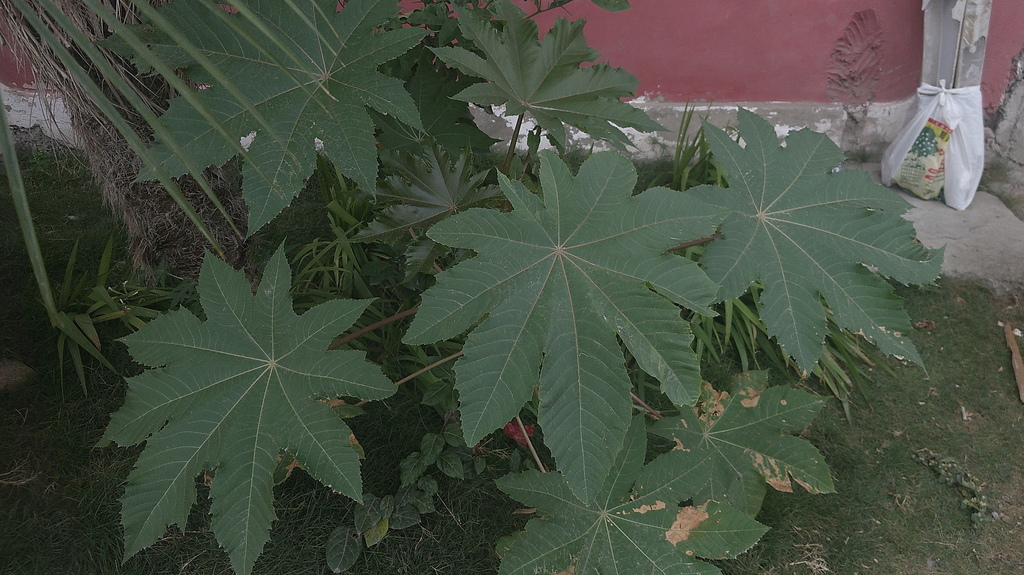
Le ricin est un arbuste tropical à croissance rapide qui fait une déclaration audacieuse dans le jardin avec ses feuilles massives, lobées et palmées. Il est souvent cultivé comme plante annuelle dans les climats plus froids car il ne supporte pas le gel. Soyez très prudent, car toutes les parties de cette plante sont très toxiques si ingérées.
En un coup d'œil
- Niveau d'entretien
- Facile
- Type de plante
- Arbuste
- Lumière
- Plein soleil
- Lumière en intérieur
- Soleil direct
- Arrosage
- Tous les 3 à 7 jours
- Taille adulte
- 300 à 450 cm
- Croissance
- Rapide
- Rusticité
- USDA 9 à 11
- Floraison
- Milieu de l'été au début de l'automne
Entretien
Donnez à cette plante beaucoup d'espace et de plein soleil pour qu'elle atteigne son plein potentiel. Gardez le sol uniformément humide pendant la saison de croissance et surveillez le flétrissement s'il devient trop sec. C'est une plante gourmande, alors fournissez des nutriments réguliers pour soutenir sa croissance rapide.
- Arrosage
- Gardez le sol uniformément humide mais pas détrempé.
- Engrais
- Appliquez un engrais liquide équilibré une fois par mois pendant la saison de croissance active.
- Taille
- Taille les tiges mortes ou endommagées au début du printemps si cultivée comme plante vivace.
- Rempotage
- Rempotez annuellement si conservé en conteneur pour accommoder sa croissance racinaire rapide.
- Sol
- Sol riche et bien drainé
- pH du sol
- 6,0 à 7,0
- Température
- 10 à 35°C
- Humidité
- 40 à 70%
- Résistance à la sécheresse
- Moyenne
- Durée de vie
- Vivace tendre, généralement cultivée comme annuelle.
- Résistance aux chevreuils et lapins
- Élevée
Signes qu'il faut rempoter
- Les racines sortent des trous de drainage.
- Croissance ralentie malgré une fertilisation régulière.
- L'eau traverse directement le pot sans s'infiltrer.
Sécurité
- Humains
- La plante contient de la ricine et de la ricinine, ce qui la rend extrêmement dangereuse si consommée.
- Animaux
- Cette plante est extrêmement toxique pour les chats et les chiens si ingérée.
- Enfants
- Cette plante est extrêmement dangereuse pour les enfants car les graines attrayantes, semblables à des haricots, sont hautement toxiques si avalées.
- Allergènes de contact
- La sève peut provoquer une irritation cutanée ou une dermatite chez les personnes sensibles.
- Allergènes aéroportés
- Le pollen peut déclencher des réactions allergiques chez certaines personnes.
- Comestibilité
- Toutes les parties de cette plante sont très toxiques si ingérées, en particulier les graines qui contiennent de la ricine.
Comment l'identifier
- Grandes feuilles lobées et palmées
- Feuilles souvent teintées de violet rougeâtre
- Capsules de graines piquantes
- Tiges ligneuses hautes
- Hauteur
- 1,5 à 3m
- Envergure
- 1 à 2m
- Feuilles
- violet foncé, bronze, vert, caduque
- Fleurs
- rouge, vert, 1 à 2cm
- Fruits
- rouge épineux, brun, Automne
Problèmes à surveiller
- Pourriture griseCourant
- TétranyquesCourant
- Pourriture des racinesPeu courant
- Taches foliairesPeu courant
- Acariens — Minuscules parasites qui sucent la sève et provoquent des marbrures sur le feuillage.
Par symptôme
Vérifie la santé de ta plante en photo
Pocket Botanist analyse une photo de ta plante et te dit ce qui ne va pas et quoi essayer en premier.
La cultiver
- Multiplication
- semis
- Quand planter
- Printemps
- Hivernage
- Dans les zones sans gel, taillez les tiges à la fin de l'hiver pour encourager une nouvelle croissance. Dans les régions plus froides, la plante mourra complètement au premier gel sévère et devra être retirée.
- En pot
- Il pousse bien dans de très grands conteneurs, d'au moins 75 litres, pour accueillir son système racinaire massif.
Semis
- Faites tremper les graines dans de l'eau tiède pendant 24 heures pour ramollir la coque dure.
- Semez les graines à 2,5 cm de profondeur dans des pots individuels après la disparition du risque de gel.
- Gardez le sol chaud et humide jusqu'à la germination, qui survient en 1 à 2 semaines.
Plantez-le comme un point focal audacieux au centre d'un parterre entouré d'annuelles plus basses.
Bonnes associations
Espèces similaires
- Ensete ventricosum — Offre un aspect tropical audacieux similaire dans le jardin.
Science
- Famille
- Euphorbiaceae
- Genre
- Ricinus
- Ordre
- Malpighiales
- Classe
- Magnoliopsida
- Région d'origine
- Afrique orientale tropicale et bassin méditerranéen.
- Préservation
- Pas de préoccupation de conservation, bien qu'il soit considéré comme une mauvaise herbe envahissante dans de nombreuses régions tropicales.
C'est une espèce pionnière à croissance rapide qui colonise rapidement les sols perturbés dans les climats chauds.
- Intérêt pour la faune
- source de nectar
- Pollinisateurs
- abeilles, papillons
- Utilisations
- feuillage ornemental, production d'huile industrielle
Au fil des saisons
Repères écologiques
- Réaction du sol
- 6/9
- Lumière
- 8/9
- Température
- 8/9
- Nutriments
- 7/9
- Salinité
- 2/9
- Humidité
- 6/9
Taxonomie vérifiée avec le GBIF.
Ce qu'on demande souvent
- Puis-je le faire pousser en pot ?
- Oui, il pousse bien dans de grands contenants si on lui donne beaucoup de soleil et d'eau.
- Est-ce une plante vivace ?
- C'est une vivace tendre généralement cultivée comme annuelle dans les climats plus froids.
D'où vient le nom
Le nom Ricinus vient du latin pour tique, faisant référence à la ressemblance de la graine avec l'insecte, tandis que communis signifie commun.
Bon à savoir
- L'huile de ricin est extraite des graines pour un usage industriel et médicinal.
- Il pousse incroyablement vite, atteignant souvent sa hauteur maximale en une seule saison.
- Les graines sont utilisées depuis des siècles dans diverses cultures pour leur huile.
Aussi dans
Garde ta plante en pleine forme
Cette page est un guide général. Enregistre ta plante dans Pocket Botanist et tu reçois des rappels d'entretien adaptés à cette plante, ainsi qu'un historique d'entretien qui montre ce qui a marché.
Ce guide a été généré par IA et vérifié avec la taxonomie du GBIF. Il s'agit d'informations générales, et non de conseils horticoles ou vétérinaires. Découvre comment nous concevons ces guides.