 Pocket Botanist
Plant guide
Kudzu.
Pueraria montana
Pronounced pyoo-er-AIR-ee-uh mon-TAN-uh
Also known as Kudzu, kudzu vine, Japanese Arrowroot



Scan with your phone's camera to get the app
Or go to pocketbotanist.app/get on your phone

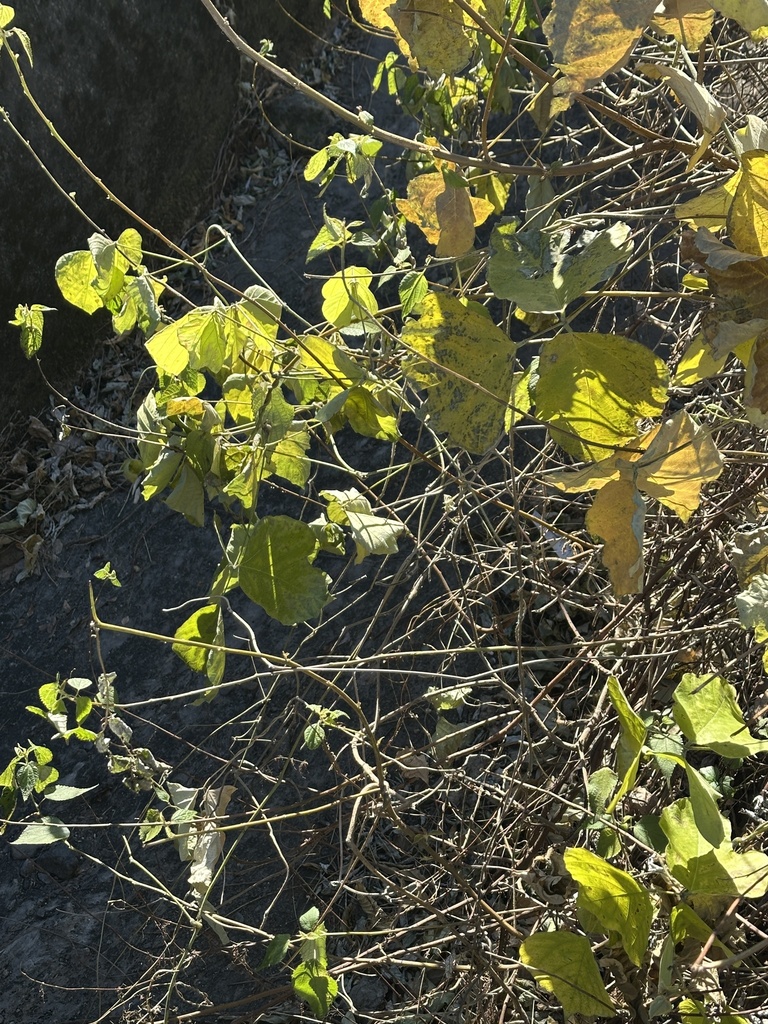
Kudzu is a vigorous climbing vine known for its rapid growth and ability to cover entire landscapes. It produces fragrant purple flowers and large, trifoliate leaves. This plant is highly invasive in many regions and is generally not recommended for home cultivation.
At a glance
- Care level
- Easy
- Plant type
- Perennial vine
- Light
- Full sun
- Indoor light
- Direct sun
- Water
- Every 7 to 14 days
- Mature size
- 30 meters
- Growth rate
- Fast
- Hardiness
- USDA 5 to 10
- Bloom time
- Late summer to early autumn
Care
This plant thrives in full sun and requires minimal intervention to grow aggressively. Keep an eye out for its tendency to smother other vegetation and structures. It is best to avoid planting it entirely due to its invasive nature.
- Watering
- Once established, it is highly drought tolerant.
- Feeding
- It rarely needs fertilizer as it fixes its own nitrogen.
- Pruning
- Constant pruning is required to keep this plant from taking over.
- Repotting
- It is not recommended to keep this plant in a container.
- Soil
- Well-draining, adaptable to most soils
- Soil pH
- 5.0 to 7.0
- Temperature
- -20 to 40°C
- Humidity
- 40 to 80%
- Drought tolerance
- High
- Lifespan
- Perennial, can live for many decades.
- Fragrance
- Strong
- Deer and rabbits
- High
Safety
- People
- The plant is not considered toxic, but its aggressive growth makes it a nuisance in most garden settings.
- Pets
- Kudzu is generally considered non-toxic to cats and dogs.
- Children
- The long, trailing vines pose a potential entanglement risk for small children playing near dense thickets.
- Contact allergens
- The fuzzy hairs on the stems and leaves can cause mild skin irritation in sensitive individuals.
- Airborne allergens
- The pollen may cause seasonal allergy symptoms in some people.
- Edibility
- While the starchy roots and flowers are edible when prepared correctly, the plant is often treated with herbicides due to its invasive nature.
How to identify it
- Large, alternate, trifoliate leaves
- Fragrant, purple, pea-like flower clusters
- Thick, woody, hairy vines
- Rapidly spreading growth habit
- Height
- 10 to 30m
- Spread
- 5 to 10m
- Leaves
- green, deciduous
- Flowers
- purple, violet, 1 to 2cm
- Fruit
- brown, Autumn
Problems to watch for
- Japanese BeetlesCommon
- Leaf SpotCommon
- CaterpillarsUncommon
- Powdery MildewUncommon
Check your kudzu from a photo
Pocket Botanist looks at a photo of your plant and tells you what's wrong and what to try first.
Scan with your phone's camera to get the app
Or go to pocketbotanist.app/get on your phone
Growing it
- Propagation
- seed, cuttings, division
- When to plant
- spring
- Overwintering
- The vines die back to the ground in frost, leaving the massive root crown to survive the winter.
- In containers
- It is not suitable for containers due to its massive root system and extreme vigor.
Seed propagation
- Scarify the hard seed coat with sandpaper.
- Soak seeds in warm water for 24 hours.
- Plant in well draining soil in a warm location.
Do not plant this near any other species as it will inevitably smother them.
Science
- Family
- Fabaceae
- Genus
- Pueraria
- Order
- Fabales
- Class
- Magnoliopsida
- Native range
- Eastern Asia
- Conservation
- It is listed as a severe invasive species in many regions, and planting it is often discouraged or illegal.
It thrives by outcompeting native vegetation for sunlight and space, often blanketing entire trees.
- Value to wildlife
- nectar source
- Pollinators
- bees, butterflies
- Uses
- erosion control, forage, culinary starch
Through the year
Ecological indicators
- Salinity
- 2/9
- Soil reaction
- 6/9
- Light
- 8/9
- Temperature
- 7/9
- Moisture
- 5/9
- Nutrients
- 5/9
Taxonomy resolved against GBIF.
Questions people ask
- Is it safe to plant in my garden?
- No, it is highly invasive and will quickly overwhelm other plants and structures.
- How do I get rid of it?
- Consistent mowing, grazing, or targeted herbicide application is required to exhaust the root system.
Where the name comes from
The genus name honors the Swiss botanist Marc Michel Puerari, while the specific epithet montana refers to its mountain habitat.
Good to know
- Kudzu was introduced to the United States in 1876 for ornamental use and erosion control.
- The roots contain a high concentration of starch used in traditional cooking.
- It is known as the vine that ate the South due to its rapid spread across the landscape.
- The flowers have a pleasant grape like scent.
Also in
Keep your kudzu growing
This page is a general guide. Save your plant in Pocket Botanist and you get care reminders timed for this plant, plus a care history that shows what worked.
Scan with your phone's camera to get the app
Or go to pocketbotanist.app/get on your phone
This guide was generated with AI on and checked against GBIF taxonomy. It is general information, not horticultural or veterinary advice. Read about how we build these guides.