 Pocket Botanist
Plant guide
Garden Phlox.
Phlox paniculata
Pronounced floks pan-ik-yoo-LAY-tuh
Also known as Fall Phlox, Fall-pink, Garden Phlox, Panicled Phlox, Perennial Phlox, Perennial-pink, Phlox, Summer Phlox


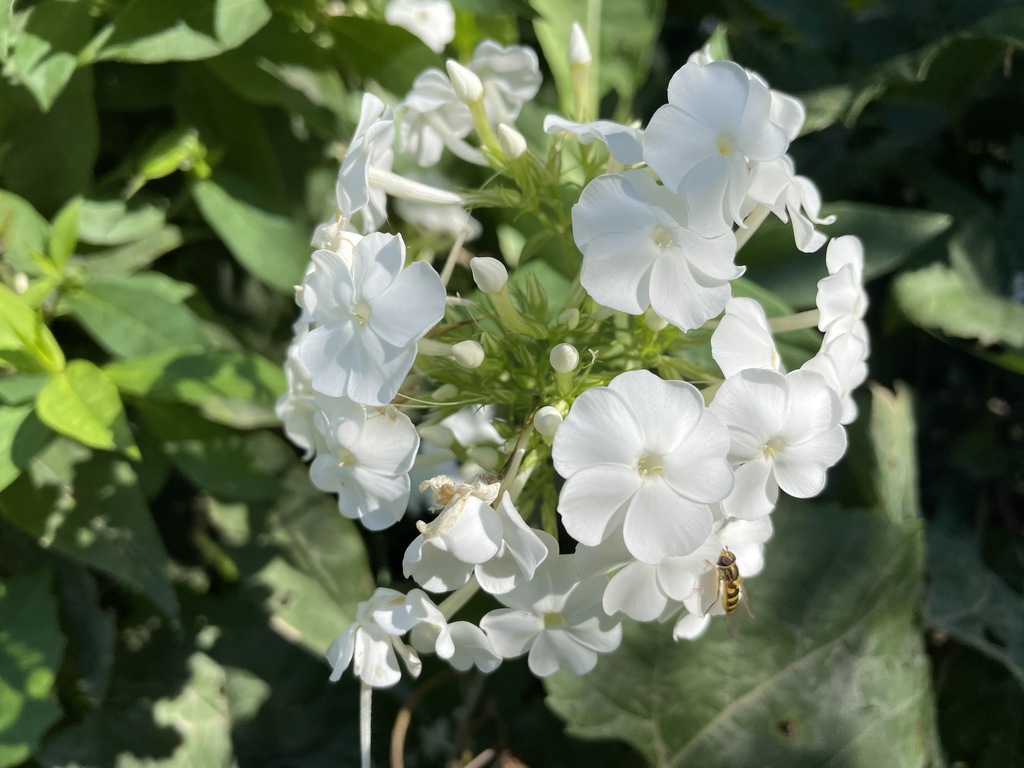
Garden phlox is a classic perennial that brings height and fragrance to the summer garden. It produces large, showy clusters of flowers in shades of pink, purple, and white. These plants are favorites for attracting butterflies and hummingbirds to your yard.
At a glance
- Care level
- Moderate
- Plant type
- Herbaceous perennial
- Light
- Full sun to partial shade
- Indoor light
- Bright indirect
- Water
- Every 3 to 7 days
- Mature size
- 2 to 4 feet tall
- Growth rate
- Medium
- Hardiness
- USDA 4 to 8
- Bloom time
- Mid to late summer
Care
Plant in a spot with good air circulation to prevent powdery mildew on the foliage. Keep the soil consistently moist but not waterlogged to support healthy blooms. Watch for yellowing leaves or white dusty patches, which often signal moisture stress or fungal issues.
- Watering
- Water deeply at the base of the plant to keep the soil evenly moist during the growing season.
- Feeding
- Apply a balanced fertilizer once a month during the spring and early summer.
- Pruning
- Cut the stems back to the ground in late autumn after the foliage has died back.
- Repotting
- Divide the clumps every few years in spring to maintain plant vigor and prevent overcrowding.
- Soil
- Rich, moist, well-draining soil
- Soil pH
- 6.0 to 7.0
- Temperature
- -30 to 35°C
- Humidity
- 40 to 70%
- Drought tolerance
- Moderate
- Lifespan
- Perennial, typically 5 to 10 years.
- Fragrance
- Strong
- Deer and rabbits
- Low
Signs it needs repotting
- Roots growing out of the drainage holes.
- Water sitting on the surface of the soil for too long.
- The plant stops growing even during the active season.
Safety
- People
- The plant is generally considered non-toxic, but ingestion is not recommended.
- Pets
- This plant is generally considered non-toxic to cats and dogs.
- Children
- The stems and leaves are not poisonous, but they are not meant for consumption by children.
- Contact allergens
- Some individuals may experience mild skin irritation from handling the foliage.
- Airborne allergens
- The pollen can be a minor irritant for those with severe seasonal allergies.
- Edibility
- This plant is not considered edible and should not be consumed.
How to identify it
- Large clusters of fragrant tubular flowers
- Opposite lance shaped green leaves
- Sturdy upright stems reaching several feet
- Distinctive eye in center of petals
- Height
- 0.6 to 1.2m
- Spread
- 0.45 to 0.9m
- Leaves
- green, deciduous
- Flowers
- pink, purple, white, red, 2 to 3cm
Problems to watch for
- Powdery MildewCommon
- Spider MitesCommon
- Leaf ScorchUncommon
- Leaf SpotUncommon
- Stem RotUncommon
- Root RotRare
By symptom
Check your garden phlox from a photo
Pocket Botanist looks at a photo of your plant and tells you what's wrong and what to try first.
Growing it
- Propagation
- division, cuttings, seed
- When to plant
- spring, autumn
- Overwintering
- Cut the stems back to the ground after the first hard frost to prevent disease overwintering. Apply a light layer of mulch if you live in a very cold climate.
- In containers
- It can grow in large pots, but ensure the container is at least 12 inches wide to accommodate the root system.
Division
- Dig up the clump in early spring or fall.
- Use a sharp spade to divide the root ball into smaller sections.
- Replant the divisions at the same depth they were previously growing.
Planting in groups improves air circulation and creates a stronger visual impact.
Grows well with
- Coneflower — They share similar light and moisture requirements.
- Daylily — The contrasting foliage textures look lovely together.
Similar species
- Creeping Phlox — It is a low growing groundcover version of the genus.
Science
- Family
- Polemoniaceae
- Genus
- Phlox
- Order
- Ericales
- Class
- Magnoliopsida
- Native range
- Eastern and central North America.
- Conservation
- This species is common and not of conservation concern.
It thrives in moist, fertile meadows and open woodlands where it competes for light.
- Value to wildlife
- nectar source
- Pollinators
- bees, butterflies, moths, hummingbirds
- Uses
- ornamental border, cut flowers, pollinator gardens
Through the year
Ecological indicators
- Soil reaction
- 6/9
- Light
- 7/9
- Temperature
- 5/9
- Moisture
- 6/9
- Salinity
- 1/9
- Nutrients
- 6/9
Taxonomy resolved against GBIF.
Questions people ask
- How do I stop powdery mildew?
- Ensure good air circulation and water at the base of the plant.
- Should I deadhead?
- Yes, deadheading encourages a second flush of blooms.
Where the name comes from
Phlox is Greek for flame, referring to the vibrant flower colors, while paniculata describes the panicled flower clusters.
Good to know
- The name Phlox comes from the Greek word for flame.
- These flowers are famous for their sweet, clove-like scent.
- They are a favorite choice for traditional cottage gardens.
Keep your garden phlox growing
This page is a general guide. Save your plant in Pocket Botanist and you get care reminders timed for this plant, plus a care history that shows what worked.
This guide was generated with AI and checked against GBIF taxonomy. It is general information, not horticultural or veterinary advice. Read about how we build these guides.