 Pocket Botanist
Guide botanique
Phlox de jardin.
Phlox paniculata
Prononciation floks pan-ik-yoo-LAY-tuh
Aussi appelée Phlox d'automne, Phlox rose d'automne, Phlox de jardin, Phlox paniculé, Phlox vivace, Phlox rose vivace, Phlox, Phlox d'été


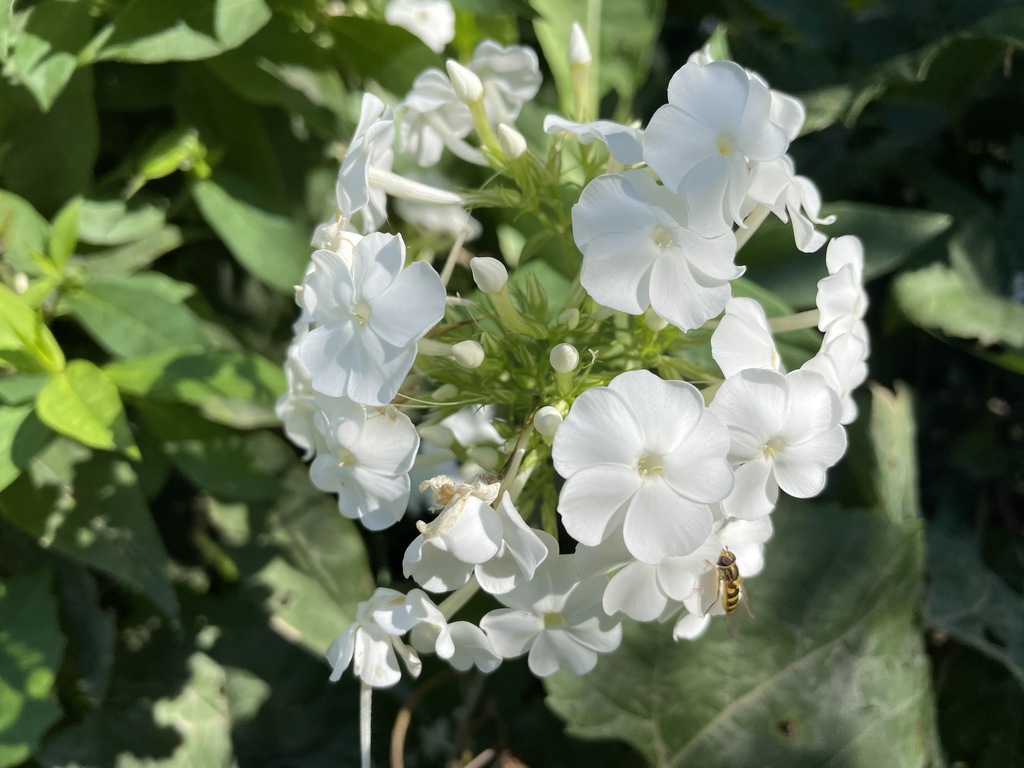
Le phlox de jardin est une plante vivace classique qui apporte hauteur et parfum au jardin d'été. Il produit de grandes grappes de fleurs voyantes dans des tons de rose, de violet et de blanc. Ces plantes sont idéales pour attirer les papillons et les colibris dans votre cour.
En un coup d'œil
- Niveau d'entretien
- Moyenne
- Type de plante
- Vivace herbacée
- Lumière
- Plein soleil à mi-ombre
- Lumière en intérieur
- Lumière vive indirecte
- Arrosage
- Tous les 3 à 7 jours
- Taille adulte
- 2 à 4 pieds de hauteur
- Croissance
- Moyenne
- Rusticité
- USDA 4 à 8
- Floraison
- Milieu à fin de l'été
Entretien
Plantez dans un endroit bien aéré pour éviter l'oïdium sur le feuillage. Gardez le sol constamment humide mais pas détrempé pour favoriser des floraisons saines. Surveillez le jaunissement des feuilles ou les taches poudreuses blanches, qui signalent souvent un stress hydrique ou des problèmes fongiques.
- Arrosage
- Arrosez profondément à la base de la plante pour que le sol soit uniformément humide pendant la saison de croissance.
- Engrais
- Appliquez un engrais équilibré une fois par mois au printemps et au début de l'été.
- Taille
- Coupez les tiges jusqu'au sol à la fin de l'automne, une fois le feuillage fané.
- Rempotage
- Divisez les touffes tous les quelques années au printemps pour maintenir la vigueur de la plante et éviter la surpopulation.
- Sol
- Sol riche, humide, bien drainé
- pH du sol
- 6,0 à 7,0
- Température
- -30 à 35°C
- Humidité
- 40 à 70%
- Résistance à la sécheresse
- Moyenne
- Durée de vie
- Vivace, généralement 5 à 10 ans.
- Parfum
- Fort
- Résistance aux chevreuils et lapins
- Faible
Signes qu'il faut rempoter
- Les racines sortent des trous de drainage.
- L'eau reste trop longtemps à la surface du sol.
- La plante arrête de pousser même pendant la saison active.
Sécurité
- Humains
- La plante est généralement considérée comme non toxique, mais l'ingestion n'est pas recommandée.
- Animaux
- Cette plante est généralement considérée comme non toxique pour les chats et les chiens.
- Enfants
- Les tiges et les feuilles ne sont pas toxiques, mais elles ne sont pas destinées à être consommées par les enfants.
- Allergènes de contact
- Certaines personnes peuvent ressentir une légère irritation cutanée en manipulant le feuillage.
- Allergènes aéroportés
- Le pollen peut être un irritant mineur pour les personnes souffrant d'allergies saisonnières sévères.
- Comestibilité
- Cette plante n'est pas considérée comme comestible et ne doit pas être consommée.
Comment l'identifier
- Grandes grappes de fleurs tubulaires parfumées
- Feuilles vertes lancéolées opposées
- Tiges robustes dressées atteignant plusieurs pieds
- Œil distinctif au centre des pétales
- Hauteur
- 0,6 à 1,2m
- Envergure
- 0,45 à 0,9m
- Feuilles
- vert, caduc
- Fleurs
- rose, violet, blanc, rouge, 2 à 3cm
Problèmes à surveiller
- OïdiumCourant
- TétranyquesCourant
- Brûlures du feuillagePeu courant
- Pourriture de la tigePeu courant
- Taches foliairesPeu courant
- Pourriture des racinesRare
Par symptôme
Vérifie la santé de ta plante en photo
Pocket Botanist analyse une photo de ta plante et te dit ce qui ne va pas et quoi essayer en premier.
La cultiver
- Multiplication
- division, bouturage, semis
- Quand planter
- printemps, automne
- Hivernage
- Coupez les tiges jusqu'au sol après le premier gel sévère pour éviter la survie de maladies. Appliquez une légère couche de paillis si vous vivez dans un climat très froid.
- En pot
- Elle peut pousser dans de grands pots, mais assurez-vous que le conteneur mesure au moins 30 cm de large pour accueillir le système racinaire.
Division
- Dégagez la touffe au début du printemps ou à l'automne.
- Utilisez une bêche tranchante pour diviser la motte en sections plus petites.
- Replantez les divisions à la même profondeur qu'elles poussaient auparavant.
La plantation en groupes améliore la circulation de l'air et crée un impact visuel plus fort.
Bonnes associations
- Échinacée pourpre — Elles partagent des exigences similaires en matière de lumière et d'humidité.
- Hémérocalle — Les textures contrastées du feuillage sont magnifiques ensemble.
Espèces similaires
- Phlox subulata — C'est une version rampante et basse du genre.
Science
- Famille
- Polemoniaceae
- Genre
- Phlox
- Ordre
- Ericales
- Classe
- Magnoliopsida
- Région d'origine
- Est et centre de l'Amérique du Nord.
- Préservation
- Cette espèce est commune et ne fait pas l'objet de préoccupations de conservation.
Il prospère dans les prairies humides et fertiles et les bois ouverts où il concurrence la lumière.
- Intérêt pour la faune
- source de nectar
- Pollinisateurs
- abeilles, papillons, papillons de nuit, colibris
- Utilisations
- bordure ornementale, fleurs coupées, jardins pour pollinisateurs
Au fil des saisons
Repères écologiques
- Réaction du sol
- 6/9
- Lumière
- 7/9
- Température
- 5/9
- Humidité
- 6/9
- Salinité
- 1/9
- Nutriments
- 6/9
Taxonomie vérifiée avec le GBIF.
Ce qu'on demande souvent
- Comment puis-je arrêter l'oïdium ?
- Assurez une bonne circulation de l'air et arrosez au pied de la plante.
- Dois-je supprimer les fleurs fanées ?
- Oui, la suppression des fleurs fanées encourage une seconde floraison.
D'où vient le nom
Phlox signifie flamme en grec, faisant référence aux couleurs vives des fleurs, tandis que paniculata décrit les grappes de fleurs panicules.
Bon à savoir
- Le nom Phlox vient du mot grec pour flamme.
- Ces fleurs sont célèbres pour leur parfum doux, rappelant le clou de girofle.
- Elles sont un choix de prédilection pour les jardins de cottage traditionnels.
Garde ta plante en pleine forme
Cette page est un guide général. Enregistre ta plante dans Pocket Botanist et tu reçois des rappels d'entretien adaptés à cette plante, ainsi qu'un historique d'entretien qui montre ce qui a marché.
Ce guide a été généré par IA et vérifié avec la taxonomie du GBIF. Il s'agit d'informations générales, et non de conseils horticoles ou vétérinaires. Découvre comment nous concevons ces guides.