 Pocket Botanist
Guía de plantas
Floc de jardín.
Phlox paniculata
Pronunciación floks pan-ik-yoo-LAY-tuh
También se conoce como Floc de otoño, Floc rosa de otoño, Floc de jardín, Floc en pánico, Floc perenne, Floc perenne rosado, Floc, Floc de verano


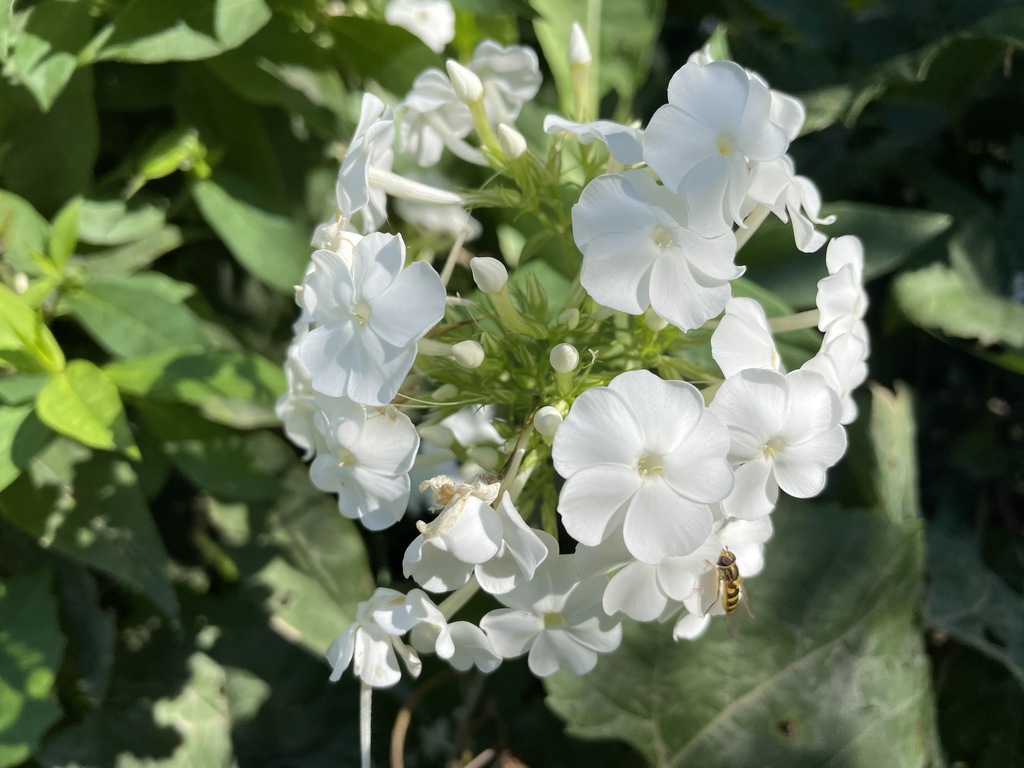
La fucsia de jardín es una planta perenne clásica que aporta altura y fragancia al jardín de verano. Produce grandes y vistosas racimos de flores en tonos rosados, púrpuras y blancos. Estas plantas son ideales para atraer mariposas y colibríes a tu patio.
De un vistazo
- Nivel de cuidados
- Media
- Tipo de planta
- Planta perenne herbácea
- Luz
- Pleno sol a sombra parcial
- Luz en interior
- Luz indirecta brillante
- Riego
- Cada 3 a 7 días
- Tamaño adulto
- 2 a 4 pies de altura
- Ritmo de crecimiento
- Medio
- Rusticidad
- USDA 4 a 8
- Floración
- Mediados a finales del verano
Cuidados
Planta en un lugar con buena circulación de aire para prevenir el oídio en el follaje. Mantén la tierra constantemente húmeda pero no encharcada para favorecer floraciones saludables. Presta atención a las hojas amarillentas o a parches polvorientos blancos, que a menudo indican estrés por humedad o problemas fúngicos.
- Riego
- Riega profundamente en la base de la planta para mantener la tierra uniformemente húmeda durante la temporada de crecimiento.
- Abonado
- Aplica un fertilizante equilibrado una vez al mes durante la primavera y principios de verano.
- Poda
- Corta los tallos hasta el suelo a finales de otoño, después de que el follaje se haya marchitado.
- Trasplante
- Divide los matas cada pocos años en primavera para mantener la vitalidad de la planta y prevenir el apiñamiento.
- Suelo
- Tierra rica, húmeda y bien drenada
- pH del suelo
- 6.0 a 7.0
- Temperatura
- -30 a 35°C
- Humedad
- 40 a 70%
- Tolerancia a la sequía
- Moderada
- Longevidad
- Perenne, típicamente de 5 a 10 años.
- Fragancia
- Intensa
- Resistencia a ciervos y conejos
- Baja
Señales de que necesita trasplante
- Las raíces crecen por los agujeros de drenaje.
- El agua permanece en la superficie del suelo durante demasiado tiempo.
- La planta deja de crecer incluso durante la temporada activa.
Seguridad
- Personas
- La planta generalmente se considera no tóxica, pero no se recomienda la ingestión.
- Mascotas
- Esta planta generalmente se considera no tóxica para gatos y perros.
- Niños
- Los tallos y las hojas no son venenosos, pero no están destinados al consumo por parte de los niños.
- Alérgenos por contacto
- Algunas personas pueden experimentar irritación leve de la piel al manipular el follaje.
- Alérgenos en el aire
- El polen puede ser un irritante menor para personas con alergias estacionales severas.
- Comestibilidad
- Esta planta no se considera comestible y no debe consumirse.
Cómo identificarla
- Grandes racimos de flores tubulares fragantes
- Hojas verdes opuestas en forma de lanza
- Tallos erguidos y robustos que alcanzan varios pies
- Ojo distintivo en el centro de los pétalos
- Altura
- 0,6 a 1,2m
- Anchura
- 0,45 a 0,9m
- Hojas
- verde, caducifolio
- Flores
- rosa, púrpura, blanco, rojo, 2 a 3cm
Problemas a vigilar
- Araña rojaComún
- OídioComún
- Manchas foliaresPoco común
- Podredumbre del talloPoco común
- Quemadura foliarPoco común
- Podredumbre radicularRara
Por síntoma
Revisa tu floc de jardín con una foto
Pocket Botanist mira una foto de tu planta y te dice qué le pasa y qué probar primero.
Cómo cultivarla
- Propagación
- división, esquejes, semilla
- Cuándo plantar
- primavera, otoño
- Cuidados en invierno
- Corta los tallos hasta el suelo después de la primera helada fuerte para prevenir la hibernación de enfermedades. Aplica una capa ligera de mantillo si vives en un clima muy frío.
- En maceta
- Puede crecer en macetas grandes, pero asegúrate de que el contenedor tenga al menos 12 pulgadas de ancho para acomodar el sistema radicular.
División
- Desentierra el cepellón a principios de primavera u otoño.
- Usa una pala afilada para dividir el cepellón en secciones más pequeñas.
- Trasplanta las divisiones a la misma profundidad a la que crecían anteriormente.
Plantar en grupos mejora la circulación del aire y crea un impacto visual más fuerte.
Buenas compañeras
- Equinácea morada — Comparten requisitos de luz y humedad similares.
- Lirio de día — Las texturas contrastantes del follaje se ven encantadoras juntas.
Especies parecidas
- Phlox subulata — Es una versión de crecimiento bajo de cubierta de tierra del género.
Ciencia
- Familia
- Polemoniaceae
- Género
- Phlox
- Orden
- Ericales
- Clase
- Magnoliopsida
- Distribución natural
- Este y centro de América del Norte.
- Conservación
- Esta especie es común y no es de preocupación de conservación.
Prospera en prados húmedos y fértiles y en bosques abiertos donde compite por la luz.
- Valor para la fauna
- fuente de néctar
- Polinizadores
- abejas, mariposas, polillas, colibríes
- Usos
- borde ornamental, flores cortadas, jardines para polinizadores
A lo largo del año
Indicadores ecológicos
- Reacción del suelo
- 6/9
- Luz
- 7/9
- Temperatura
- 5/9
- Humedad
- 6/9
- Salinidad
- 1/9
- Nutrientes
- 6/9
Taxonomía cotejada con GBIF.
Lo que más preguntan
- ¿Cómo detengo el oídio?
- Asegúrate de que haya buena circulación de aire y riega en la base de la planta.
- ¿Debo quitar las flores marchitas?
- Sí, quitar las flores marchitas fomenta una segunda oleada de floraciones.
De dónde viene el nombre
Phlox es griego para llama, refiriéndose a los vibrantes colores de las flores, mientras que paniculata describe los racimos de flores en pánico.
Bueno saberlo
- El nombre Phlox proviene de la palabra griega para llama.
- Estas flores son famosas por su dulce aroma, similar al clavo.
- Son una opción favorita para los jardines tradicionales de tipo cabaña.
Que tu floc de jardín siga creciendo
Esta página es una guía general. Guarda tu planta en Pocket Botanist y tendrás recordatorios de cuidado pensados para esta planta, además de un historial de cuidados que muestra qué ha funcionado.
Esta guía se ha generado con IA y se ha cotejado con la taxonomía de GBIF. Es información general, no asesoramiento botánico ni veterinario. Descubre cómo elaboramos estas guías.