 Pocket Botanist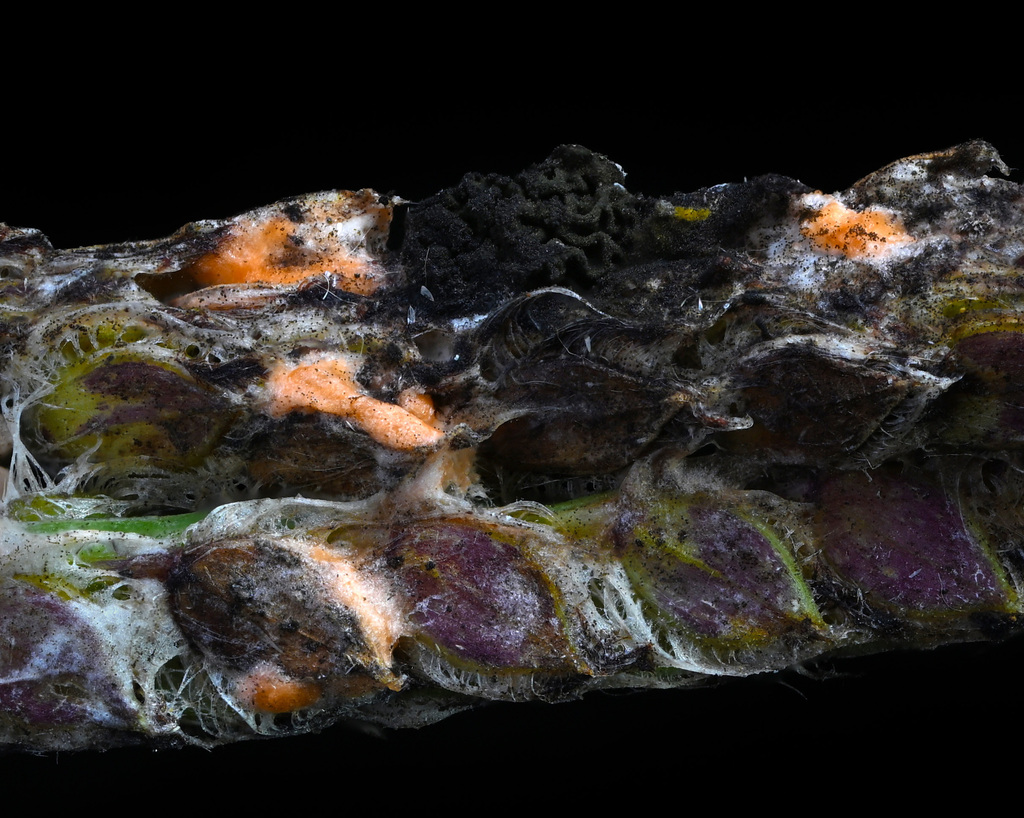
Symptoms by part
Stems
You will see dark, water soaked lesions near the soil line that eventually turn soft, mushy, or discolored. In advanced stages, the stem may collapse entirely or show fuzzy fungal growth.
Causes
- Consistently wet or waterlogged soil
- Poor air circulation around the base of the plant
- High humidity levels
- Overcrowding that traps moisture against the stems
- Wounds on the stem from tools or pests that allow fungi to enter
Could be confused with
- Root Rot · Root rot shows decay starting below the soil surface, while stem rot is primarily visible on the stem above the soil line.
- Bacterial Wilt · Bacterial wilt causes sudden wilting without the mushy, discolored lesions on the stem that characterize fungal stem rot.
Treatment
- Isolate the affected plant immediately to prevent the fungus from reaching healthy neighbors.
- Cut away any visibly rotted or mushy sections of the stem using a clean, sharp blade, ensuring you cut into healthy tissue.
- Remove and discard all infected plant debris and the top inch of soil around the base to reduce the fungal load.
- Repot the plant into a fresh, well draining potting mix if it is in a container.
- Reduce watering frequency to allow the soil surface to dry out completely between waterings.
Without chemicals
- Improve air circulation by spacing plants further apart.
- Use a fan to increase airflow if the plants are indoors.
- Switch to bottom watering to keep the stems and foliage dry.
- Use a rain cover or move container plants under shelter during prolonged wet weather.
Chemical options
- Tebuconazole, apply as a soil drench or spray to the base of the plant, follow the label.
- Triticonazole, apply as a soil drench or spray to the base of the plant, follow the label.
Preventing it
- Always use sterile, well draining soil mixes.
- Avoid splashing water onto the stems when watering.
- Ensure pots have adequate drainage holes.
- Clean and disinfect pruning tools between every cut to avoid spreading spores.
Season
The warm growing season, especially during periods of high humidity or frequent rainfall.
Spread risk
Moderate
Severity
High
When to act
Act as soon as you notice soft or discolored patches on the stem. If the rot has already encircled the entire stem or reached the crown, the plant is usually beyond saving and should be removed and destroyed.
Think it's Stem Rot?
This guide covers the general picture. Pocket Botanist looks at your actual plant from a photo and tells you what's really going on, how serious it is, and what to try first. Identification and a health check are free.


Questions people ask
- Can I save a plant if the stem is completely mushy?
- If the rot has moved all the way around the stem, the plant can no longer move water or nutrients and will not recover. It is best to remove it to protect other plants.
- Does stem rot always kill the plant?
- Not always, but it is very aggressive. If you catch it early and remove the infected tissue while keeping the plant dry, there is a good chance it will survive.
Plants it affects
This guide was generated with AI and is general information, not horticultural advice. Read about how we build these guides.