 Pocket Botanist
Plant guide
Mock orange.
Philadelphus
Pronounced fill-uh-DELL-fuss
Also known as mock orange, mock oranges, mock-orange, mock-oranges, mockorange, syringa



Mock orange is a wonderful deciduous shrub known for its incredibly fragrant white flowers that bloom in late spring. It makes a classic addition to any garden, especially near windows or walkways where you can enjoy the scent. These shrubs are quite hardy and bring a lovely, traditional feel to your landscape.
At a glance
- Care level
- Easy
- Plant type
- Deciduous shrub
- Light
- Full sun to partial shade
- Indoor light
- Bright indirect
- Water
- Every 7 to 14 days
- Mature size
- 8 to 12 feet
- Growth rate
- Medium
- Hardiness
- USDA 4 to 8
- Bloom time
- Late spring to early summer
Care
Plant in well draining soil and provide plenty of room for its natural arching habit. Watch for yellowing leaves which might indicate poor drainage or too much shade. Prune immediately after flowering to encourage fresh growth for next year.
- Watering
- Water deeply during dry spells to keep the root zone consistently moist but not soggy.
- Feeding
- Apply a balanced slow release fertilizer in early spring just as new growth begins.
- Pruning
- Prune back flowered stems by one third immediately after the blooms fade.
- Repotting
- If growing in a container, move to a larger pot every few years to refresh the soil.
- Soil
- Well draining loamy soil
- Soil pH
- 6.0 to 7.5
- Temperature
- -25 to 35°C
- Humidity
- 40 to 70%
- Drought tolerance
- Moderate
- Lifespan
- Perennial, typically 15 to 20 years or more.
- Fragrance
- Strong
- Deer and rabbits
- Moderate
Signs it needs repotting
- Roots growing out of the drainage holes.
- Water drains very slowly or not at all.
- Plant dries out much faster than usual.
- Visible salt or mineral buildup on the soil surface.
Safety
- People
- This plant is generally considered non-toxic to humans.
- Children
- The stems are woody and can be sharp if broken, but there is no specific ingestion risk for children.
- Contact allergens
- Some people may experience mild skin irritation from handling the foliage.
- Airborne allergens
- The strong fragrance of the flowers can trigger sensitivities in some individuals.
- Edibility
- The plant is not considered edible and should not be consumed.
How to identify it
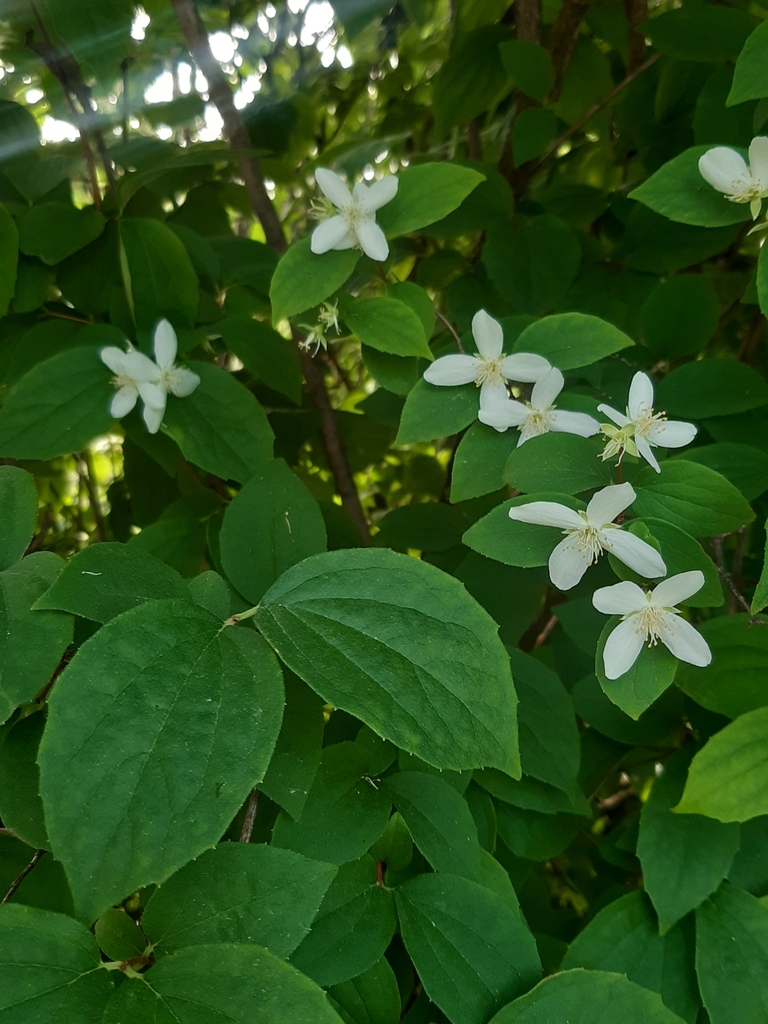
- Fragrant white four petaled flowers
- Opposite simple ovate leaves
- Peeling papery bark on older stems
- Arching woody branches
- Height
- 1.5 to 3m
- Spread
- 1.5 to 2.5m
- Leaves
- green, deciduous
- Flowers
- white, 2 to 5cm
Problems to watch for
- AphidsCommon
- Powdery MildewCommon
- ChlorosisUncommon
- Leaf SpotUncommon
- Root RotUncommon
- Scale InsectsUncommon
By symptom
Check your mock orange from a photo
Pocket Botanist looks at a photo of your plant and tells you what's wrong and what to try first.
Growing it
- Propagation
- cuttings, division
- When to plant
- spring, autumn
- Overwintering
- Mockorange is a hardy shrub that generally does not require special overwintering care. In very cold regions, a layer of mulch around the base can help protect the roots from extreme temperature fluctuations.
- In containers
- Mockorange can be grown in containers, but it prefers a larger pot, at least 15-20 gallons, to accommodate its root system and eventual size.
Softwood Cuttings
- Take 4-6 inch cuttings from new growth in late spring or early summer.
- Remove lower leaves and dip the cut end in rooting hormone.
- Insert cuttings into a moist potting mix.
- Keep consistently moist and provide bright, indirect light.
- Roots should form within 4-6 weeks.
Hardwood Cuttings
- Take 6-10 inch cuttings from dormant, mature wood in late fall or winter.
- Remove lower leaves and side shoots.
- Insert cuttings into a prepared bed of moist sand or potting mix, leaving two buds exposed.
- Keep the medium consistently moist and protect from harsh winter conditions.
- Roots typically form by spring.
Division
- Dig up established clumps in early spring or fall.
- Carefully divide the root ball into sections, ensuring each section has roots and shoots.
- Replant the divisions immediately at the same depth.
- Water thoroughly after planting.
Plant near other spring flowering shrubs to create a succession of color and scent.
Grows well with
Similar species
- Deutzia — They have similar growth habits and white flowers.
Science
- Family
- Hydrangeaceae
- Genus
- Philadelphus
- Order
- Cornales
- Class
- Magnoliopsida
- Native range
- North America, Europe, and Asia.
- Conservation
- This plant is not of conservation concern.
It grows in woodland edges and thickets where it benefits from dappled light and moist, well-draining soil.
- Value to wildlife
- nectar source
- Pollinators
- bees, butterflies
- Uses
- ornamental shrub, fragrant garden addition, hedge plant
Through the year
Ecological indicators
- Salinity
- 2/9
- Soil reaction
- 6/9
- Light
- 6/9
- Moisture
- 5/9
- Nutrients
- 5/9
- Temperature
- 5/9
Taxonomy resolved against GBIF.
Questions people ask
- When should I prune my mock orange?
- Prune immediately after the flowers fade to encourage new growth for next year.
- Does it need full sun?
- It thrives in full sun but will tolerate partial shade.
Where the name comes from
The scientific name Philadelphus comes from the Greek word for brotherly love, while the common name refers to the orange-like scent.
Good to know
- Mock orange flowers are famous for their intense, sweet perfume.
- It was a popular choice in Victorian gardens for its fragrance.
- The genus name Philadelphus honors an ancient Egyptian king.
- These shrubs are very low maintenance once established.
Keep your mock orange growing
This page is a general guide. Save your plant in Pocket Botanist and you get care reminders timed for this plant, plus a care history that shows what worked.
This guide was generated with AI and checked against GBIF taxonomy. It is general information, not horticultural or veterinary advice. Read about how we build these guides.