 Pocket Botanist
Plant guide
Chinese silver grass.
Miscanthus sinensis Andersson
Pronounced mis-KAN-thus si-NEN-sis
Also known as Chinese Silvergrass, Chinese fairy grass, Eulalia, Maiden Grass, Maiden Silvergrass, Miscanthus, Susuki Grass, Zebra Grass


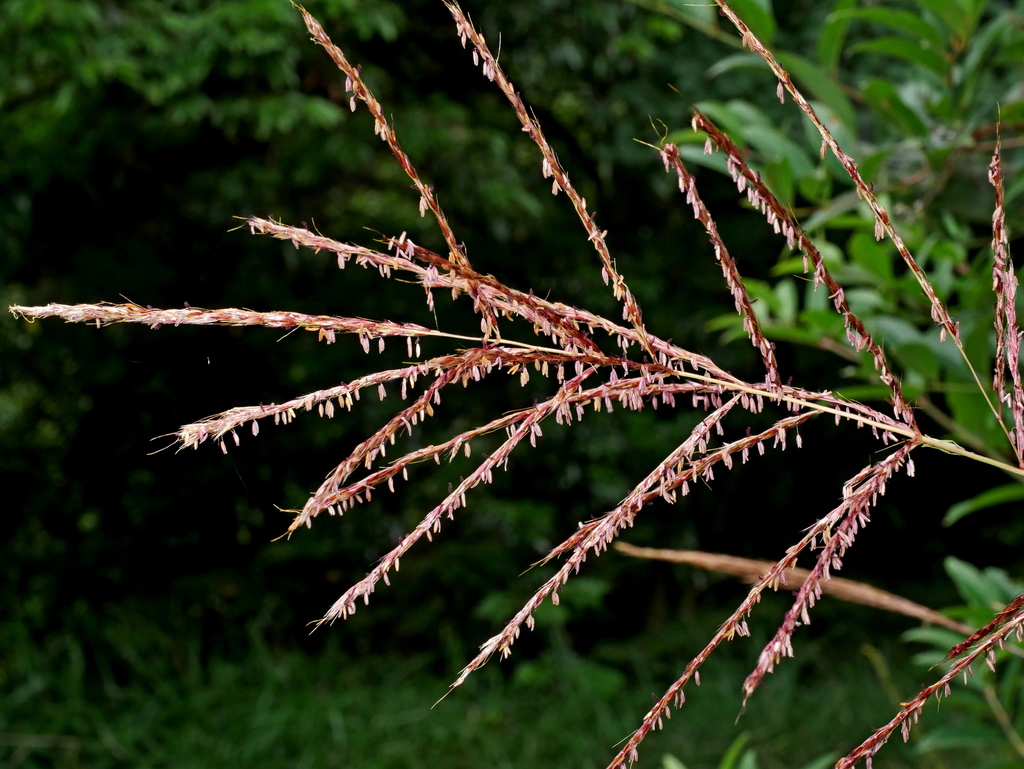
This elegant ornamental grass adds beautiful texture and movement to your garden. It is a clump forming perennial that produces feathery plumes in late summer. It is a great choice for adding height and interest to borders.
At a glance
- Care level
- Easy
- Plant type
- Perennial grass
- Light
- Full sun
- Indoor light
- Direct sun
- Water
- Every 7 to 14 days
- Mature size
- 3 to 10 feet
- Growth rate
- Fast
- Hardiness
- USDA 5 to 9
- Bloom time
- Late summer to mid autumn
Care
Plant this grass in a spot that gets plenty of sun to keep it sturdy. Watch for the foliage to fade in late winter, which is your signal to cut it back. Ensure the soil drains well so the roots stay healthy.
- Watering
- Water deeply during dry spells to keep the plant looking its best.
- Feeding
- Apply a balanced fertilizer once in early spring as new growth begins.
- Pruning
- Cut the foliage down to a few inches above the ground in late winter.
- Repotting
- Divide the clumps every few years to keep the plant vigorous.
- Soil
- Well draining, fertile soil
- Soil pH
- 6.0 to 7.5
- Temperature
- -25 to 35°C
- Humidity
- 40 to 70%
- Drought tolerance
- Moderate
- Lifespan
- Perennial, typically 10 to 20 years.
- Deer and rabbits
- High
Signs it needs repotting
- Roots growing out of the drainage holes
- Water running straight through the soil
- Growth slowing significantly
Safety
- People
- This plant is not considered toxic to humans.
- Children
- The sharp, serrated leaf edges can cause paper-like cuts on children's skin.
- Contact allergens
- The leaf edges can be sharp and may cause minor skin abrasions.
- Airborne allergens
- The plumes release significant amounts of pollen in late summer.
- Edibility
- This plant is not intended for human consumption.
How to identify it
- Arching blade like leaves
- Silvery feathery flower plumes
- Clump forming growth habit
- Leaves turn golden in autumn
- Height
- 1.2 to 3m
- Spread
- 0.6 to 1.5m
- Leaves
- green, silver, variegated, deciduous
- Flowers
- silver, pink, white, copper, 15 to 30cm
Problems to watch for
- RustCommon
- Brown Leaf EdgesUncommon
- DehydrationUncommon
- Leaf SpotUncommon
By symptom
Check your chinese silver grass from a photo
Pocket Botanist looks at a photo of your plant and tells you what's wrong and what to try first.
Growing it
- Propagation
- division, seed
- When to plant
- spring, autumn
- Overwintering
- Leave the foliage standing through winter to protect the crown and provide garden interest. Cut the entire plant down to about 15 centimeters in late winter.
- In containers
- It grows well in large containers, but ensure the pot is at least 50 centimeters wide to accommodate the root system.
Division
- Dig up the entire clump in early spring.
- Use a sharp spade to cut the root ball into smaller sections.
- Ensure each section has healthy roots and new shoots.
- Replant immediately in prepared soil.
Pair this grass with late blooming perennials to maintain visual interest throughout the autumn months.
Grows well with
- Coneflower — The bold flower heads contrast beautifully with the fine texture of the grass.
- Sedum — These provide late season color that complements the emerging grass plumes.
- Russian Sage — The airy blue flowers look stunning against the tall, arching blades of the grass.
Similar species
- Switchgrass — A native alternative that offers similar height and winter structure.
- Feather Reed Grass — Provides a more upright, vertical form for tighter garden spaces.
Science
- Family
- Poaceae
- Genus
- Miscanthus
- Order
- Poales
- Class
- Liliopsida
- Native range
- Eastern Asia, including China, Japan, and Korea.
- Conservation
- It is considered invasive in several regions of North America, so check local regulations before planting.
It thrives in open, sunny habitats where it can quickly establish large, dense clumps that outcompete smaller vegetation.
- Value to wildlife
- nesting material, winter shelter
- Pollinators
- bees, butterflies
- Uses
- ornamental grass, privacy screen, dried arrangements, winter interest
Through the year
Ecological indicators
- Salinity
- 2/9
- Moisture
- 5/9
- Soil reaction
- 5/9
- Light
- 7/9
- Temperature
- 6/9
- Nutrients
- 4/9
Taxonomy resolved against GBIF.
Questions people ask
- When should I cut it back?
- Wait until late winter or very early spring before new growth emerges.
- Does it need full sun?
- Yes, it performs best with at least six hours of direct sunlight daily.
Where the name comes from
The name Miscanthus is derived from the Greek words mischos, meaning stalk, and anthos, meaning flower. Sinensis indicates its origin in China.
Good to know
- It is commonly known as Maiden Grass.
- The genus name comes from the Greek words for stem and flower.
- It is a popular choice for modern landscape designs.
Also in
Keep your chinese silver grass growing
This page is a general guide. Save your plant in Pocket Botanist and you get care reminders timed for this plant, plus a care history that shows what worked.
This guide was generated with AI and checked against GBIF taxonomy. It is general information, not horticultural or veterinary advice. Read about how we build these guides.