 Pocket Botanist
Guide botanique
herbe de Chine argentée.
Miscanthus sinensis Andersson
Prononciation mis-KAN-thus si-NEN-sis
Aussi appelée Argentine de Chine, herbe de fée chinoise, Eulalie, herbe vierge, herbe argentée vierge, Miscanthus, herbe Susuki, herbe zébrée


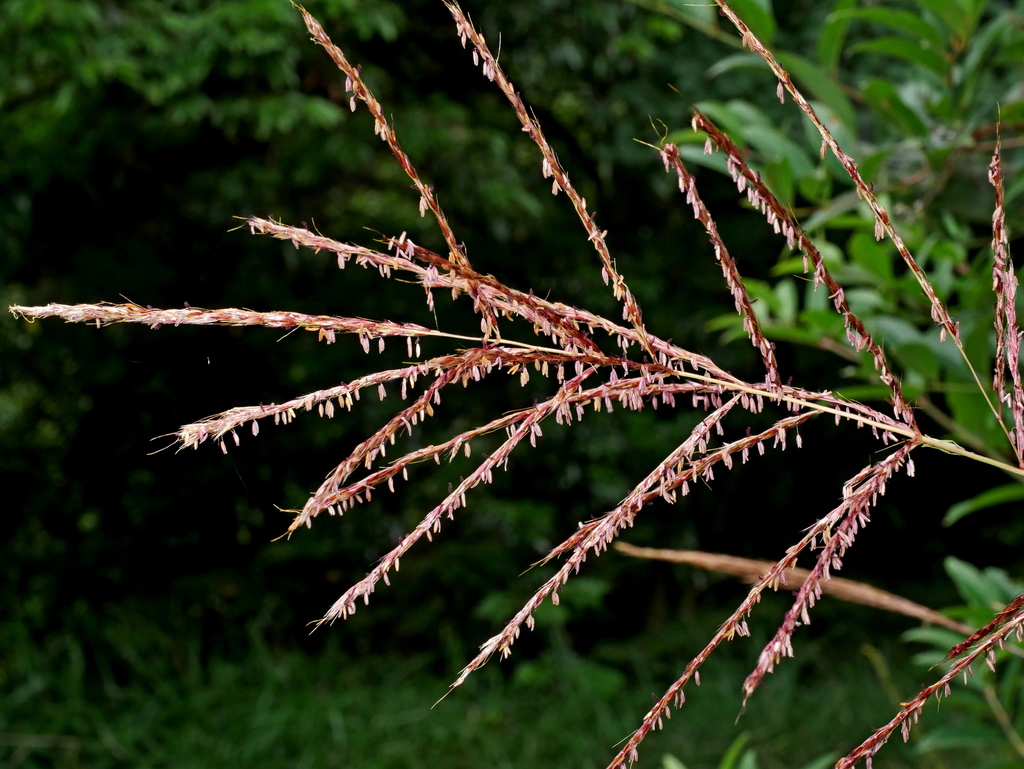
Cette élégante graminée ornementale ajoute une belle texture et du mouvement à votre jardin. C'est une vivace formant des touffes qui produit des panicules plumeuses à la fin de l'été. C'est un excellent choix pour ajouter de la hauteur et de l'intérêt aux bordures.
En un coup d'œil
- Niveau d'entretien
- Facile
- Type de plante
- Herbe vivace
- Lumière
- Plein soleil
- Lumière en intérieur
- Soleil direct
- Arrosage
- Tous les 7 à 14 jours
- Taille adulte
- 3 à 10 pieds
- Croissance
- Rapide
- Rusticité
- USDA 5 à 9
- Floraison
- Fin de l'été à mi-automne
Entretien
Plantez cette herbe dans un endroit ensoleillé pour qu'elle reste vigoureuse. Surveillez le feuillage qui pâlit à la fin de l'hiver, c'est le signal pour le tailler. Assurez-vous que le sol draine bien pour que les racines restent saines.
- Arrosage
- Arrosez abondamment pendant les périodes sèches pour que la plante reste à son meilleur.
- Engrais
- Appliquez un engrais équilibré une fois au début du printemps, lorsque la nouvelle croissance commence.
- Taille
- Taillez le feuillage à quelques centimètres au-dessus du sol à la fin de l'hiver.
- Rempotage
- Divisez les touffes tous les quelques années pour maintenir la vigueur de la plante.
- Sol
- Sol bien drainé et fertile
- pH du sol
- 6.0 à 7.5
- Température
- -25 à 35°C
- Humidité
- 40 à 70%
- Résistance à la sécheresse
- Moyenne
- Durée de vie
- Vivace, généralement de 10 à 20 ans.
- Résistance aux chevreuils et lapins
- Élevée
Signes qu'il faut rempoter
- Les racines sortent des trous de drainage
- L'eau traverse directement le sol
- La croissance ralentit considérablement
Sécurité
- Humains
- Cette plante n'est pas considérée comme toxique pour l'homme.
- Enfants
- Les bords tranchants et dentelés des feuilles peuvent causer des coupures semblables à du papier sur la peau des enfants.
- Allergènes de contact
- Les bords des feuilles peuvent être coupants et provoquer de légères abrasions cutanées.
- Allergènes aéroportés
- Les panicules libèrent des quantités importantes de pollen à la fin de l'été.
- Comestibilité
- Cette plante n'est pas destinée à la consommation humaine.
Comment l'identifier
- Feuilles arquées en forme de lame
- Panicules florales argentées et plumeuses
- Habitude de croissance en touffe
- Les feuilles deviennent dorées en automne
- Hauteur
- 1,2 à 3m
- Envergure
- 0,6 à 1,5m
- Feuilles
- vert, argenté, panaché, caduc
- Fleurs
- argenté, rose, blanc, cuivré, 15 à 30cm
Problèmes à surveiller
- RouilleCourant
- Brunissement du bord des feuillesPeu courant
- DéshydratationPeu courant
- Taches foliairesPeu courant
Par symptôme
Vérifie la santé de ta plante en photo
Pocket Botanist analyse une photo de ta plante et te dit ce qui ne va pas et quoi essayer en premier.
La cultiver
- Multiplication
- division, semis
- Quand planter
- printemps, automne
- Hivernage
- Laissez le feuillage debout pendant l'hiver pour protéger la couronne et offrir un intérêt au jardin. Taillez toute la plante à environ 15 centimètres à la fin de l'hiver.
- En pot
- Elle pousse bien dans de grands conteneurs, mais assurez-vous que le pot mesure au moins 50 centimètres de large pour accueillir le système racinaire.
Division
- Dégagez toute la touffe au début du printemps.
- Utilisez une bêche tranchante pour couper la motte de racines en plus petites sections.
- Assurez-vous que chaque section possède des racines saines et de nouvelles pousses.
- Replantez immédiatement dans un sol préparé.
Associez cette herbe à des plantes vivaces à floraison tardive pour maintenir un intérêt visuel tout au long des mois d'automne.
Bonnes associations
- Échinacée pourpre — Les grosses têtes florales contrastent magnifiquement avec la texture fine de l'herbe.
- Ice Plant — Ceux-ci fournissent une couleur de fin de saison qui complète les panicules d'herbe naissantes.
- Salvia yangii — Les fleurs bleu aérien sont magnifiques contre les lames hautes et arquées de l'herbe.
Espèces similaires
- Switchgrass — Une alternative indigène qui offre une hauteur et une structure hivernale similaires.
- Calame grass — Fournit une forme plus droite et verticale pour les espaces de jardin plus restreints.
Science
- Famille
- Poaceae
- Genre
- Miscanthus
- Ordre
- Poales
- Classe
- Liliopsida
- Région d'origine
- Asie de l'Est, y compris la Chine, le Japon et la Corée.
- Préservation
- Elle est considérée comme envahissante dans plusieurs régions d'Amérique du Nord, alors vérifiez la réglementation locale avant de planter.
Elle prospère dans les habitats ouverts et ensoleillés où elle peut rapidement former de grandes touffes denses qui surpassent la végétation plus petite.
- Intérêt pour la faune
- matériau de nidification, abri hivernal
- Pollinisateurs
- abeilles, papillons
- Utilisations
- herbe ornementale, écran d'intimité, arrangements séchés, intérêt hivernal
Au fil des saisons
Repères écologiques
- Salinité
- 2/9
- Humidité
- 5/9
- Réaction du sol
- 5/9
- Lumière
- 7/9
- Température
- 6/9
- Nutriments
- 4/9
Taxonomie vérifiée avec le GBIF.
Ce qu'on demande souvent
- Quand dois-je la tailler ?
- Attendez la fin de l'hiver ou le tout début du printemps, avant que la nouvelle croissance n'apparaisse.
- A-t-elle besoin de plein soleil ?
- Oui, elle se porte mieux avec au moins six heures de soleil direct par jour.
D'où vient le nom
Le nom Miscanthus vient des mots grecs mischos, signifiant tige, et anthos, signifiant fleur. Sinensis indique son origine en Chine.
Bon à savoir
- Elle est communément appelée Herbe de la Vierge.
- Le nom du genre vient des mots grecs pour tige et fleur.
- C'est un choix populaire pour les aménagements paysagers modernes.
Aussi dans
Garde ta plante en pleine forme
Cette page est un guide général. Enregistre ta plante dans Pocket Botanist et tu reçois des rappels d'entretien adaptés à cette plante, ainsi qu'un historique d'entretien qui montre ce qui a marché.
Ce guide a été généré par IA et vérifié avec la taxonomie du GBIF. Il s'agit d'informations générales, et non de conseils horticoles ou vétérinaires. Découvre comment nous concevons ces guides.