 Pocket Botanist
Plant guide
Lion's Ear.
Leonotis leonurus
Pronounced lee-oh-NO-tis lee-oh-NOO-rus
Also known as Cape Hemp, Common Lion's Ear, Common Lionspaw, Leonotis, Lion's ear, Lion's tail, Narrow-Leaved Leonotis, Narrow-leaved Minaret Flower


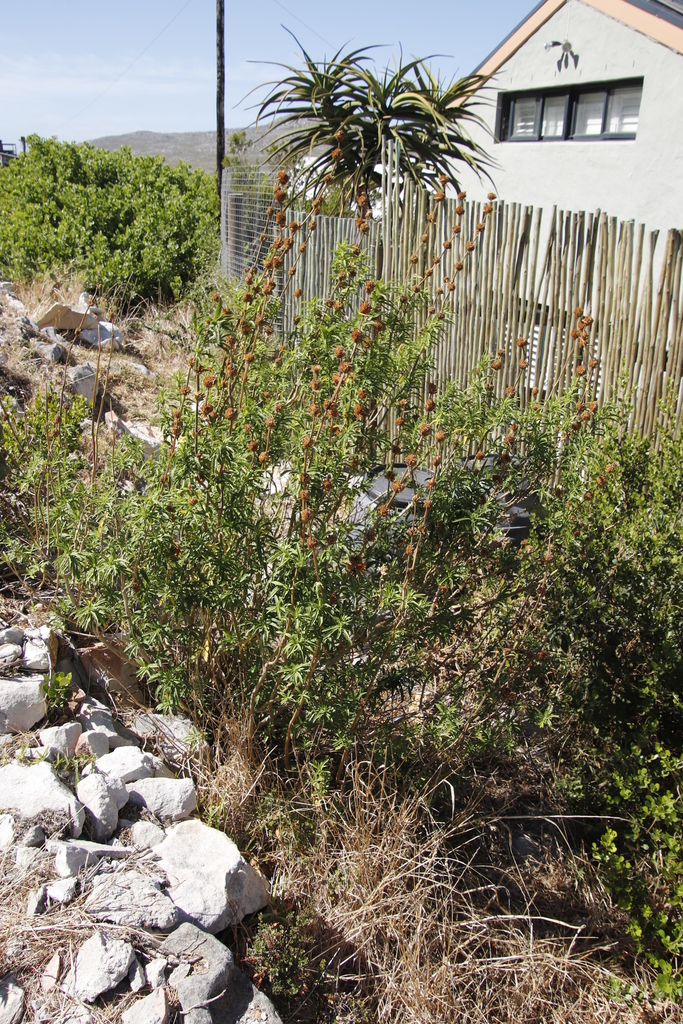
Lion's ear is a striking shrub known for its unique, fuzzy orange flowers that resemble a lion's mane. It thrives in warm climates and attracts pollinators like bees and butterflies to the garden. This plant brings a bold, architectural look to any sunny landscape.
At a glance
- Care level
- Easy
- Plant type
- Evergreen shrub
- Light
- Full sun
- Indoor light
- direct
- Water
- Every 7 to 14 days
- Mature size
- 2 to 3 meters
- Growth rate
- fast
- Hardiness
- USDA 8 to 11
- Bloom time
- Late summer to autumn
Care
Plant in well-draining soil and provide plenty of sun to encourage heavy blooming. Prune back hard after flowering to keep the plant tidy and promote vigorous growth for the next season. Watch for aphids or whiteflies during dry spells.
- Watering
- Allow the soil to dry out significantly between waterings as this plant is quite drought tolerant once established.
- Feeding
- Apply a balanced liquid fertilizer during the active growing season to support flower production.
- Pruning
- Cut the stems back to the ground or by half after the flowering period ends to maintain shape.
- Repotting
- Repot in early spring if the plant becomes root bound in its container.
- Soil
- Sandy, loamy, well-draining
- Soil pH
- Neutral to slightly acidic
- Temperature
- -5 to 35°C
- Humidity
- 20 to 50%
- Drought tolerance
- high
- Lifespan
- Perennial, typically 5 to 10 years.
- Deer and rabbits
- high
Signs it needs repotting
- Roots growing out of the drainage holes.
- Water running straight through the pot without soaking in.
- Stunted growth despite regular feeding.
Safety
- People
- All parts of the plant are generally considered non-toxic, but it is not intended for human consumption.
- Pets
- This plant is generally considered non-toxic to cats and dogs.
- Children
- Keep out of reach of small children as the dried stems can be brittle and sharp if broken.
- Contact allergens
- Handling the foliage may cause mild skin irritation in sensitive individuals due to fine hairs.
- Airborne allergens
- The pollen can trigger mild reactions in those with severe seasonal allergies.
- Edibility
- The plant is not considered edible and ingestion may cause gastrointestinal distress.
How to identify it
- Whorls of tubular orange flowers
- Fuzzy, velvety flower texture
- Narrow, serrated green leaves
- Tall, square, woody stems
- Height
- 1.5 to 3m
- Spread
- 1 to 2m
- Leaves
- green, evergreen
- Flowers
- orange, 3 to 5cm
Common problems
- Aphids — Small sap-sucking insects that cluster on new growth.
- Whitefly — Tiny white insects that congregate on the undersides of leaves.
Growing it
- Propagation
- cuttings, seed
- When to plant
- spring
- Overwintering
- In areas with frost, move containers indoors or cut the plant back and mulch heavily to protect the roots.
- In containers
- It grows well in large containers of at least 5 gallons, provided the pot has excellent drainage.
Stem Cuttings
- Take a 4 to 6 inch cutting from non-flowering growth.
- Remove the lower leaves to expose the nodes.
- Dip the end in rooting hormone.
- Place in a moist, well-draining potting mix.
- Keep in bright, indirect light until roots form.
Group this plant with other drought-tolerant species that enjoy full sun to ensure consistent care across the bed.
Grows well with
- Salvia — They share similar sun and water requirements while providing a nice contrast in flower form.
- Agapanthus — These plants thrive in the same warm, sunny conditions and offer a different texture.
Similar species
- Leonotis nepetifolia — This species has rounder flower heads compared to the elongated ones of L. leonurus.
Science
- Family
- Lamiaceae
- Genus
- Leonotis
- Order
- Lamiales
- Class
- Magnoliopsida
- Native range
- Southern Africa.
- Conservation
- This species is not currently listed as threatened or endangered in its native habitat.
It grows in open grasslands and rocky slopes where it relies on birds for pollination.
- Value to wildlife
- nectar source
- Pollinators
- bees, butterflies, hummingbirds
- Uses
- ornamental shrub, pollinator garden, cut flowers
Through the year
Ecological indicators
- Salinity
- 3/9
- Soil reaction
- 6/9
- Light
- 8/9
- Temperature
- 7/9
- Moisture
- 4/9
- Nutrients
- 5/9
Taxonomy resolved against GBIF.
Questions people ask
- Does it need full sun?
- Yes, it thrives best in full sun to produce the most vibrant blooms.
- How often should I prune it?
- Prune back hard after flowering to encourage a bushier shape for the next season.
Where the name comes from
The name Leonotis comes from the Greek words for lion and ear, referring to the flower shape, while leonurus means lion-tailed.
Good to know
- It is commonly known as lion's ear because of the fuzzy orange flower clusters.
- The plant can reach heights of 6 to 8 feet in ideal conditions.
- It is a member of the mint family but lacks the typical aromatic foliage.
Is your lion's ear looking unwell?
This page is a general guide. Pocket Botanist diagnoses problems from a photo of your actual plant, works out watering for your light and conditions, and reminds you when care is due.
This guide was generated with AI and checked against GBIF taxonomy. It is general information, not horticultural or veterinary advice. Read about how we build these guides.