 Pocket Botanist
Plant guide
French lavender.
Lavandula stoechas
Pronounced la-VAN-dyoo-la STEE-kas
Also known as French Lavender, Italian lavender, Spanish lavender, topped lavender, wild lavender



Scan with your phone's camera to get the app
Or go to pocketbotanist.app/get on your phone
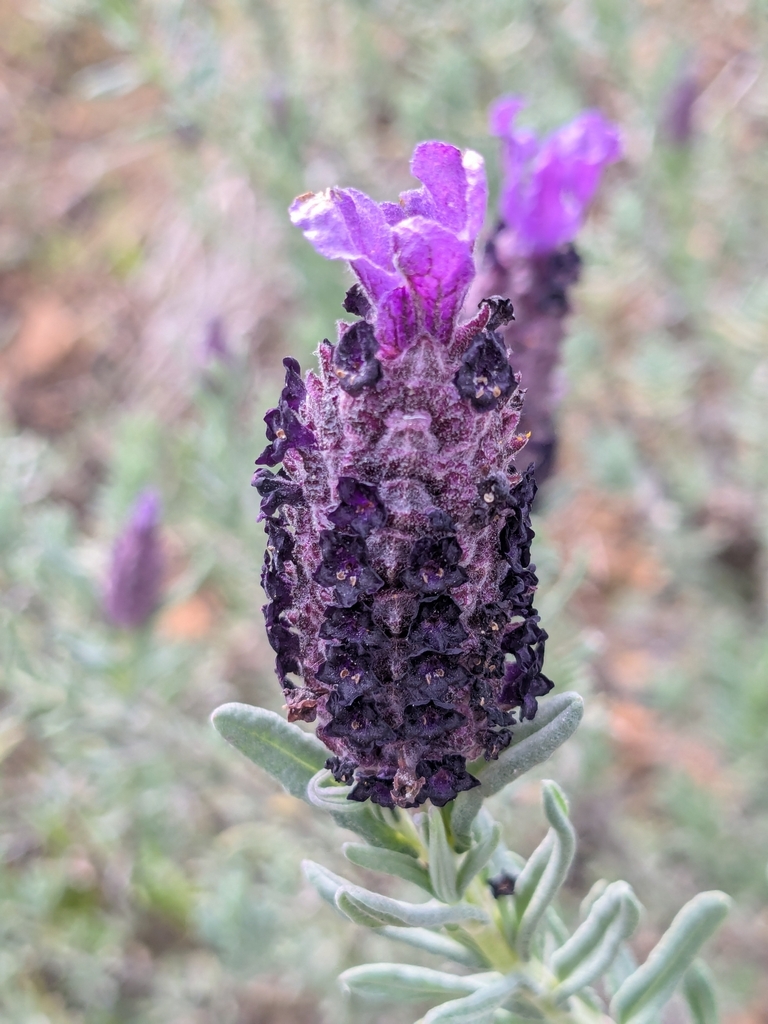
French lavender is a lovely Mediterranean shrub known for its unique, rabbit ear flower heads. It adds a wonderful fragrance and a touch of elegance to any sunny garden spot. You'll find it's quite a cheerful plant that really loves the heat.

At a glance
- Care level
- Moderate
- Plant type
- Evergreen shrub
- Light
- Full sun
- Indoor light
- Direct sun
- Water
- Every 7 to 14 days
- Mature size
- 2 to 3 feet
- Growth rate
- Medium
- Hardiness
- USDA 7 to 9
- Bloom time
- Early to mid spring
Care
Keep this plant in well draining soil to prevent root rot, as it hates sitting in water. Watch for yellowing leaves, which often signal that the soil is staying too wet. It thrives with plenty of airflow and lots of sunshine.
- Watering
- Allow the soil to dry out significantly between waterings.
- Feeding
- Apply a light, balanced fertilizer only during the active growing season.
- Pruning
- Trim back the stems after flowering to keep the plant tidy and encourage new growth.
- Repotting
- Repot only when the plant has clearly outgrown its current container.
- Soil
- Sandy or gritty, well draining soil
- Soil pH
- Slightly acidic to neutral
- Temperature
- -10 to 35°C
- Humidity
- 20 to 50%
- Drought tolerance
- High
- Lifespan
- Perennial, typically 5 to 7 years
- Fragrance
- Strong
- Deer and rabbits
- High
Signs it needs repotting
- Roots growing out of the drainage holes
- Water running straight through the pot without soaking in
- Stunted growth during the active season
Safety
- People
- This plant is generally considered non-toxic to humans.
- Pets
- This plant is generally considered toxic to cats and dogs if ingested.
- Children
- The plant is not considered a significant risk to children, though the stems can be slightly woody and sharp.
- Contact allergens
- Some individuals may experience mild skin irritation from the essential oils in the foliage.
- Airborne allergens
- The pollen can trigger mild reactions in sensitive individuals during the peak flowering season.
- Edibility
- While the flowers are sometimes used in culinary applications, ensure the plant has not been treated with pesticides before consumption.
How to identify it
- Distinctive rabbit ear bracts on flowers
- Narrow, grey green aromatic foliage
- Compact and bushy growth habit
- Small purple flowers in dense spikes
- Height
- 0.3 to 0.6m
- Spread
- 0.3 to 0.6m
- Leaves
- gray-green, evergreen
- Flowers
- purple, pink, white, 2 to 5cm
Problems to watch for
- Root rot · This occurs when the soil remains too wet for too long.
- Leaf spot · Fungal spots appear on leaves in high humidity or poor air circulation.
Check your french lavender from a photo
Pocket Botanist looks at a photo of your plant and tells you what's wrong and what to try first.
Scan with your phone's camera to get the app
Or go to pocketbotanist.app/get on your phone
Growing it
- Propagation
- cuttings, seed
- When to plant
- spring, early autumn
- Overwintering
- Ensure the soil is very well-drained to prevent winter rot. In colder climates, move pots to a sheltered, frost-free location.
- In containers
- It grows very well in pots, provided you use a well-draining potting mix and a container at least 30 cm wide.
Softwood cuttings
- Take 10 cm cuttings from non-flowering shoots in late spring.
- Remove the lower leaves and dip the base in rooting hormone.
- Plant in a sandy, well-draining medium and keep in a bright, cool spot.
Group these plants in a sunny, well-drained area to ensure they all receive the dry conditions they prefer.
Grows well with
Similar species
- English Lavender · It is a more cold-hardy relative with a different flower structure.
Science
- Family
- Lamiaceae
- Genus
- Lavandula
- Order
- Lamiales
- Class
- Magnoliopsida
- Native range
- Mediterranean region
- Conservation
- This plant is not currently listed as endangered or threatened.
It grows in dry, sunny, and rocky habitats where it relies on its drought tolerance to survive summer heat.
- Value to wildlife
- nectar source
- Pollinators
- bees, butterflies
- Uses
- ornamental border, container plant, pollinator garden, dried flower arrangements
Through the year
Ecological indicators
- Salinity
- 2/9
- Soil reaction
- 6/9
- Light
- 8/9
- Temperature
- 7/9
- Moisture
- 2/9
- Nutrients
- 2/9
Taxonomy resolved against GBIF.
Questions people ask
- Does it need pruning?
- Yes, prune lightly after flowering to maintain a compact shape and prevent woody stems.
- Can I grow it in a pot?
- It thrives in containers as long as the drainage is excellent.
Where the name comes from
The genus name Lavandula comes from the Latin lavare, meaning to wash, while stoechas refers to the Stoechades islands where it was historically found.
Good to know
- It is also known as Spanish lavender or French lavender.
- The flowers are highly fragrant and retain their scent well when dried.
- It prefers poorer, rocky soils rather than rich, fertile ones.
Also in
Keep your french lavender growing
This page is a general guide. Save your plant in Pocket Botanist and you get care reminders timed for this plant, plus a care history that shows what worked.
Scan with your phone's camera to get the app
Or go to pocketbotanist.app/get on your phone
This guide was generated with AI on and checked against GBIF taxonomy. It is general information, not horticultural or veterinary advice. Read about how we build these guides.