 Pocket Botanist
Plant guide
Polka Dot Plant.
Hypoestes phyllostachya
Pronounced hy-po-ES-teez fil-lo-STAK-ee-uh
Also known as Freckle Face, Flamingo Plant, Polkadot-Plant, flamingo-plant, freckle-face, measlesplant, pink-dot, polka-dot-plant



Scan with your phone's camera to get the app
Or go to pocketbotanist.app/get on your phone
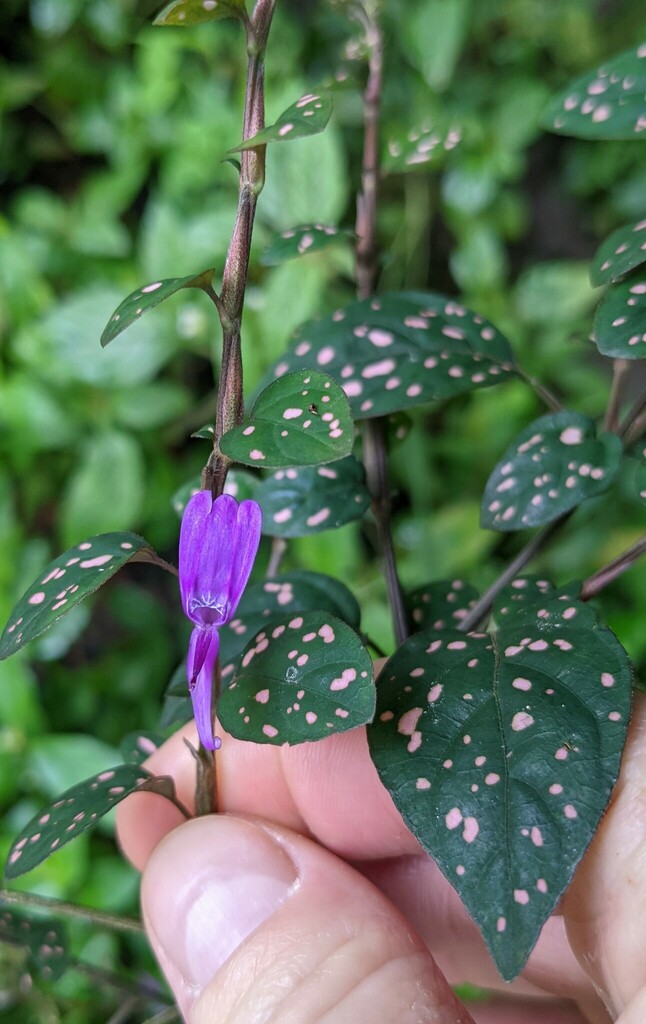
This charming plant is famous for its vibrant, speckled foliage that adds a splash of color to any indoor space. It's a compact grower that loves warmth and consistent moisture. You'll find it's a great choice for terrariums or as a bright windowsill companion.

At a glance
- Care level
- Moderate
- Plant type
- Herbaceous perennial
- Light
- Bright indirect light is best to maintain the intensity of the leaf spots.
- Indoor light
- Bright indirect
- Water
- Every 3 to 7 days
- Mature size
- 30 to 50 cm
- Growth rate
- Medium
- Hardiness
- USDA 10 to 11
- Bloom time
- Late summer to early autumn
Care
Keep the soil consistently moist but never soggy to prevent root rot. If the plant starts looking leggy, pinch back the stems to encourage a bushier shape. Watch for drooping leaves, which is a clear signal that your plant is thirsty.
- Watering
- Water when the top centimeter of soil feels dry to the touch.
- Feeding
- Use a balanced liquid fertilizer diluted to half strength during the growing season.
- Pruning
- Pinch back the growing tips regularly to keep the plant compact and prevent flowering.
- Repotting
- Repot in the spring if the plant becomes root-bound.
- Soil
- Well-draining peat-based potting mix.
- Soil pH
- 6.0 to 7.0
- Temperature
- 15 to 27°C
- Humidity
- 50 to 80%
- Drought tolerance
- Low
- Lifespan
- Perennial, typically 2 to 3 years as a houseplant.
- Deer and rabbits
- Moderate
Signs it needs repotting
- Roots growing out of the drainage holes.
- Water running straight through the soil without soaking in.
- The plant wilts very quickly after watering.
Safety
- People
- The plant is generally considered non-toxic to humans, though ingestion is not recommended.
- Pets
- The polka dot plant is generally considered non-toxic to cats and dogs.
- Children
- The plant is safe for children, but the small leaves could pose a minor choking hazard if placed in the mouth.
- Contact allergens
- There are no known skin irritants associated with this plant.
- Airborne allergens
- The small flowers produce minimal pollen and are not typically a concern for allergy sufferers.
- Edibility
- This plant is not considered edible and may cause stomach upset if ingested.
How to identify it
- Oval shaped leaves with colorful spots
- Colors include pink, red, or white
- Soft, slightly hairy leaf texture
- Small, tubular flowers occasionally appear
- Height
- 0.3 to 0.6m
- Spread
- 0.2 to 0.4m
- Leaves
- green, pink, white, red, evergreen
- Flowers
- lavender, pink, white, 0.5 to 1cm
Problems to watch for
- AphidsCommon
- Brown Leaf EdgesCommon
- Powdery MildewCommon
- Fungus GnatsUncommon
- Leaf DropUncommon
- MealybugsUncommon
- Spider MitesUncommon
- WhiteflyUncommon
Check your polka dot plant from a photo
Pocket Botanist looks at a photo of your plant and tells you what's wrong and what to try first.
Scan with your phone's camera to get the app
Or go to pocketbotanist.app/get on your phone
Growing it
- Propagation
- cuttings, seed
- When to plant
- spring, summer
- Overwintering
- Keep the plant in a warm spot away from cold drafts. Reduce watering slightly during the winter months when growth slows down.
- In containers
- It grows very well in containers and is often used in small pots or mixed arrangements, requiring a minimum 10 cm diameter pot.
Stem Cuttings
- 1. Snip a 10 cm stem cutting just below a leaf node.
- 2. Remove the lower leaves.
- 3. Place the cutting in water or moist potting mix.
- 4. Keep in bright, indirect light until roots form.
Group this plant with others that enjoy high humidity to create a microclimate that keeps leaves from crisping.
Grows well with
- Fern · They share similar requirements for high humidity and indirect light.
- Peace Lily · Both plants enjoy consistent moisture and lower light levels.
Similar species
- Coleus · It offers similar colorful foliage and thrives in comparable conditions.
Science
- Family
- Acanthaceae
- Genus
- Hypoestes
- Order
- Lamiales
- Class
- Magnoliopsida
- Native range
- Madagascar
- Conservation
- This species is not of conservation concern and is widely cultivated.
It grows as an understory plant in tropical forests where it thrives in dappled light and consistent moisture.
- Value to wildlife
- nectar source
- Pollinators
- bees, butterflies
- Uses
- houseplant, container filler, annual bedding
Through the year
Ecological indicators
- Salinity
- 2/9
- Soil reaction
- 6/9
- Light
- 6/9
- Nutrients
- 5/9
- Temperature
- 8/9
- Moisture
- 6/9
Taxonomy resolved against GBIF.
Questions people ask
- Why are my leaves losing their color?
- The plant likely needs more bright, indirect light to maintain its vibrant spots.
- Should I let it flower?
- Most gardeners pinch off the flowers to keep the plant focused on foliage production.
Where the name comes from
The genus name Hypoestes comes from Greek words meaning under and house, referring to the bracts that cover the flowers. The species name phyllostachya refers to its leaf-like spikes.
Good to know
- It is commonly called the polka dot plant due to its speckled foliage.
- The plant will become leggy if it does not receive enough light.
- Regular pinching of the stems encourages a bushier growth habit.
Keep your polka dot plant growing
This page is a general guide. Save your plant in Pocket Botanist and you get care reminders timed for this plant, plus a care history that shows what worked.
Scan with your phone's camera to get the app
Or go to pocketbotanist.app/get on your phone
This guide was generated with AI on and checked against GBIF taxonomy. It is general information, not horticultural or veterinary advice. Read about how we build these guides.