 Pocket Botanist
Guía de plantas
Polka dot plant.
Hypoestes phyllostachya
Pronunciación hy-po-ES-teez fil-lo-STAK-ee-uh
También se conoce como Baby's Tears, Flamingo Plant, Polkadot-Plant, flamingo-plant, freckle-face, measlesplant, pink-dot, polka-dot-plant


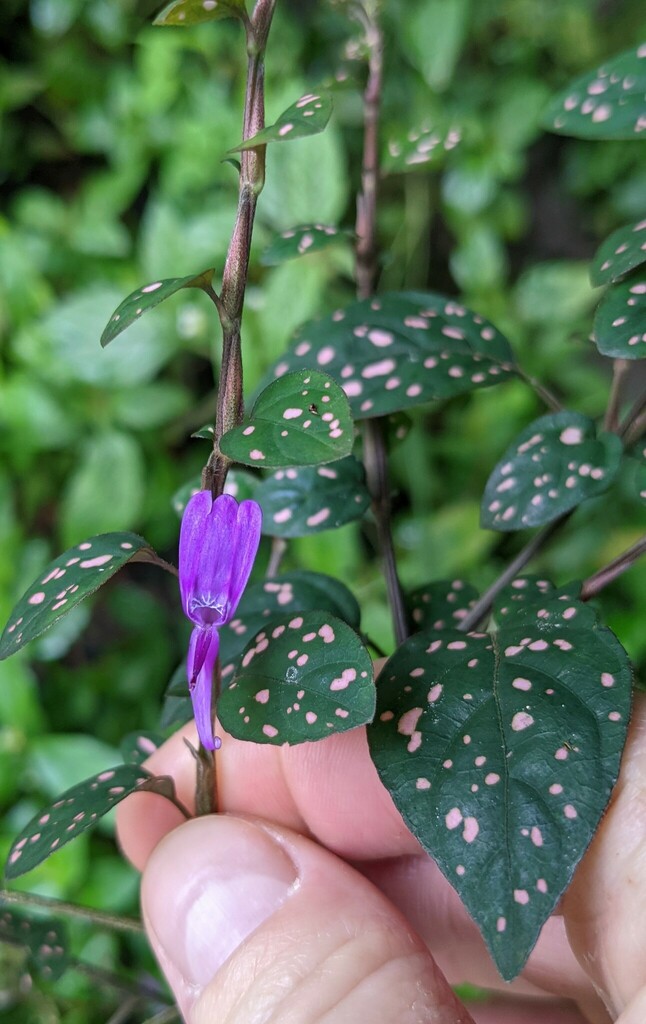
Esta encantadora planta es famosa por su vibrante follaje moteado que añade un toque de color a cualquier espacio interior. Es una planta compacta que ama la calidez y la humedad constante. Te darás cuenta de que es una excelente opción para terrarios o como compañera brillante en el alféizar de una ventana.
De un vistazo
- Care level
- Moderate
- Plant type
- Perenne herbácea
- Light
- La luz indirecta brillante es lo mejor para mantener la intensidad de las manchas de las hojas.
- Indoor light
- bright-indirect
- Water
- Every 3 to 7 days
- Mature size
- 30 a 50 cm
- Growth rate
- medium
- Hardiness
- USDA 10 to 11
- Bloom time
- Finales de verano
Cuidados
Mantén la tierra constantemente húmeda pero nunca empapada para prevenir la pudrición de las raíces. Si la planta empieza a verse alargada, pellizca los tallos para fomentar una forma más frondosa. Observa las hojas caídas, que son una clara señal de que tu planta tiene sed.
- Watering
- Riega cuando los primeros centímetros de tierra se sientan secos al tacto.
- Feeding
- Usa un fertilizante líquido equilibrado diluido a la mitad de su potencia durante la temporada de crecimiento.
- Pruning
- Pellizca las puntas de crecimiento regularmente para mantener la planta compacta y prevenir la floración.
- Repotting
- Trasplanta en primavera si la planta se queda sin espacio en la maceta.
- Soil
- Mezcla de tierra para macetas a base de turba y bien drenada.
- Soil pH
- 6.0 a 7.0
- Temperature
- 15 to 27°C
- Humidity
- 50 to 70%
- Drought tolerance
- low
- Lifespan
- Short lived perennial, often grown as an annual.
- Deer and rabbits
- moderate
Señales de que necesita trasplante
- Roots growing out of the drainage holes.
- Water running straight through the pot without soaking in.
- The plant wilts very quickly after watering.
Seguridad
- People
- This plant is generally considered non-toxic to humans, but it is best to keep it away from curious mouths.
- Pets
- La planta de lunares generalmente se considera no tóxica para gatos y perros.
- Children
- The small leaves could pose a choking hazard if ingested by very young children.
- Edibility
- While not considered highly toxic, it is not meant for human consumption and may cause stomach upset.
Cómo identificarla
- Hojas ovaladas con manchas coloridas
- Los colores incluyen rosa, rojo o blanco
- Textura de hoja suave, ligeramente peluda
- Ocasionalmente aparecen pequeñas flores tubulares
- Height
- 0.2 to 0.5m
- Spread
- 0.2 to 0.4m
- Leaves
- verde, rosa, rojo, blanco, perenne
- Flowers
- lavanda, rosa, 1 to 2cm
Problemas frecuentes
- Aphids — These tiny insects cluster on new growth and suck sap from the leaves.
- Root rot — Overwatering leads to fungal decay of the root system.
- Leggy growth — Insufficient light causes the stems to stretch and lose their compact shape.
Cómo cultivarla
- Propagation
- esquejes, semilla
- When to plant
- primavera
- Overwintering
- Bring the plant indoors if you keep it outside during the summer. Keep it in a warm spot with bright, indirect light and reduce watering slightly.
- In containers
- It grows very well in containers and stays compact in a 4 to 6 inch pot.
Stem cuttings
- Take a 3 to 4 inch cutting from a healthy stem.
- Remove the lower leaves from the cutting.
- Place the stem in water or moist potting mix.
- Keep in a warm, bright area until roots develop.
Group plants with similar water needs together to maintain a consistent microclimate.
Buenas compañeras
- Ferns — They share similar requirements for high humidity and indirect light.
- Peace Lily — Both plants enjoy consistent moisture and lower light conditions.
- Pothos — They make a great visual contrast when grown together in a shared container.
Especies parecidas
- Fittonia — It has similar light and humidity needs but features distinct veined patterns.
Ciencia
- Family
- Acanthaceae
- Genus
- Hypoestes
- Order
- Lamiales
- Class
- Magnoliopsida
- Native range
- Madagascar and parts of Southeast Asia.
- Conservation
- This species is not currently listed as endangered or threatened in its native range.
It thrives in the moist, shaded forest floor where it competes for light beneath the canopy.
- Uses
- indoor ornamental, terrarium plant, seasonal bedding
A lo largo del año
Indicadores ecológicos
- Salinity
- 2/9
- Soil reaction
- 6/9
- Light
- 6/9
- Temperature
- 7/9
- Moisture
- 7/9
- Nutrients
- 5/9
Taxonomía cotejada con GBIF.
Lo que más preguntan
- Why are my plant's leaves turning brown?
- This is often a sign of low humidity or underwatering.
- Does it need direct sunlight?
- No, it prefers bright, indirect light to keep its colors vibrant.
De dónde viene el nombre
The name Hypoestes comes from the Greek words for under and house, referring to the bracts that cover the flowers. Phyllostachya means leaf spike, describing the arrangement of its foliage.
Bueno saberlo
- It is commonly known as the polka dot plant because of its speckled foliage.
- The leaves can come in shades of pink, red, and white.
- It belongs to the Acanthaceae family, which includes many tropical flowering plants.
- Regular pinching of the stems helps keep the plant bushy and full.
¿Tu polka dot plant tiene mal aspecto?
Esta página es una guía general. Pocket Botanist diagnostica problemas a partir de una foto de tu propia planta, calcula el riego según tu luz y tus condiciones, y te avisa cuando toca cuidarla.
Esta guía se ha generado con IA y se ha cotejado con la taxonomía de GBIF. Es información general, no asesoramiento botánico ni veterinario. Descubre cómo elaboramos estas guías.