 Pocket Botanist
Pflanzenratgeber
Polka dot plant.
Hypoestes phyllostachya
Aussprache hy-po-ES-teez fil-lo-STAK-ee-uh
Auch bekannt als Baby's Tears, Flamingo Plant, Polka Dot Plant, flamingo-plant, freckle-face, measlesplant, pink-dot, polka-dot-plant


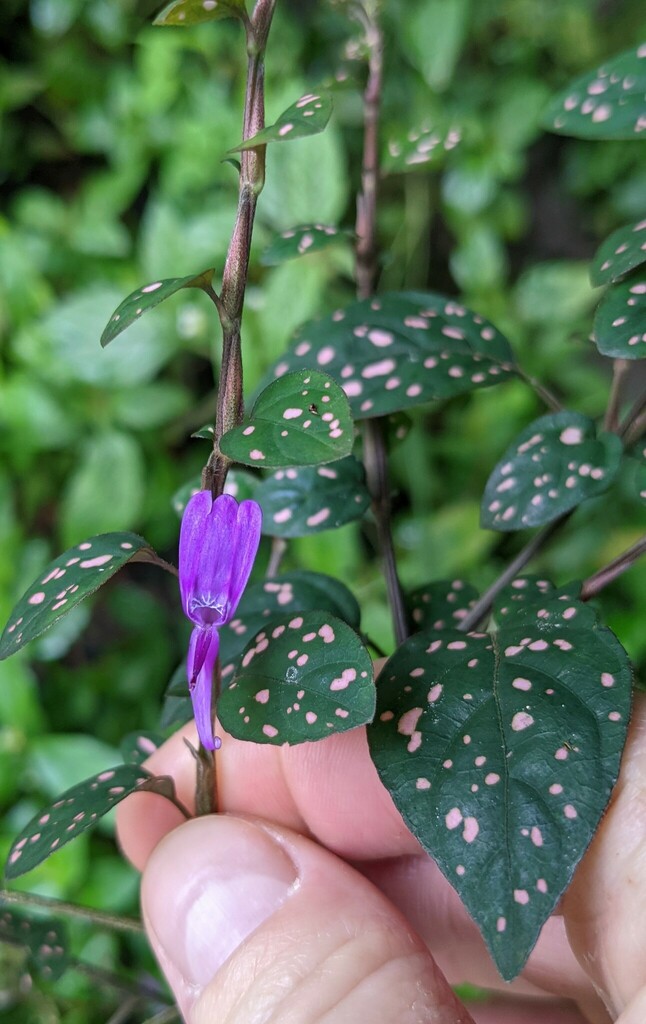
Diese charmante Pflanze ist berühmt für ihr lebhaftes, gesprenkeltes Laub, das jedem Innenraum einen Farbtupfer verleiht. Sie wächst kompakt und liebt Wärme und gleichmäßige Feuchtigkeit. Sie ist eine großartige Wahl für Terrarien oder als Begleiter für ein helles Fensterbrett.
Auf einen Blick
- Care level
- Moderate
- Plant type
- Krautige Staude
- Light
- Helles indirektes Licht ist am besten, um die Intensität der Blattflecken zu erhalten.
- Indoor light
- bright-indirect
- Water
- Every 3 to 7 days
- Mature size
- 30 bis 50 cm
- Growth rate
- medium
- Hardiness
- USDA 10 to 11
- Bloom time
- Spätsommer
Pflege
Halten Sie die Erde gleichmäßig feucht, aber nie nass, um Wurzelfäule zu vermeiden. Wenn die Pflanze langbeinig wird, kneifen Sie die Stiele zurück, um eine buschigere Form zu fördern. Achten Sie auf hängende Blätter, ein klares Zeichen dafür, dass Ihre Pflanze durstig ist.
- Watering
- Gießen Sie, wenn sich die oberste Zentimeterschicht der Erde trocken anfühlt.
- Feeding
- Verwenden Sie während der Wachstumsperiode einen ausgewogenen Flüssigdünger, der auf die halbe Stärke verdünnt ist.
- Pruning
- Kneifen Sie regelmäßig die Wachstumsspitzen zurück, um die Pflanze kompakt zu halten und die Blüte zu verhindern.
- Repotting
- Topfen Sie im Frühling um, wenn die Pflanze stark verwurzelt ist.
- Soil
- Gut durchlässige, torfbasierte Blumenerde.
- Soil pH
- 6,0 bis 7,0
- Temperature
- 15 to 27°C
- Humidity
- 50 to 70%
- Drought tolerance
- low
- Lifespan
- Short lived perennial, often grown as an annual.
- Deer and rabbits
- moderate
Anzeichen fürs Umtopfen
- Roots growing out of the drainage holes.
- Water running straight through the pot without soaking in.
- The plant wilts very quickly after watering.
Sicherheit
- People
- This plant is generally considered non-toxic to humans, but it is best to keep it away from curious mouths.
- Pets
- Die Polka Dot Plant gilt im Allgemeinen als ungiftig für Katzen und Hunde.
- Children
- The small leaves could pose a choking hazard if ingested by very young children.
- Edibility
- While not considered highly toxic, it is not meant for human consumption and may cause stomach upset.
So erkennst du die Pflanze
- Oval geformte Blätter mit bunten Flecken
- Farben umfassen Pink, Rot oder Weiß
- Weiche, leicht behaarte Blattoberfläche
- Kleine, röhrenförmige Blüten erscheinen gelegentlich
- Height
- 0.2 to 0.5m
- Spread
- 0.2 to 0.4m
- Leaves
- grün, pink, rot, weiß, Immergrün
- Flowers
- lavendel, pink, 1 to 2cm
Häufige Probleme
- Aphids — These tiny insects cluster on new growth and suck sap from the leaves.
- Root rot — Overwatering leads to fungal decay of the root system.
- Leggy growth — Insufficient light causes the stems to stretch and lose their compact shape.
Standort und Pflege
- Propagation
- Stecklinge, Samen
- When to plant
- Frühling
- Overwintering
- Bring the plant indoors if you keep it outside during the summer. Keep it in a warm spot with bright, indirect light and reduce watering slightly.
- In containers
- It grows very well in containers and stays compact in a 4 to 6 inch pot.
Stem cuttings
- Take a 3 to 4 inch cutting from a healthy stem.
- Remove the lower leaves from the cutting.
- Place the stem in water or moist potting mix.
- Keep in a warm, bright area until roots develop.
Group plants with similar water needs together to maintain a consistent microclimate.
Gute Pflanzpartner
- Ferns — They share similar requirements for high humidity and indirect light.
- Peace Lily — Both plants enjoy consistent moisture and lower light conditions.
- Pothos — They make a great visual contrast when grown together in a shared container.
Ähnliche Arten
- Fittonia — It has similar light and humidity needs but features distinct veined patterns.
Botanisches
- Family
- Acanthaceae
- Genus
- Hypoestes
- Order
- Lamiales
- Class
- Magnoliopsida
- Native range
- Madagascar and parts of Southeast Asia.
- Conservation
- This species is not currently listed as endangered or threatened in its native range.
It thrives in the moist, shaded forest floor where it competes for light beneath the canopy.
- Uses
- indoor ornamental, terrarium plant, seasonal bedding
Im Jahresverlauf
Ökologische Zeigerwerte
- Salinity
- 2/9
- Soil reaction
- 6/9
- Light
- 6/9
- Temperature
- 7/9
- Moisture
- 7/9
- Nutrients
- 5/9
Taxonomie abgeglichen mit GBIF.
Häufige Fragen
- Why are my plant's leaves turning brown?
- This is often a sign of low humidity or underwatering.
- Does it need direct sunlight?
- No, it prefers bright, indirect light to keep its colors vibrant.
Woher der Name kommt
The name Hypoestes comes from the Greek words for under and house, referring to the bracts that cover the flowers. Phyllostachya means leaf spike, describing the arrangement of its foliage.
Gut zu wissen
- It is commonly known as the polka dot plant because of its speckled foliage.
- The leaves can come in shades of pink, red, and white.
- It belongs to the Acanthaceae family, which includes many tropical flowering plants.
- Regular pinching of the stems helps keep the plant bushy and full.
Geht es deiner polka dot plant nicht gut?
Diese Seite bietet allgemeine Infos. Pocket Botanist erkennt Probleme anhand eines Fotos deiner echten Pflanze, passt das Gießen an dein Licht und deinen Standort an und erinnert dich an die Pflege.
Dieser Ratgeber wurde mit KI erstellt und mit der GBIF-Taxonomie abgeglichen. Er dient zur allgemeinen Information und ersetzt keine gärtnerische oder tierärztliche Beratung. Hier erfährst du, wie wir diese Ratgeber erstellen.