 Pocket Botanist
Plant guide
Reed sweet-grass.
Glyceria maxima
Pronounced glis-ER-ee-uh MAX-ih-muh
Also known as English watergrass, Great Water Grass, Reed Sweet-Grass, Reed mannagrass, giant mannagrass


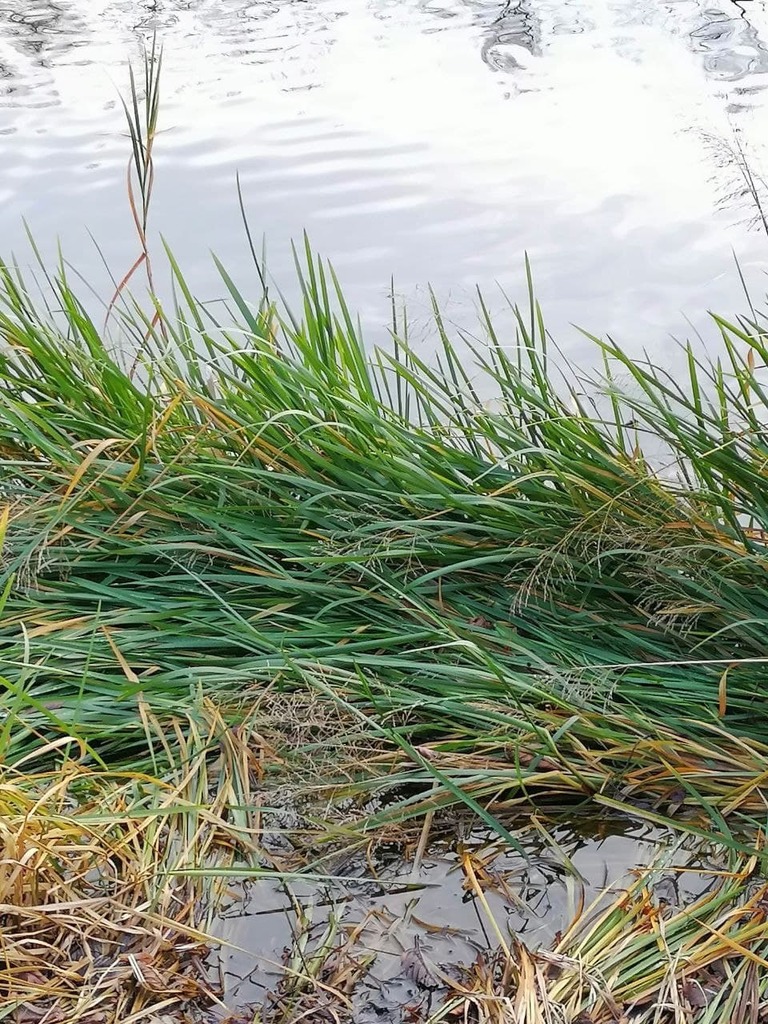
Reed sweet-grass is a robust perennial grass that thrives in wet, marshy environments. It spreads quickly through underground rhizomes to form dense colonies. You will often find it growing along the edges of ponds and slow moving streams.
At a glance
- Care level
- Easy
- Plant type
- Aquatic perennial grass
- Light
- Full sun to partial shade
- Indoor light
- Direct sun
- Water
- Every day
- Mature size
- 8 feet
- Growth rate
- Fast
- Hardiness
- USDA 4 to 9
- Bloom time
- Mid to late summer
Care
Keep the soil consistently saturated or submerged in shallow water to mimic its natural habitat. Watch for excessive spread, as this plant can become invasive in smaller water features. Ensure it has plenty of space to grow without crowding out other aquatic species.
- Watering
- The soil must remain constantly wet or submerged.
- Feeding
- Apply a balanced aquatic fertilizer once during the spring growing season.
- Pruning
- Cut back dead foliage in late winter to make room for new spring growth.
- Repotting
- Divide the rhizomes every two years to prevent the container from becoming overcrowded.
- Soil
- Wet, heavy, or boggy soil
- Soil pH
- 6.0 to 7.5
- Temperature
- -30 to 35°C
- Humidity
- 60 to 100%
- Drought tolerance
- Low
- Lifespan
- Perennial, typically 5 to 10 years.
- Deer and rabbits
- Moderate
Signs it needs repotting
- Roots growing out of the container drainage holes.
- The center of the clump begins to die out.
- Growth slows significantly during the growing season.
Safety
- People
- The plant is generally considered non-toxic but is not suitable for human consumption.
- Children
- The sharp leaf edges can cut small fingers, so keep children away from dense stands.
- Contact allergens
- The leaves have sharp, serrated edges that can cause minor skin abrasions.
- Airborne allergens
- The wind-dispersed pollen can trigger seasonal hay fever in sensitive individuals.
- Edibility
- This plant is not typically consumed by humans and may contain cyanogenic glycosides.
How to identify it
- Tall, reed-like stems
- Bright green, flat leaf blades
- Large, spreading panicle flower heads
- Spreads via creeping rhizomes
- Height
- 1 to 2.5m
- Spread
- 1 to 5m
- Leaves
- bright green, deciduous
- Flowers
- green, purple, 15 to 45cm
- Fruit
- brown, Autumn
Problems to watch for
By symptom
Check your reed sweet-grass from a photo
Pocket Botanist looks at a photo of your plant and tells you what's wrong and what to try first.
Growing it
- Propagation
- division, seed
- When to plant
- spring, autumn
- Overwintering
- The foliage will die back naturally after the first frost. You can trim the dead stalks to the water line in late winter to tidy up the area.
- In containers
- It grows well in pots, but you must use a container without drainage holes and keep it submerged in water.
Division
- 1. Dig up a clump in spring.
- 2. Use a sharp spade to divide the rhizomes.
- 3. Replant immediately in wet soil.
Plant in a bottomless container to keep its aggressive roots from taking over your entire water feature.
Grows well with
- Yellow Flag Iris — They share similar moisture requirements in pond margins.
- Purple Loosestrife — Both thrive in the same wet, boggy soil conditions.
Similar species
- Reed Canary Grass — It occupies a similar ecological niche in wet habitats.
Science
- Family
- Poaceae
- Genus
- Glyceria
- Order
- Poales
- Class
- Liliopsida
- Native range
- Europe and temperate Asia.
- Conservation
- It is considered an invasive weed in many regions outside its native range.
It grows in shallow water and wet meadows, where it outcompetes other vegetation through rapid rhizomatous growth.
- Value to wildlife
- larval host plant, nesting material for birds
- Pollinators
- bees, butterflies
- Uses
- wetland restoration, erosion control, ornamental pond edge
Through the year
Ecological indicators
- Light
- 7/9
- Nutrients
- 7/9
- Salinity
- 2/9
- Soil reaction
- 6/9
- Temperature
- 5/9
- Moisture
- 9/9
Taxonomy resolved against GBIF.
Questions people ask
- Is it safe for pets?
- It is generally safe for livestock to graze, but it can be invasive in pastures.
- Can I grow this in a pot?
- It is best grown in a container submerged in a pond to prevent it from escaping into the garden.
Where the name comes from
The genus name Glyceria comes from the Greek word glykeros, meaning sweet, referring to the taste of the seeds. The specific epithet maxima means largest.
Good to know
- It is also known as reed sweet-grass.
- The stems were once used to make pens in parts of Europe.
- It spreads rapidly through underground rhizomes.
- It thrives in water up to 30 centimeters deep.
Keep your reed sweet-grass growing
This page is a general guide. Save your plant in Pocket Botanist and you get care reminders timed for this plant, plus a care history that shows what worked.
This guide was generated with AI and checked against GBIF taxonomy. It is general information, not horticultural or veterinary advice. Read about how we build these guides.