 Pocket Botanist
Plant guide
Wild Geranium.
Geranium maculatum
Pronounced jeh-RAY-nee-um mack-yoo-LAY-tum
Also known as Spotted Crane's-bill, Spotted Geranium, Wild Crane's-bill, Wild Geranium



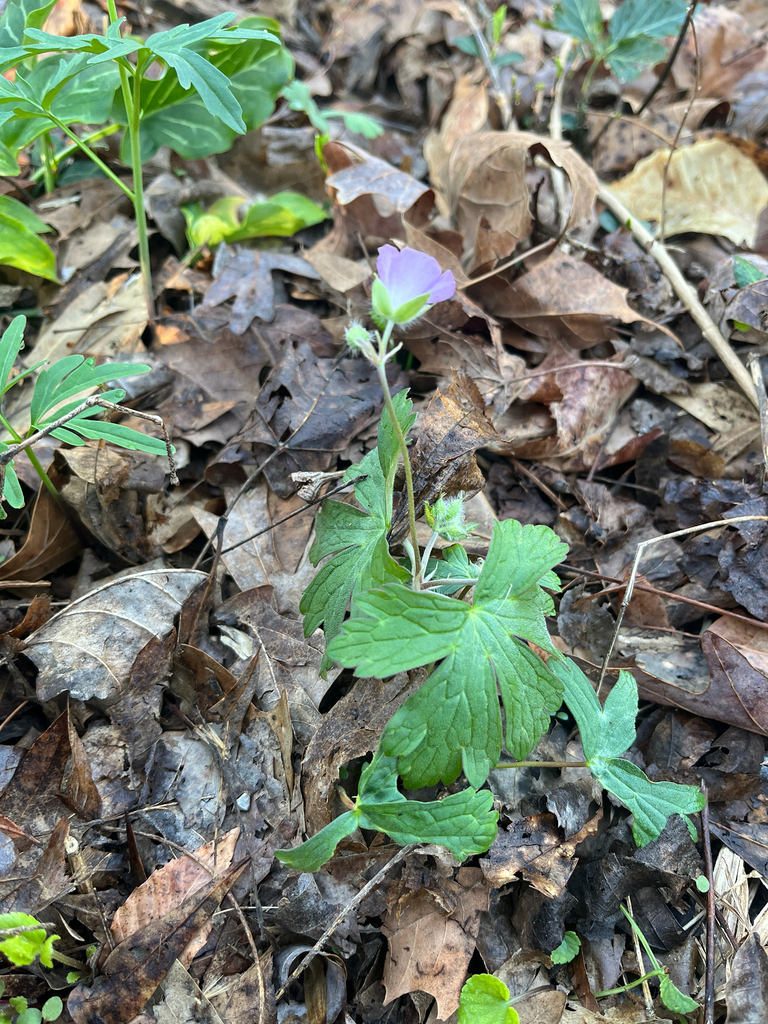
This lovely native wildflower brings a touch of woodland charm to shady garden spots. It produces delicate, five petaled flowers in shades of pink or lavender during the spring. You will find it is a sturdy perennial that settles in quite nicely once established.
At a glance
- Care level
- Easy
- Plant type
- Perennial
- Light
- Partial shade to full shade
- Indoor light
- Medium light
- Water
- Every 5 to 10 days
- Mature size
- 2 feet tall
- Growth rate
- Medium
- Hardiness
- USDA 3 to 8
- Bloom time
- Mid to late spring
Care
Plant this in well draining soil that stays consistently moist but not soggy. Keep an eye out for wilting during dry spells, as it prefers to stay hydrated. Mulching around the base helps keep the roots cool and preserves soil moisture.
- Watering
- Keep the soil evenly moist but avoid letting it sit in standing water.
- Feeding
- A light application of compost in the spring is usually all it needs.
- Pruning
- Trim back the foliage after flowering if the plant starts to look a bit tired.
- Repotting
- Divide the clumps every few years to keep the plant vigorous and healthy.
- Soil
- Rich, moist, well draining soil
- Soil pH
- 6.0 to 7.5
- Temperature
- -35 to 30°C
- Humidity
- 40 to 70%
Safety
- People
- The plant is generally considered non-toxic, though the high tannin content makes it unpalatable.
- Children
- There are no specific safety concerns for children, but it is always best to discourage eating wild plants.
- Contact allergens
- Contact with the foliage may cause mild skin irritation in sensitive individuals.
- Airborne allergens
- The pollen is not considered a significant airborne allergen.
- Edibility
- While historically used in herbal medicine, this plant contains tannins that can cause stomach upset if ingested in quantity.
How to identify it
- Five petaled pink to lavender flowers
- Deeply lobed palm shaped leaves
- Hairy stems and foliage
- Seed pods resembling a cranes bill
- Height
- 0.3 to 0.6m
- Spread
- 0.3 to 0.45m
- Leaves
- green, deciduous
- Flowers
- pink, lavender, white, 2 to 4cm
- Fruit
- brown, Summer
Common problems
- Powdery mildew — A white fungal growth on leaves often caused by poor air circulation.
Growing it
- Propagation
- division, seed
- When to plant
- spring, autumn
Plant in groups of three or more to create a natural drift effect in shade gardens.
Grows well with
Similar species
- Herb Robert — A related species with smaller, more deeply cut leaves.
Science
- Family
- Geraniaceae
- Genus
- Geranium
- Order
- Geraniales
- Class
- Magnoliopsida
- Native range
- Eastern and central North America.
- Conservation
- This plant is common and secure throughout its native range.
It thrives in the understory of deciduous forests where it benefits from spring light before the canopy closes.
- Value to wildlife
- nectar source, early season pollen
- Pollinators
- bees, butterflies, moths
- Uses
- woodland gardens, shade borders, pollinator habitat
Through the year
Ecological indicators
- Salinity
- 1/9
- Soil reaction
- 6/9
- Light
- 4/9
- Temperature
- 4/9
- Moisture
- 5/9
- Nutrients
- 5/9
Taxonomy resolved against GBIF.
Questions people ask
- Does it need full sun?
- It prefers partial shade and performs best in dappled light.
- Is it invasive?
- No, it is a well behaved native perennial that spreads slowly.
Where the name comes from
The genus name Geranium comes from the Greek word geranos, meaning crane, referring to the long beak of the fruit. The species name maculatum means spotted, though the leaves are rarely spotted in the wild.
Good to know
- It is commonly called wild cranesbill because the seed pod resembles a crane's beak.
- It is a classic choice for naturalizing in shady woodland areas.
- The leaves often turn a lovely shade of red in the autumn.
Also in
Is your wild geranium looking unwell?
This page is a general guide. Pocket Botanist diagnoses problems from a photo of your actual plant, works out watering for your light and conditions, and reminds you when care is due.
This guide was generated with AI and checked against GBIF taxonomy. It is general information, not horticultural or veterinary advice. Read about how we build these guides.