 Pocket Botanist
Guía de plantas
Wild Geranium.
Geranium maculatum
Pronunciación jeh-RAY-nee-um mack-yoo-LAY-tum
También se conoce como Spotted Crane's-bill, Spotted Geranium, Wild Crane's-bill, Wild Geranium



This lovely native wildflower brings a touch of woodland charm to shady garden spots. It produces delicate, five petaled flowers in shades of pink or lavender during the spring. You will find it is a sturdy perennial that settles in quite nicely once established.
De un vistazo
- Nivel de cuidados
- Fácil
- Tipo de planta
- Perennial
- Luz
- Partial shade to full shade
- Luz en interior
- Luz media
- Riego
- Cada 5 a 10 días
- Tamaño adulto
- 2 feet tall
- Ritmo de crecimiento
- Medio
- Rusticidad
- USDA 3 a 8
- Floración
- Mid to late spring
Cuidados
Plant this in well draining soil that stays consistently moist but not soggy. Keep an eye out for wilting during dry spells, as it prefers to stay hydrated. Mulching around the base helps keep the roots cool and preserves soil moisture.
- Riego
- Keep the soil evenly moist but avoid letting it sit in standing water.
- Abonado
- A light application of compost in the spring is usually all it needs.
- Poda
- Trim back the foliage after flowering if the plant starts to look a bit tired.
- Trasplante
- Divide the clumps every few years to keep the plant vigorous and healthy.
- Suelo
- Rich, moist, well draining soil
- pH del suelo
- 6.0 to 7.5
- Temperatura
- -35 a 30°C
- Humedad
- 40 a 70%
Seguridad
- Personas
- The plant is generally considered non-toxic, though the high tannin content makes it unpalatable.
- Niños
- There are no specific safety concerns for children, but it is always best to discourage eating wild plants.
- Alérgenos por contacto
- Contact with the foliage may cause mild skin irritation in sensitive individuals.
- Alérgenos en el aire
- The pollen is not considered a significant airborne allergen.
- Comestibilidad
- While historically used in herbal medicine, this plant contains tannins that can cause stomach upset if ingested in quantity.
Cómo identificarla
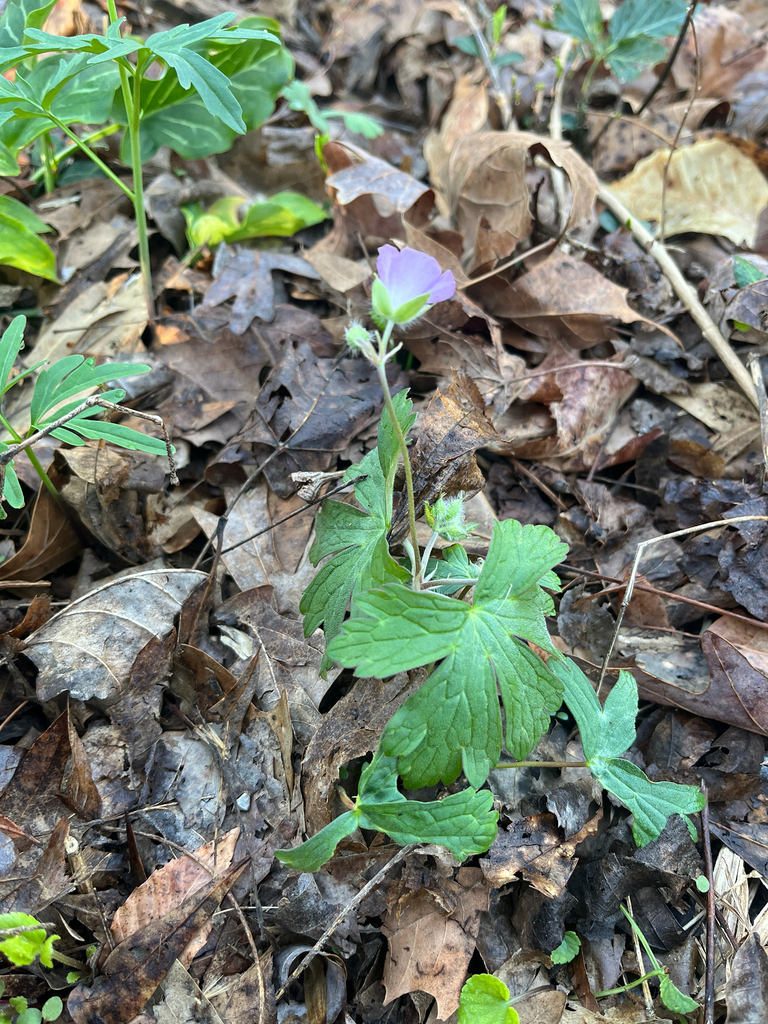
- Five petaled pink to lavender flowers
- Deeply lobed palm shaped leaves
- Hairy stems and foliage
- Seed pods resembling a cranes bill
- Altura
- 0,3 a 0,6m
- Anchura
- 0,3 a 0,45m
- Hojas
- green, deciduous
- Flores
- pink, lavender, white, 2 a 4cm
- Frutos
- brown, Summer
Problemas frecuentes
- Powdery mildew — A white fungal growth on leaves often caused by poor air circulation.
Cómo cultivarla
- Propagación
- division, seed
- Cuándo plantar
- spring, autumn
Plant in groups of three or more to create a natural drift effect in shade gardens.
Buenas compañeras
- aguileña oriental roja — They share similar light and moisture requirements in woodland settings.
- Christmas fern — Ferns provide a beautiful textural contrast to the geranium foliage.
Especies parecidas
- Herb Robert — A related species with smaller, more deeply cut leaves.
Ciencia
- Familia
- Geraniaceae
- Género
- Geranium
- Orden
- Geraniales
- Clase
- Magnoliopsida
- Distribución natural
- Eastern and central North America.
- Conservación
- This plant is common and secure throughout its native range.
It thrives in the understory of deciduous forests where it benefits from spring light before the canopy closes.
- Valor para la fauna
- nectar source, early season pollen
- Polinizadores
- abejas, mariposas, polillas
- Usos
- woodland gardens, shade borders, pollinator habitat
A lo largo del año
Indicadores ecológicos
- Salinidad
- 1/9
- Reacción del suelo
- 6/9
- Luz
- 4/9
- Temperatura
- 4/9
- Humedad
- 5/9
- Nutrientes
- 5/9
Taxonomía cotejada con GBIF.
Lo que más preguntan
- Does it need full sun?
- It prefers partial shade and performs best in dappled light.
- Is it invasive?
- No, it is a well behaved native perennial that spreads slowly.
De dónde viene el nombre
The genus name Geranium comes from the Greek word geranos, meaning crane, referring to the long beak of the fruit. The species name maculatum means spotted, though the leaves are rarely spotted in the wild.
Bueno saberlo
- It is commonly called wild cranesbill because the seed pod resembles a crane's beak.
- It is a classic choice for naturalizing in shady woodland areas.
- The leaves often turn a lovely shade of red in the autumn.
También en
¿Tu wild geranium tiene mal aspecto?
Esta página es una guía general. Pocket Botanist diagnostica problemas a partir de una foto de tu propia planta, calcula el riego según tu luz y tus condiciones, y te avisa cuando toca cuidarla.
Esta guía se ha generado con IA y se ha cotejado con la taxonomía de GBIF. Es información general, no asesoramiento botánico ni veterinario. Descubre cómo elaboramos estas guías.