 Pocket Botanist
Plant guide
Fuchsia.
Fuchsia
Pronounced FYOO-sha
Also known as Fuchsia, Fuschias, fuchsias, lady's eardrops genus



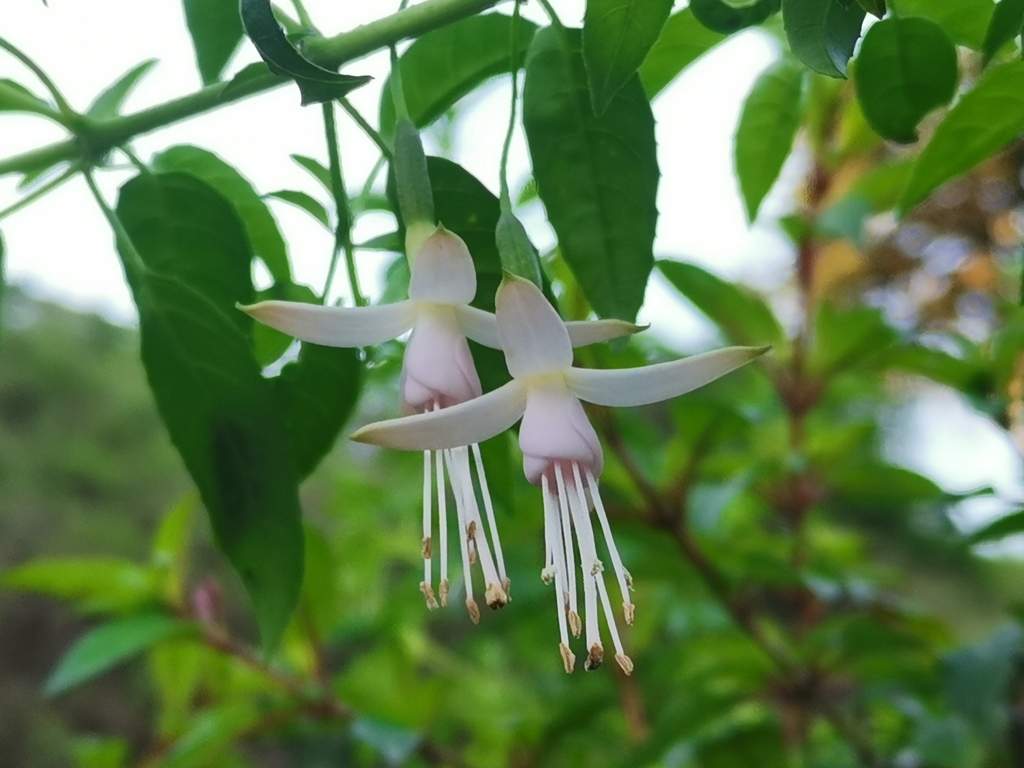
Fuchsias are beloved for their elegant, pendulous flowers that look like little dancers. They thrive in cooler, humid environments and add a touch of grace to any shaded porch or garden. You will find them in a wide variety of colors, ranging from deep purples to bright pinks.
At a glance
- Care level
- Moderate
- Plant type
- Flowering shrub
- Light
- Partial shade to full shade
- Indoor light
- Bright indirect
- Water
- Every 2 to 4 days
- Mature size
- 1 to 3 feet
- Growth rate
- Medium
- Hardiness
- USDA 8 to 10
- Bloom time
- Late spring to mid autumn
Care
Keep your fuchsia in a spot with filtered light and consistent moisture to prevent wilting. Watch for drooping leaves, which often signal that the plant needs a drink or is getting too hot. Deadhead spent blooms regularly to encourage the plant to keep producing new flowers throughout the season.
- Watering
- Keep the soil consistently moist but never soggy.
- Feeding
- Use a balanced liquid fertilizer during the active growing season.
- Pruning
- Pinch back stems to encourage bushier growth and more flowers.
- Repotting
- Repot in early spring if the plant becomes root bound.
- Soil
- Well draining, rich potting mix
- Soil pH
- 6.0 to 7.0
- Temperature
- 5 to 25°C
- Humidity
- 60 to 80%
- Drought tolerance
- Low
- Lifespan
- Perennial, typically 3 to 5 years with proper care.
- Deer and rabbits
- Moderate
Signs it needs repotting
- Roots growing out of the drainage holes.
- Water running straight through the pot.
- Stunted growth during the active season.
Safety
- People
- This plant is generally considered non toxic to humans.
- Pets
- Fuchsias are generally considered non-toxic to cats and dogs.
- Children
- The small berries may pose a choking hazard to very young children if ingested.
- Edibility
- While the berries are technically edible, they are often bland and not recommended for consumption.
How to identify it
- Pendulous, bell shaped flowers
- Opposite or whorled leaves
- Distinctive sepals and petals
- Often features contrasting colors
- Height
- 0.3 to 1.5m
- Spread
- 0.3 to 1m
- Leaves
- green, bronze, deciduous
- Flowers
- pink, purple, white, red, 2 to 8cm
- Fruit
- dark purple, Late summer
Problems to watch for
- Botrytis BlightCommon
- Fuchsia Gall MiteCommon
- WhiteflyCommon
- AphidsUncommon
- Root RotUncommon
- Spider MitesUncommon
Check your fuchsia from a photo
Pocket Botanist looks at a photo of your plant and tells you what's wrong and what to try first.
Growing it
- Propagation
- cuttings, seed
- When to plant
- spring
- Overwintering
- Move containers to a cool, frost free location like a garage or basement. Reduce watering significantly while the plant is dormant.
- In containers
- They are excellent for containers and hanging baskets, provided the pot is at least 25 cm wide.
Stem cuttings
- 1. Take a 10 cm cutting from a non flowering shoot.
- 2. Remove the lower leaves.
- 3. Dip the end in rooting hormone.
- 4. Place in moist potting mix.
- 5. Cover with a plastic bag to maintain humidity.
Group plants with similar water needs to keep the soil consistently moist without waterlogging.
Grows well with
Similar species
- Trailing Fuchsia — It has a similar growth habit but is more suited for ground cover.
Science
- Family
- Onagraceae
- Genus
- Fuchsia
- Order
- Myrtales
- Class
- Magnoliopsida
- Native range
- Central and South America
- Conservation
- Not currently of conservation concern.
Fuchsias thrive in the cool, moist, and shaded understory of mountain forests.
- Value to wildlife
- nectar source
- Pollinators
- hummingbirds, bees
- Uses
- hanging baskets, container gardens, shaded borders
Through the year
Ecological indicators
- Salinity
- 2/9
- Light
- 3/9
- Soil reaction
- 6/9
- Temperature
- 5/9
- Moisture
- 7/9
- Nutrients
- 6/9
Taxonomy resolved against GBIF.
Questions people ask
- Why are my fuchsia flowers dropping?
- This is often caused by heat stress or inconsistent watering.
- Should I deadhead my fuchsia?
- Yes, removing spent flowers encourages the plant to produce more blooms.
Where the name comes from
The genus was named in honor of Leonhart Fuchs, a 16th century German physician and botanist.
Good to know
- Fuchsia flowers are pollinated primarily by hummingbirds in their native range.
- The plant was named after the German botanist Leonhart Fuchs.
- There are over 100 species of fuchsia found in the wild.
- Some fuchsia varieties can be trained into intricate tree shapes known as standards.
Also in
Keep your fuchsia growing
This page is a general guide. Save your plant in Pocket Botanist and you get care reminders timed for this plant, plus a care history that shows what worked.
This guide was generated with AI and checked against GBIF taxonomy. It is general information, not horticultural or veterinary advice. Read about how we build these guides.