 Pocket Botanist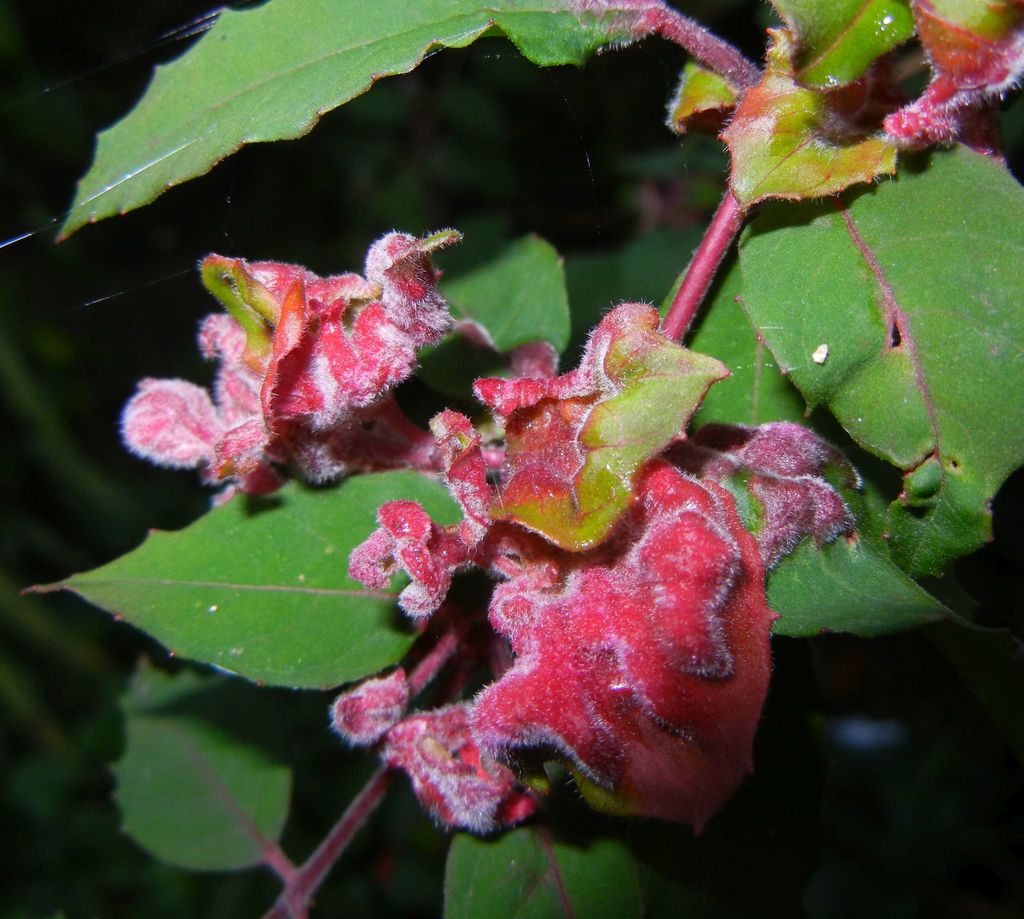
Symptoms by part
Leaves
New leaves emerge twisted, thickened, and curled, often covered in a reddish or yellowish fuzzy growth that feels like felt.
Flowers
Flower buds fail to open properly, appearing swollen or deformed, and often wither before they can bloom.
Causes
- Introduction of infested plant cuttings or nursery stock into your garden.
- Movement of mites between plants via wind, insects, or human contact with tools and clothing.
- High humidity and warm temperatures which favor rapid mite reproduction.
Could be confused with
- Aphid damage · Aphids are visible to the naked eye and leave behind sticky honeydew or black sooty mold, whereas gall mites are invisible and cause distinct fuzzy, red galls.
- Fuchsia rust · Rust appears as orange or brown powdery pustules on the undersides of leaves, while gall mite damage causes structural distortion and thickening of the plant tissue.
Treatment
- Prune away all visibly distorted stems, leaves, and buds immediately, cutting back to healthy tissue.
- Place all pruned material into a sealed bag and dispose of it in the trash, never in your compost pile.
- Clean your pruning shears with a disinfectant solution after every cut to avoid spreading the mites to healthy parts of the plant.
- Apply a treatment of fatty acids to the entire plant, ensuring you reach the undersides of leaves and the growing tips, follow the label.
Without chemicals
- Isolate infested plants immediately to prevent the mites from moving to healthy fuchsias.
- Remove and destroy heavily infested plants entirely to protect the rest of your collection.
- Choose resistant fuchsia varieties if you live in an area where this pest is common.
Chemical options
- Fatty acids, spray thoroughly on all plant surfaces during the growing season, follow the label.
Preventing it
- Inspect all new fuchsia plants carefully for signs of distortion before bringing them into your garden.
- Avoid taking cuttings from plants that have shown any signs of mite activity in the past.
- Space your plants out to improve airflow, which makes it harder for mites to travel between them.
Season
The warm growing season, when temperatures are consistently mild to hot.
Spread risk
High
Severity
High
When to act
Act as soon as you spot the first sign of twisted or fuzzy growth. If the infestation has spread to the main stems or the plant is severely stunted, it is best to remove and destroy the plant to save your other fuchsias.
Think it's Fuchsia Gall Mite?
This guide covers the general picture. Pocket Botanist looks at your actual plant from a photo and tells you what's really going on, how serious it is, and what to try first. Identification and a health check are free.


Questions people ask
- Can I save a plant that has fuchsia gall mite?
- You can often save a lightly infested plant by aggressive pruning and consistent treatment, but if the mite has reached the main stems, it is usually better to remove the plant.
- Will the mites die off in the winter?
- In mild climates, the mites can survive on the plant year round, though their activity slows down significantly in cold weather.
- Can I compost the infested plant material?
- No, you should never compost infested material because the mites can survive in the pile and spread back to your garden when you use the compost.
Plants it affects
This guide was generated with AI and is general information, not horticultural advice. Read about how we build these guides.