 Pocket Botanist
Plant guide
Hardy Fuchsia.
Fuchsia magellanica
Pronounced FEW-shah mah-gel-lan-ih-kuh
Also known as Fuchsia, Hardy fuchsia, Hummingbird Fuchshia



Scan with your phone's camera to get the app
Or go to pocketbotanist.app/get on your phone
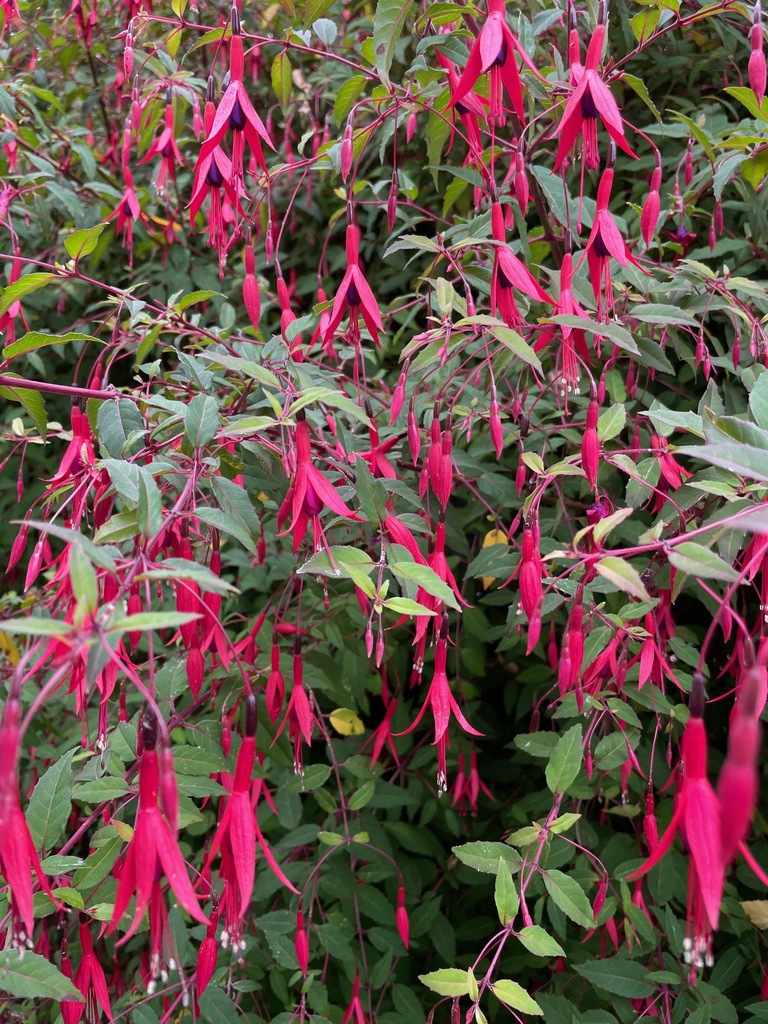
The hardy fuchsia is a lovely, woody shrub that brings a splash of color to your garden with its unique, dangling flowers. It is much tougher than its tropical cousins and can handle cooler temperatures quite well. You will love how it attracts hummingbirds all season long.
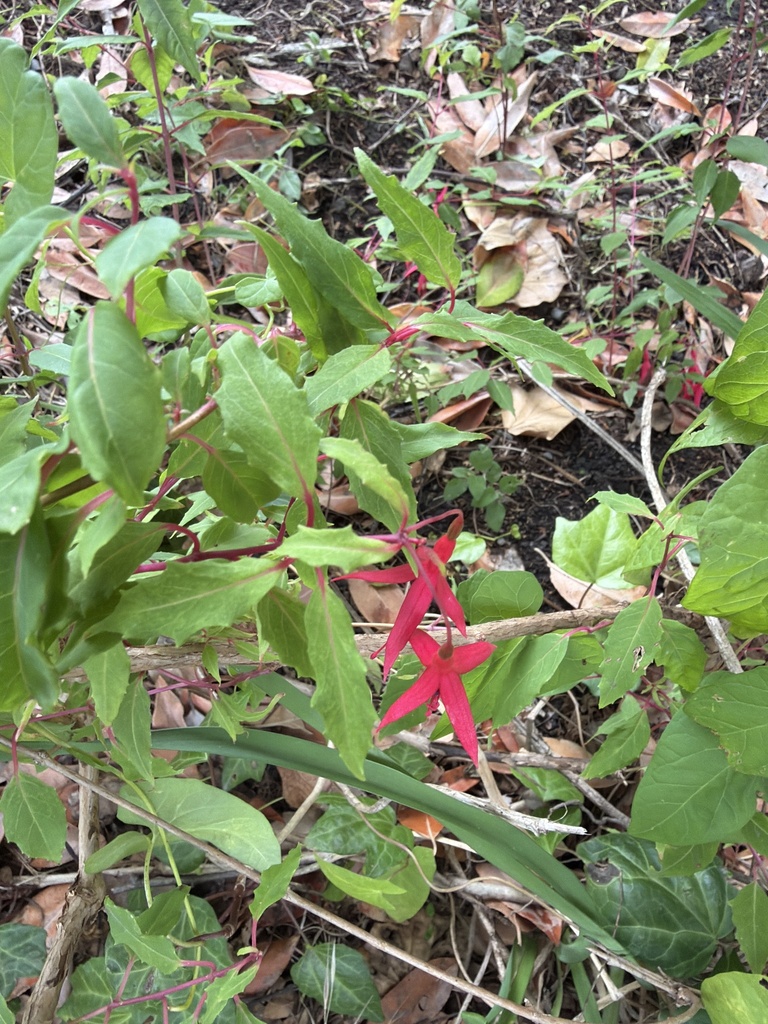
At a glance
- Care level
- Easy
- Plant type
- Deciduous shrub
- Light
- Partial shade to full sun
- Indoor light
- Bright indirect
- Water
- Every 3 to 7 days
- Mature size
- 3 to 10 feet
- Growth rate
- Fast
- Hardiness
- USDA 6 to 9
- Bloom time
- Mid summer to late autumn
Care
Keep the soil consistently moist but never soggy to help your plant thrive. Watch for wilting leaves, which often signal that the plant needs a drink. If you live in a colder area, add a layer of mulch around the base to protect the roots during winter.
- Watering
- Water whenever the top inch of soil feels dry to the touch.
- Feeding
- Apply a balanced liquid fertilizer during the active growing season.
- Pruning
- Cut back dead stems in early spring to encourage fresh, vigorous growth.
- Repotting
- Move to a slightly larger container once the roots begin to circle the bottom.
- Soil
- Well-draining, humus-rich soil
- Soil pH
- 6.0 to 7.5
- Temperature
- -10 to 30°C
- Humidity
- 50 to 70%
- Drought tolerance
- Low
- Lifespan
- Perennial, typically 10 to 20 years.
- Deer and rabbits
- Moderate
Signs it needs repotting
- Roots growing out of the drainage holes.
- Water running straight through the pot without soaking in.
- Stunted growth during the active season.
Safety
- People
- This plant is generally considered non toxic to humans.
- Pets
- This plant is considered non-toxic to cats and dogs.
- Children
- The small berries may present a choking hazard to small children if ingested.
- Edibility
- While the berries are technically edible, they are often considered flavorless or unpalatable and are not recommended for consumption.
How to identify it
- Dangling, bell-shaped flowers
- Red and purple color contrast
- Slender, arching woody stems
- Small, ovate, serrated leaves
- Height
- 0.6 to 3m
- Spread
- 0.6 to 2m
- Leaves
- green, bronze, deciduous
- Flowers
- red, purple, 2 to 5cm
- Fruit
- dark purple, black, Autumn
Problems to watch for
- AphidsCommon
- Fuchsia Gall MiteCommon
- Botrytis BlightUncommon
- Root RotUncommon
- RustUncommon
- WhiteflyUncommon
Check your hardy fuchsia from a photo
Pocket Botanist looks at a photo of your plant and tells you what's wrong and what to try first.
Scan with your phone's camera to get the app
Or go to pocketbotanist.app/get on your phone
Growing it
- Propagation
- cuttings, seed
- When to plant
- spring, early autumn
- Overwintering
- Apply a thick layer of mulch around the base in late autumn to protect the roots from freezing. In very cold areas, you can wrap the stems with burlap for extra insulation.
- In containers
- It grows well in large pots, provided they are at least 30 centimeters in diameter and have excellent drainage.
Softwood cuttings
- Take 10 centimeter cuttings from non flowering shoots in late spring.
- Remove the lower leaves and dip the cut end in rooting hormone.
- Insert into a moist, well draining potting mix.
- Cover with a plastic bag to maintain humidity until roots form.
Plant in a sheltered spot to protect the stems from drying winds.
Grows well with
Similar species
- Hardy Fuchsia · Another hardy species that shares similar growth habits and flower structure.
Science
- Family
- Onagraceae
- Genus
- Fuchsia
- Order
- Myrtales
- Class
- Magnoliopsida
- Native range
- Southern South America, specifically Chile and Argentina.
- Conservation
- This species is not of conservation concern.
It thrives in cool, moist forest margins and sheltered valleys in its native range.
- Value to wildlife
- nectar source
- Pollinators
- hummingbirds, bees
- Uses
- ornamental shrub, hedge, container plant
Through the year
Ecological indicators
- Salinity
- 2/9
- Soil reaction
- 5/9
- Light
- 5/9
- Temperature
- 4/9
- Moisture
- 6/9
- Nutrients
- 5/9
Taxonomy resolved against GBIF.
Questions people ask
- Does it need pruning?
- Yes, prune back hard in early spring to encourage vigorous new growth.
- Can it grow in full sun?
- It prefers partial shade but will tolerate full sun if the soil stays consistently moist.
Where the name comes from
The genus honors German botanist Leonhart Fuchs, while the specific epithet refers to the Magellan Strait region where it was discovered.
Good to know
- It is one of the hardiest fuchsia species available for garden use.
- The flowers have a distinct pendulous shape that attracts hummingbirds.
- It can grow quite large in mild climates, sometimes reaching the size of a small tree.
Keep your hardy fuchsia growing
This page is a general guide. Save your plant in Pocket Botanist and you get care reminders timed for this plant, plus a care history that shows what worked.
Scan with your phone's camera to get the app
Or go to pocketbotanist.app/get on your phone
This guide was generated with AI on and checked against GBIF taxonomy. It is general information, not horticultural or veterinary advice. Read about how we build these guides.