 Pocket Botanist
Plant guide
Short-fruited willowherb.
Epilobium obscurum
Pronounced ep-ih-LO-bee-um ob-SKYOOR-um
Also known as Dwarf willowherb, Short-Fruited Willowherb, obscure willowherb



Scan with your phone's camera to get the app
Or go to pocketbotanist.app/get on your phone
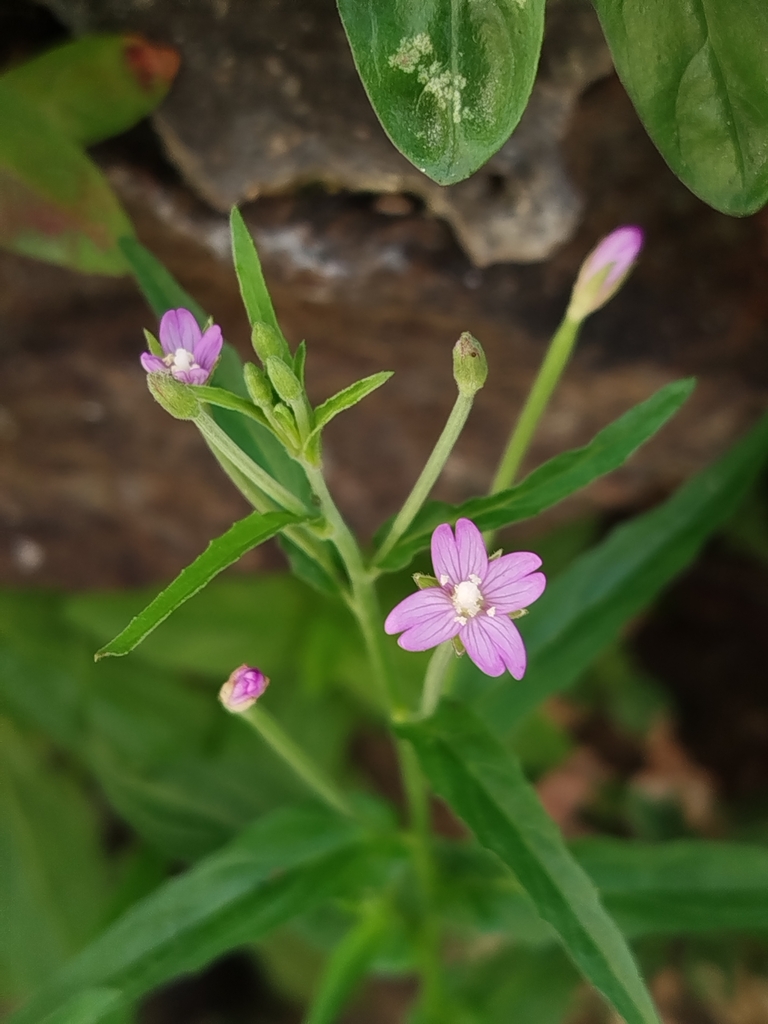
This charming wildflower is a member of the evening primrose family. It thrives in damp, open habitats and brings a subtle beauty to wild gardens. You will find it naturally occurring in various temperate regions.
At a glance
- Care level
- Easy
- Plant type
- Perennial herb
- Light
- Partial shade to full sun
- Indoor light
- Bright indirect
- Water
- Every 3 to 7 days
- Mature size
- 2 to 3 feet
- Growth rate
- Medium
- Hardiness
- USDA 5 to 9
- Bloom time
- Mid to late summer
Care
Keep the soil consistently moist to mimic its natural damp habitat. Watch for wilting leaves which signal a need for more water. Ensure the plant has enough space as it can spread through underground runners.
- Watering
- Keep the soil damp but not waterlogged.
- Feeding
- Apply a balanced liquid fertilizer during the active growing season.
- Pruning
- Deadhead spent flowers to encourage more blooms and prevent unwanted self seeding.
- Repotting
- Repot in early spring if the plant becomes root bound.
- Soil
- Moist, well draining soil
- Soil pH
- Neutral to slightly acidic
- Temperature
- -20 to 30°C
- Humidity
- 40 to 80%
Safety
- People
- There are no reports of significant toxicity, but it is not intended for human consumption.
- Children
- The small, fluffy seeds can be an irritant if inhaled or if they get into eyes.
- Edibility
- This plant is not considered edible and should be avoided for consumption.
How to identify it
- Opposite lance shaped leaves
- Small pinkish or white flowers
- Four notched petals per bloom
- Slender elongated seed capsules
- Height
- 0.3 to 0.8m
- Spread
- 0.2 to 0.4m
- Leaves
- green, reddish, deciduous
- Flowers
- pink, 0.5 to 1cm
- Fruit
- brown, Autumn
Problems to watch for
- Rust · Fungal infection causing orange spots on leaves.
Check your short-fruited willowherb from a photo
Pocket Botanist looks at a photo of your plant and tells you what's wrong and what to try first.
Scan with your phone's camera to get the app
Or go to pocketbotanist.app/get on your phone
Growing it
- Propagation
- seed, division
- When to plant
- spring, autumn
Group this plant with other moisture loving perennials to create a lush, low maintenance bog garden.
Grows well with
- Meadowsweet · They both thrive in the same moist soil conditions.
- Purple Loosestrife · It provides a similar aesthetic in damp garden areas.
Similar species
- Great Willowherb · It is a much larger relative with showier flowers.
Science
- Family
- Onagraceae
- Genus
- Epilobium
- Order
- Myrtales
- Class
- Magnoliopsida
- Native range
- Europe and parts of Western Asia.
- Conservation
- It is a common and widespread species with no special conservation concerns.
It thrives in damp, disturbed habitats like woodland clearings and stream banks where it can colonize open soil.
- Value to wildlife
- nectar source
- Pollinators
- bees, butterflies
- Uses
- wildlife garden, damp border, naturalistic planting
Through the year
Ecological indicators
- Salinity
- 1/9
- Soil reaction
- 5/9
- Light
- 5/9
- Temperature
- 5/9
- Moisture
- 7/9
- Nutrients
- 5/9
Taxonomy resolved against GBIF.
Questions people ask
- Is this plant invasive?
- It can be quite vigorous and self seeds freely, so it may become a nuisance in small gardens.
- Does it need full sun?
- It prefers partial shade but will tolerate full sun if the soil stays consistently moist.
Where the name comes from
The name Epilobium refers to the flower parts sitting on the seed pod, while obscurum describes its somewhat inconspicuous appearance.
Good to know
- The genus name comes from the Greek words for upon and pod, referring to the petals sitting on top of the ovary.
- It is commonly known as the dull willowherb because of its less showy flowers compared to other species.
- It often hybridizes with other willowherbs in the wild.
Keep your short-fruited willowherb growing
This page is a general guide. Save your plant in Pocket Botanist and you get care reminders timed for this plant, plus a care history that shows what worked.
Scan with your phone's camera to get the app
Or go to pocketbotanist.app/get on your phone
This guide was generated with AI on and checked against GBIF taxonomy. It is general information, not horticultural or veterinary advice. Read about how we build these guides.