 Pocket Botanist
Plant guide
Fringed willowherb.
Epilobium ciliatum
Pronounced eh-pih-LOW-bee-um sil-ee-AY-tum
Also known as American Willowherb, Fringed Willowherb, Glandular Willowherb, Northern Asian Willowherb, Northern Willowherb



Scan with your phone's camera to get the app
Or go to pocketbotanist.app/get on your phone
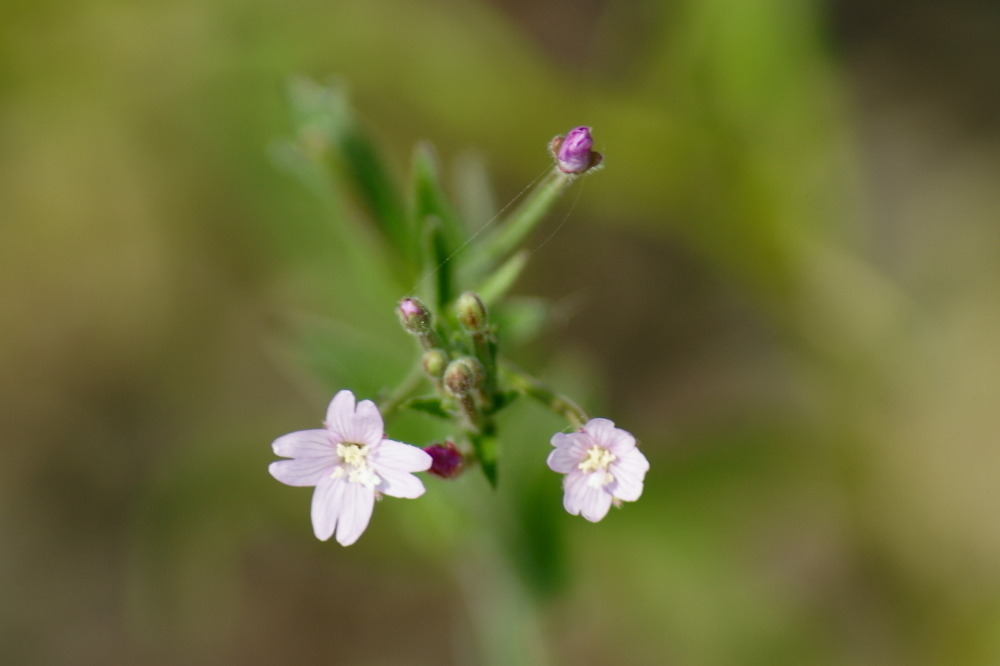
This hardy perennial is a common sight in moist, disturbed areas across North America. It produces slender stems topped with small, delicate flowers that eventually give way to fluffy seeds. It is a resilient plant that adapts well to various damp environments.
At a glance
- Care level
- Easy
- Plant type
- Perennial herb
- Light
- Full sun to partial shade
- Indoor light
- Bright indirect
- Water
- Every 2 to 5 days
- Mature size
- 3 feet
- Growth rate
- Fast
- Hardiness
- USDA 3 to 9
- Bloom time
- Mid summer to early autumn
Care
Keep the soil consistently moist to mimic its natural wetland habitat. Watch for wilting if the soil dries out too much, as this plant prefers steady hydration. It is quite vigorous, so keep an eye on it to ensure it does not crowd out other plants.
- Watering
- Keep the soil damp but not waterlogged at all times.
- Feeding
- Apply a balanced liquid fertilizer during the active growing season.
- Pruning
- Trim back spent flower stalks to encourage tidier growth.
- Repotting
- Repot when the roots begin to fill the container or become root bound.
- Soil
- Moist, well draining soil
- Soil pH
- 6.0 to 7.5
- Temperature
- -20 to 30°C
- Humidity
- 40 to 70%
- Drought tolerance
- Moderate
- Lifespan
- Short lived perennial.
- Deer and rabbits
- Moderate
Safety
- People
- There are no known significant toxicity issues for humans.
- Children
- The fine, fluffy seeds can be a minor choking hazard if inhaled or ingested in large quantities.
- Contact allergens
- The foliage can cause mild skin irritation in sensitive individuals.
- Airborne allergens
- The wind dispersed seeds have fine hairs that may irritate the respiratory tract.
- Edibility
- This plant is not typically consumed and lacks culinary value.
How to identify it
- Opposite, lance shaped leaves
- Small pink or white flowers
- Slender, elongated seed pods
- Seeds with tufts of hair
- Stems often have fine hairs
- Height
- 0.2 to 1m
- Spread
- 0.15 to 0.4m
- Leaves
- green, reddish, deciduous
- Flowers
- pink, white, 0.5 to 1.5cm
- Fruit
- brown, Autumn
Problems to watch for
- Rust · Fungal infection causing orange spots on the underside of leaves.
Check your fringed willowherb from a photo
Pocket Botanist looks at a photo of your plant and tells you what's wrong and what to try first.
Scan with your phone's camera to get the app
Or go to pocketbotanist.app/get on your phone
Growing it
- Propagation
- seed
- When to plant
- spring, autumn
- Overwintering
- The plant dies back to the ground in winter. You can leave the stems for winter interest or cut them back to the base after the first hard frost.
- In containers
- It is not ideal for containers as it spreads rapidly and prefers open ground.
Group this plant with other moisture loving natives to create a low maintenance rain garden.
Grows well with
- Joe Pye Weed · They both thrive in similar moist soil conditions.
- Cardinal Flower · This plant provides a nice color contrast in wet garden spots.
Similar species
- Great Willowherb · It is a much larger relative with showier flowers.
Science
- Family
- Onagraceae
- Genus
- Epilobium
- Order
- Myrtales
- Class
- Magnoliopsida
- Native range
- North America and parts of South America.
- Conservation
- This species is widespread and common, so it is not of conservation concern.
It acts as a pioneer species by quickly colonizing open, moist, and disturbed habitats.
- Value to wildlife
- nectar source
- Pollinators
- bees, butterflies
- Uses
- wildlife garden, restoration planting
Through the year
Ecological indicators
- Salinity
- 1/9
- Soil reaction
- 5/9
- Light
- 7/9
- Temperature
- 5/9
- Moisture
- 7/9
- Nutrients
- 5/9
Taxonomy resolved against GBIF.
Questions people ask
- Is this plant invasive?
- It can be aggressive in garden settings due to prolific seed production.
- Does it need a lot of water?
- It prefers consistently moist soil but can handle short dry spells.
Where the name comes from
The genus name comes from Greek words meaning upon a pod, referring to the petals sitting on top of the ovary, while ciliatum refers to the fine hairs on the leaves.
Good to know
- It is often called American willowherb, and its species name ciliatum refers to the fine hairs on its leaves.
- The seeds are equipped with tufts of hair that allow them to travel long distances on the wind.
- It thrives in damp, disturbed ground like roadsides and ditches.
Keep your fringed willowherb growing
This page is a general guide. Save your plant in Pocket Botanist and you get care reminders timed for this plant, plus a care history that shows what worked.
Scan with your phone's camera to get the app
Or go to pocketbotanist.app/get on your phone
This guide was generated with AI on and checked against GBIF taxonomy. It is general information, not horticultural or veterinary advice. Read about how we build these guides.