 Pocket Botanist
Plant guide
African oil palm.
Elaeis guineensis
Pronounced ee-LAY-iss gwin-ee-EN-sis
Also known as African Oil Palm, Oil palm, macaw-fat



Scan with your phone's camera to get the app
Or go to pocketbotanist.app/get on your phone
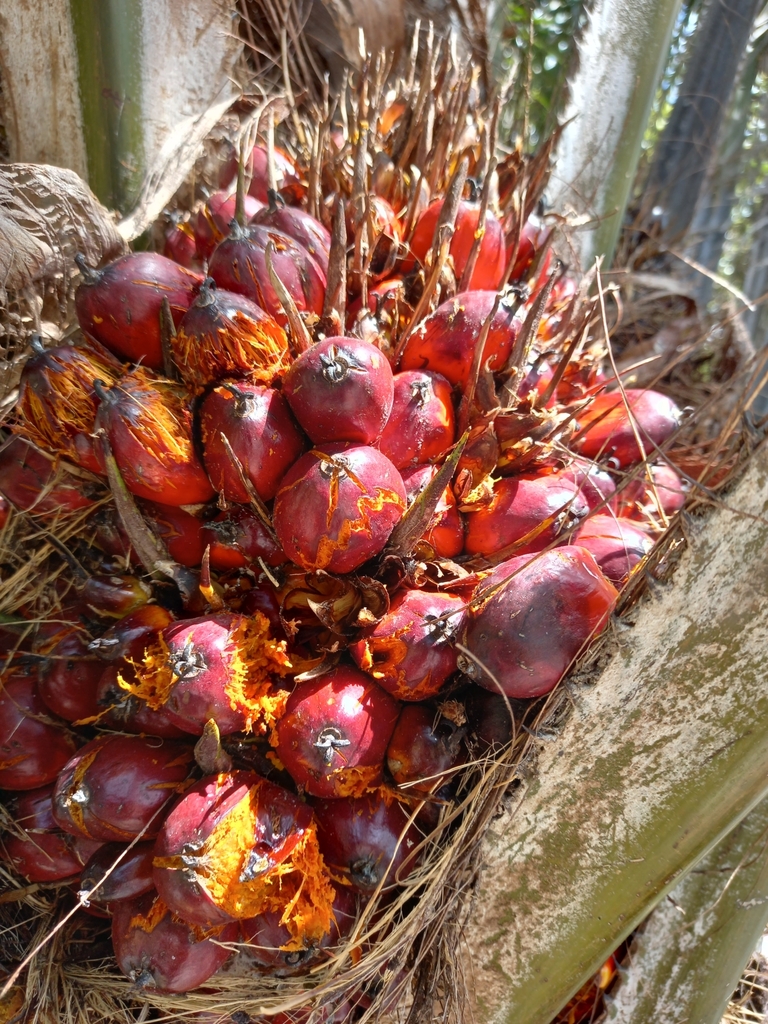
The African oil palm is a majestic, single trunked palm that is widely cultivated for its valuable fruit. It thrives in tropical climates with plenty of heat and moisture. You will love how it brings a lush, exotic feel to any large garden space.

At a glance
- Care level
- Moderate
- Plant type
- Palm
- Light
- Full sun
- Indoor light
- Direct sun
- Water
- Every 3 to 7 days
- Mature size
- 60 feet
- Growth rate
- Medium
- Hardiness
- USDA 10 to 12
- Bloom time
- Year round in tropical climates
Care
Keep the soil consistently moist and provide plenty of bright, direct sunlight for the best growth. Watch for yellowing leaves, which often signal that the plant needs more nutrients or better drainage. Ensure it stays in a warm environment, as it is quite sensitive to cold temperatures.
- Watering
- Keep the soil evenly moist but never waterlogged.
- Feeding
- Apply a balanced palm fertilizer during the active growing season.
- Pruning
- Remove dead or damaged fronds to keep the palm tidy.
- Repotting
- Repot only when the roots have clearly outgrown the current container.
- Soil
- Well draining, fertile loam
- Soil pH
- 5.5 to 7.0
- Temperature
- 18 to 35°C
- Humidity
- 70 to 90%
- Drought tolerance
- Low
- Lifespan
- Perennial, typically 25 to 100 years
- Fragrance
- Light
- Deer and rabbits
- Moderate
Signs it needs repotting
- Roots growing out of the drainage holes
- Stunted growth despite regular fertilization
Safety
- People
- The plant is not considered toxic, but the spines on the leaf stalks can cause painful puncture wounds.
- Children
- Keep children away from the sharp, serrated spines found on the base of the leaf fronds.
- Contact allergens
- The sharp spines on the leaf petioles can cause mechanical skin irritation.
- Airborne allergens
- Pollen may cause mild respiratory irritation in sensitive individuals.
- Edibility
- The fruit pulp and kernels are edible but require industrial processing to extract oil safely.
How to identify it
- Large, feathery pinnate fronds
- Sturdy, upright single trunk
- Clusters of reddish orange fruit
- Spiny leaf bases on trunk
- Height
- 6 to 20m
- Spread
- 4 to 8m
- Leaves
- dark green, evergreen
- Flowers
- yellow, cream, 1 to 2cm
- Fruit
- red, orange, black, Year round
Problems to watch for
- Ganoderma RotCommon
- Leaf MinersCommon
- Scale InsectsCommon
- Bud RotUncommon
- ChlorosisUncommon
- Red Palm WeevilUncommon
- South American Palm WeevilUncommon
- Spider MitesUncommon
Check your african oil palm from a photo
Pocket Botanist looks at a photo of your plant and tells you what's wrong and what to try first.
Scan with your phone's camera to get the app
Or go to pocketbotanist.app/get on your phone
Growing it
- Propagation
- seed
- When to plant
- spring, summer, fall, winter
- Overwintering
- Protect from any frost or temperatures below 15 degrees Celsius. Move to a heated greenhouse if necessary.
- In containers
- It is not well suited for long term container growth due to its massive root system and height.
Seed propagation
- 1. Keep cleaned seeds in dry heat at about 39 to 40 degrees Celsius for 40 to 80 days to break dormancy, then soak them in water for several days to rehydrate.
- 2. Plant seeds in a well draining, warm potting mix.
- 3. Maintain high soil temperatures around 30 degrees Celsius for germination.
- 4. Keep the soil consistently moist but not waterlogged.
- 5. Transplant seedlings once they develop their first true leaves.
Planting nitrogen fixing ground covers helps maintain soil fertility in the nutrient hungry root zone.
Grows well with
- Cover crops · These legumes help fix nitrogen and prevent soil erosion around the palm base.
Similar species
- American oil palm · A related species often used in breeding programs to improve disease resistance.
Science
- Family
- Arecaceae
- Genus
- Elaeis
- Order
- Arecales
- Class
- Liliopsida
- Native range
- Tropical West and Central Africa.
- Conservation
- Large scale cultivation has led to significant deforestation in its native range.
It thrives in high rainfall tropical environments, where it naturally grows along riverbanks, forest edges and in open, disturbed ground with plenty of light.
- Value to wildlife
- provides nesting habitat, food source for small mammals
- Pollinators
- beetles
- Uses
- cooking oil, cosmetic ingredients, biofuel, ornamental specimen
Through the year
Ecological indicators
- Salinity
- 2/9
- Soil reaction
- 6/9
- Light
- 8/9
- Temperature
- 9/9
- Moisture
- 8/9
- Nutrients
- 7/9
Taxonomy resolved against GBIF.
Questions people ask
- Can I grow this in a pot?
- It is possible when young, but it quickly outgrows containers due to its massive size.
- Does it need full sun?
- Yes, it requires full sun to produce fruit effectively.
Where the name comes from
The species name guineensis refers to the Guinea region of Africa where it was first documented by Europeans.
Good to know
- It is a single stemmed palm that can live for over 100 years.
- The oil is extracted from both the fruit pulp and the kernel.
- It is one of the most efficient oil producing crops in the world.
- The palm requires high rainfall and constant warmth to thrive.
Keep your african oil palm growing
This page is a general guide. Save your plant in Pocket Botanist and you get care reminders timed for this plant, plus a care history that shows what worked.
Scan with your phone's camera to get the app
Or go to pocketbotanist.app/get on your phone
This guide was generated with AI on and checked against GBIF taxonomy. It is general information, not horticultural or veterinary advice. Read about how we build these guides.