 Pocket Botanist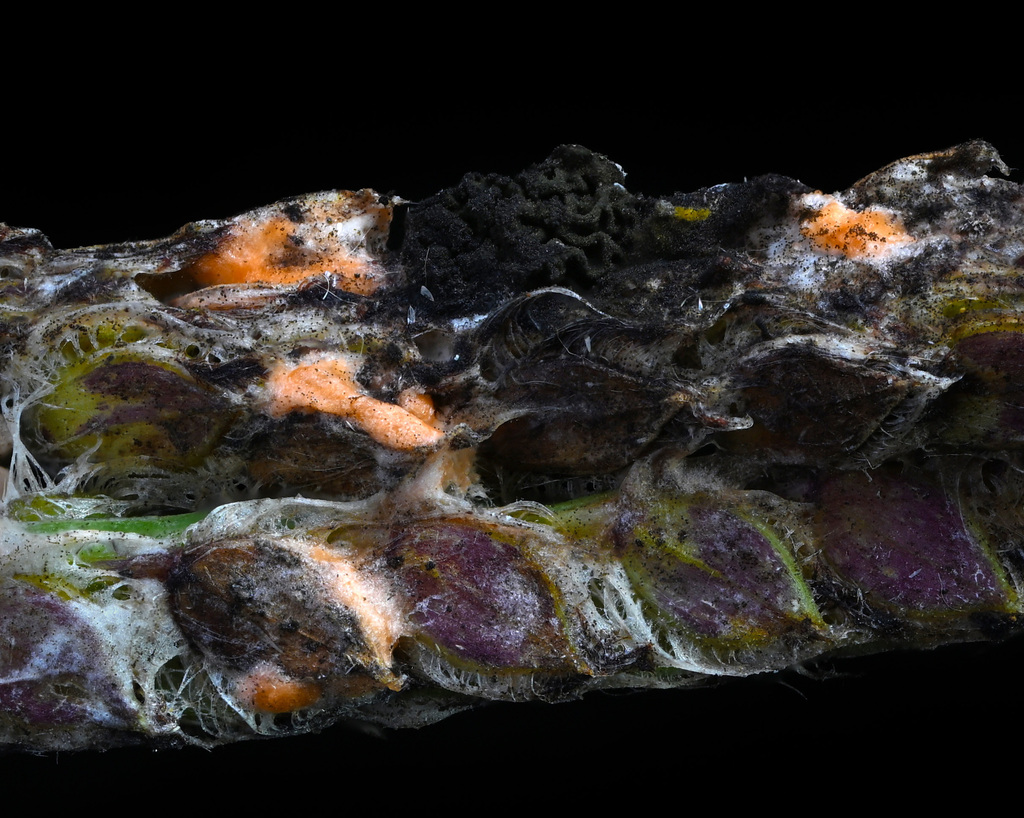
Symptoms by part
Flowers
The center of the flower cluster turns brown or grey, and the petals or bracts become mushy, slimy, or covered in a fine, dusty grey mold.
Causes
- High humidity levels that stay above 60 percent for extended periods.
- Poor air circulation around the dense flower heads.
- Excessive moisture trapped within the flower structure due to rain or heavy dew.
- Physical damage to the flower that creates an entry point for fungal spores.
Could be confused with
- Botrytis blight · While often the same pathogen, Botrytis can appear on leaves and stems as well, whereas bud rot is specifically localized to the flower head.
- Nutrient burn · Nutrient burn typically causes tips to turn yellow or brown and crispy, while bud rot causes the tissue to turn soft, mushy, and moldy.
Treatment
- Immediately cut away the affected flower cluster, ensuring you remove at least 2 to 3 centimeters of healthy tissue below the rot.
- Place the infected material directly into a sealed bag to prevent spores from drifting onto other healthy plants.
- Sterilize your pruning shears with rubbing alcohol between every single cut to avoid spreading the fungus to healthy parts of the plant.
- Increase airflow around the remaining flowers by using oscillating fans or thinning out nearby foliage.
Without chemicals
- Prune away dense foliage to improve airflow through the plant canopy.
- Use a rain cover or move container plants to a dry, sheltered area during wet weather.
- Lower the humidity in the growing environment by using a dehumidifier.
- Remove all plant debris from the soil surface to reduce spore buildup.
Chemical options
- Potassium bicarbonate, mix with water and spray onto healthy areas to alter the pH and inhibit fungal growth, follow the label.
Preventing it
- Maintain humidity levels below 50 percent during the flowering stage.
- Ensure plants have adequate spacing to allow air to move freely between them.
- Avoid overhead watering that leaves the flowers wet for long periods.
- Inspect flowers daily for any signs of discoloration or wilting.
Season
The warm growing season, especially during periods of high humidity or late season rainfall.
Spread risk
High
Severity
High
When to act
Act the moment you spot any grey fuzz or mushy brown spots to save the rest of the plant. If the rot has reached the main stem or affects more than half of the plant, it is best to remove and dispose of the entire plant to protect your collection.
Think it's Bud Rot?
This guide covers the general picture. Pocket Botanist looks at your actual plant from a photo and tells you what's really going on, how serious it is, and what to try first. Identification and a health check are free.


Questions people ask
- Can I save a flower that has bud rot?
- No, once the tissue has turned mushy or grey, it is dead and cannot be saved. You must remove it to stop the fungus from spreading to the rest of the plant.
- Is it safe to consume flowers that were near the rot?
- It is not recommended, as fungal spores and toxins can be present even on parts that look healthy to the naked eye.
This guide was generated with AI and is general information, not horticultural advice. Read about how we build these guides.