 Pocket Botanist
Symptoms by part
Stems
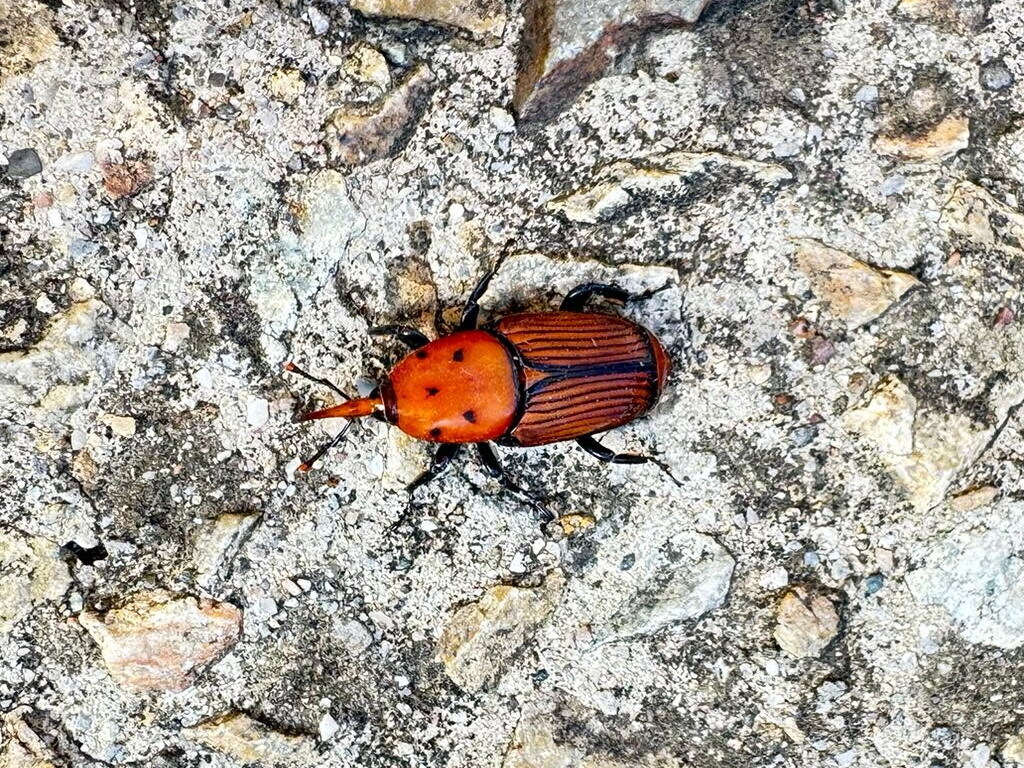
You will see small, circular entry holes in the trunk, often accompanied by oozing brown sap or a fermented, sour smell. You might also find chewed wood fibers that look like sawdust pushed out of these holes, or hear a faint crunching sound coming from inside the trunk.
Causes
- Fresh wounds or pruning cuts on the trunk that release attractant scents.
- Stressed or weakened trees that are more susceptible to initial infestation.
- High humidity and warm temperatures that favor the beetle's life cycle.
Could be confused with
- Palm trunk rot · Rot usually presents as soft, mushy tissue without the presence of sawdust or the distinct, fermented odor associated with beetle activity.
- Mechanical damage · Scrapes or gouges from equipment do not have internal tunnels, exit holes, or the presence of larvae inside the wood.
Find out what's really wrong with your plant
Problems that look alike are easy to mix up. Pocket Botanist looks at a photo of your actual plant and tells you what's going on, how serious it is, and what to try first. Identification and a health check are free.



Scan with your phone's camera to get the app
Or go to pocketbotanist.app/get on your phone
Treatment
- Remove and destroy any heavily infested palm parts or entire trees to stop the beetles from moving to nearby healthy plants.
- Seal any necessary pruning cuts immediately with a non-toxic wound sealant to mask the scent that attracts adult beetles.
- Apply a systemic insecticide to the crown and trunk base during the active season to target larvae and prevent new egg laying, follow the label.
Without chemicals
- Avoid pruning palms during the warmest months when adult beetles are most active.
- If you must prune, do so only in the cooler months and apply a sealant to the cut surface immediately.
- Remove and chip infested wood to destroy larvae and pupae inside.
Chemical options
- Lambda-cyhalothrin, apply as a trunk drench or spray to the crown, follow the label.
- Acetamiprid, apply as a systemic soil drench around the root zone, follow the label.
Preventing it
- Keep your palms healthy with proper watering and nutrition to ensure they can withstand minor stresses.
- Inspect the trunk base and crown regularly for signs of sap or holes.
- Avoid making unnecessary wounds or cuts on the trunk, as these act as beacons for adult weevils.
Season
The warm growing season.
Spread risk
High
Severity
High
When to act
Act the moment you see sap or sawdust on the trunk, as the internal damage is likely already extensive. If the crown has already collapsed or the trunk is hollowed out, you must hire a professional tree surgeon to remove the tree safely.
Keep your plants healthy from here
Save your plants in Pocket Botanist and you get care reminders timed for each one, plus a care history that shows what worked. Identification and a health check are free.
Questions people ask
- Can I save a palm once the crown starts to droop?
- Usually no. By the time the crown droops, the internal damage is so severe that the tree is likely beyond recovery.
- Do these beetles fly far?
- Yes, adult red palm weevils are strong fliers and can travel several miles to find a suitable host tree.
Plants it affects
Answers plant by plant
This guide was generated with AI on and is general information, not horticultural advice. Read about how we build these guides.