 Pocket Botanist
Guide botanique
African oil palm.
Elaeis guineensis
Prononciation ee-LAY-iss gwin-ee-EN-sis
Aussi appelée African Oil Palm, Oil palm, macaw-fat


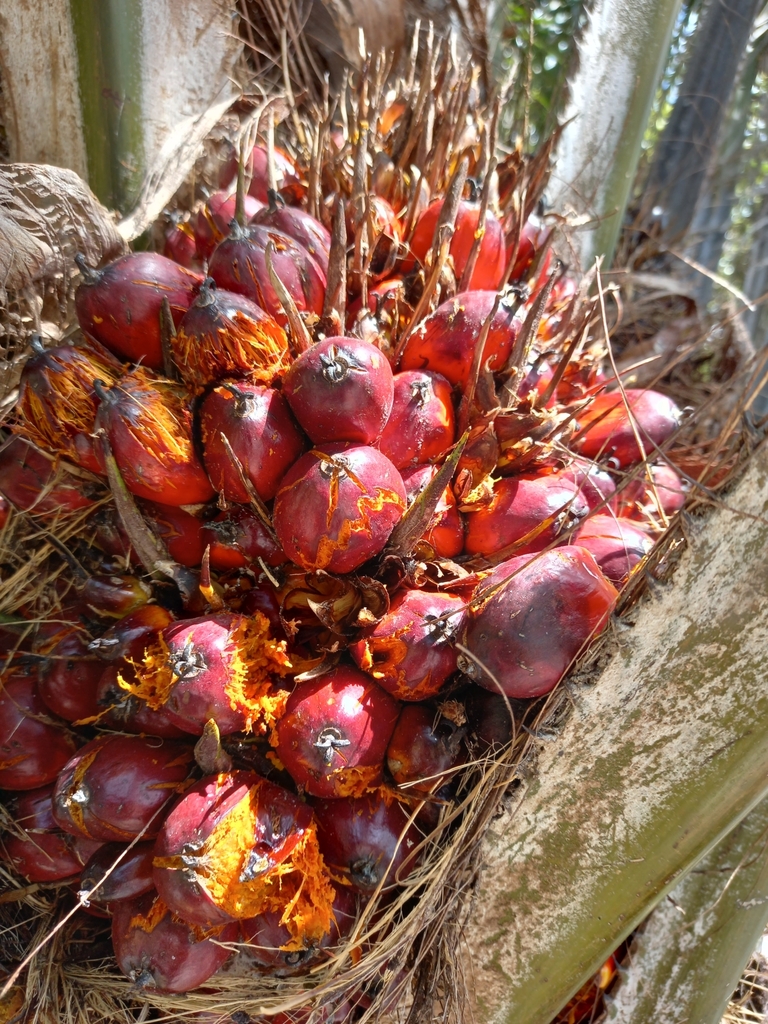
The African oil palm is a majestic, single trunked palm that is widely cultivated for its valuable fruit. It thrives in tropical climates with plenty of heat and moisture. You will love how it brings a lush, exotic feel to any large garden space.

En un coup d'œil
- Niveau d'entretien
- Moyenne
- Type de plante
- Palm
- Lumière
- Full sun
- Lumière en intérieur
- Soleil direct
- Arrosage
- Tous les 3 à 7 jours
- Taille adulte
- 60 feet
- Croissance
- Moyenne
- Rusticité
- USDA 10 à 12
- Floraison
- Year round in tropical climates
Entretien
Keep the soil consistently moist and provide plenty of bright, direct sunlight for the best growth. Watch for yellowing leaves, which often signal that the plant needs more nutrients or better drainage. Ensure it stays in a warm environment, as it is quite sensitive to cold temperatures.
- Arrosage
- Keep the soil evenly moist but never waterlogged.
- Engrais
- Apply a balanced palm fertilizer during the active growing season.
- Taille
- Remove dead or damaged fronds to keep the palm tidy.
- Rempotage
- Repot only when the roots have clearly outgrown the current container.
- Sol
- Well draining, fertile loam
- pH du sol
- 5.5 to 7.0
- Température
- 18 à 35°C
- Humidité
- 70 à 90%
- Résistance à la sécheresse
- Faible
- Durée de vie
- Perennial, typically 25 to 100 years
- Parfum
- Léger
- Résistance aux chevreuils et lapins
- Moyenne
Signes qu'il faut rempoter
- Roots growing out of the drainage holes
- Stunted growth despite regular fertilization
Sécurité
- Humains
- The plant is not considered toxic, but the spines on the leaf stalks can cause painful puncture wounds.
- Enfants
- Keep children away from the sharp, serrated spines found on the base of the leaf fronds.
- Allergènes de contact
- The sharp spines on the leaf petioles can cause mechanical skin irritation.
- Allergènes aéroportés
- Pollen may cause mild respiratory irritation in sensitive individuals.
- Comestibilité
- The fruit pulp and kernels are edible but require industrial processing to extract oil safely.
Comment l'identifier
- Large, feathery pinnate fronds
- Sturdy, upright single trunk
- Clusters of reddish orange fruit
- Spiny leaf bases on trunk
- Hauteur
- 6 à 20m
- Envergure
- 4 à 8m
- Feuilles
- dark green, evergreen
- Fleurs
- yellow, cream, 1 à 2cm
- Fruits
- red, orange, black, Year round
Problèmes courants
- Ganoderma rot — A fungal infection that causes basal stem rot and eventual tree death.
- Leaf miner — Small larvae that tunnel into the fronds causing yellowing and tissue death.
La cultiver
- Multiplication
- seed
- Quand planter
- spring, summer, fall, winter
- Hivernage
- Protect from any frost or temperatures below 15 degrees Celsius. Move to a heated greenhouse if necessary.
- En pot
- It is not well suited for long term container growth due to its massive root system and height.
Seed propagation
- 1. Soak seeds in warm water for 48 hours to soften the hard outer coat.
- 2. Plant seeds in a well draining, warm potting mix.
- 3. Maintain high soil temperatures around 30 degrees Celsius for germination.
- 4. Keep the soil consistently moist but not waterlogged.
- 5. Transplant seedlings once they develop their first true leaves.
Planting nitrogen fixing ground covers helps maintain soil fertility in the nutrient hungry root zone.
Bonnes associations
- Mucuna bracteata — These legumes help fix nitrogen and prevent soil erosion around the palm base.
Espèces similaires
- Elaeis oleifera — A related species often used in breeding programs to improve disease resistance.
Science
- Famille
- Arecaceae
- Genre
- Elaeis
- Ordre
- Arecales
- Classe
- Liliopsida
- Région d'origine
- Tropical West and Central Africa.
- Préservation
- Large scale cultivation has led to significant deforestation in its native range.
It thrives in high rainfall tropical environments where it competes for light in the forest understory before reaching the canopy.
- Intérêt pour la faune
- provides nesting habitat, food source for small mammals
- Pollinisateurs
- coléoptères
- Utilisations
- cooking oil, cosmetic ingredients, biofuel, ornamental specimen
Au fil des saisons
Repères écologiques
- Salinité
- 2/9
- Réaction du sol
- 6/9
- Lumière
- 8/9
- Température
- 9/9
- Humidité
- 8/9
- Nutriments
- 7/9
Taxonomie vérifiée avec le GBIF.
Ce qu'on demande souvent
- Can I grow this in a pot?
- It is possible when young, but it quickly outgrows containers due to its massive size.
- Does it need full sun?
- Yes, it requires full sun to produce fruit effectively.
D'où vient le nom
The species name guineensis refers to the Guinea region of Africa where it was first documented by Europeans.
Bon à savoir
- It is a single stemmed palm that can live for over 100 years.
- The oil is extracted from both the fruit pulp and the kernel.
- It is one of the most efficient oil producing crops in the world.
- The palm requires high rainfall and constant warmth to thrive.
Ta plante a mauvaise mine ?
Cette page est un guide général. Pocket Botanist diagnostique les problèmes directement à partir d'une photo de ta plante, adapte l'arrosage à sa luminosité et te prévient quand il faut t'en occuper.
Ce guide a été généré par IA et vérifié avec la taxonomie du GBIF. Il s'agit d'informations générales, et non de conseils horticoles ou vétérinaires. Découvre comment nous concevons ces guides.