 Pocket Botanist
Plant guide
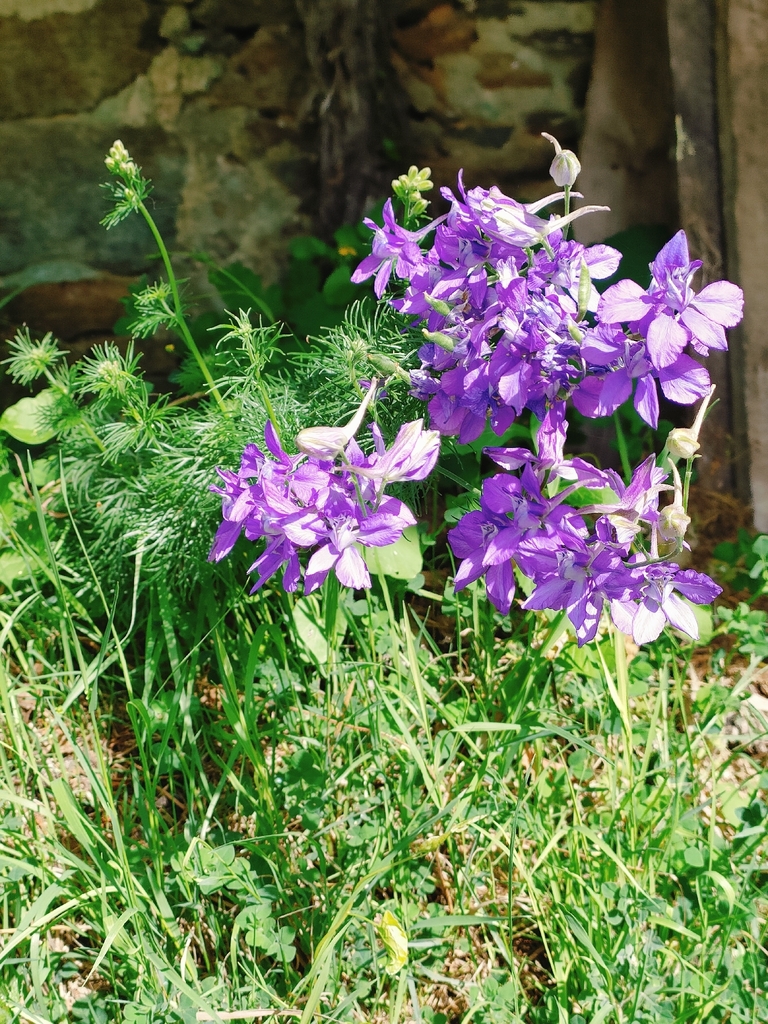
Rocket larkspur.
Consolida ajacis
Pronounced kon-SOL-ih-duh ah-JAY-sis
Also known as Consolida ajacis, Larkspur, Rocket larkspur, doubtful knight's-spur, eastern larkspur



Scan with your phone's camera to get the app
Or go to pocketbotanist.app/get on your phone

Rocket larkspur is a charming annual that brings tall, colorful spikes to your garden. It is a classic cottage garden favorite that blooms beautifully in late spring and early summer. You will love how easily it adds vertical interest to your flower beds.
At a glance
- Care level
- Moderate
- Plant type
- Annual
- Light
- Full sun
- Indoor light
- Direct sun
- Water
- Every 3 to 7 days
- Mature size
- 2 to 4 feet
- Growth rate
- Fast
- Hardiness
- USDA 2 to 11
- Bloom time
- Late spring to mid summer
Care
Plant these in a spot with plenty of sun and well draining soil. Keep an eye out for powdery mildew on the leaves during humid weather. Deadheading spent blooms can encourage a second flush of flowers later in the season.
- Watering
- Keep the soil consistently moist but never waterlogged.
- Feeding
- Apply a balanced liquid fertilizer once a month during the growing season.
- Pruning
- Remove faded flower spikes to tidy the plant and promote new growth.
- Repotting
- As an annual, this plant completes its life cycle in one season and does not require repotting.
- Soil
- Well draining, fertile soil
- Soil pH
- 6.0 to 7.5
- Temperature
- -10 to 30°C
- Humidity
- 40 to 60%
- Drought tolerance
- Moderate
- Lifespan
- Annual, one season.
- Deer and rabbits
- High
Signs it needs repotting
- Roots growing out of the drainage holes.
- Stunted growth despite regular feeding.
Safety
- People
- The plant contains diterpene alkaloids that are poisonous to humans and pets if eaten.
- Pets
- This plant is toxic to cats and dogs if ingested.
- Children
- Keep this plant away from children as all parts are highly toxic if ingested.
- Contact allergens
- Handling the foliage can cause skin irritation or dermatitis in sensitive individuals.
- Airborne allergens
- The pollen is generally not considered a major allergen.
- Edibility
- All parts of this plant are toxic if ingested and can cause severe digestive distress.
How to identify it
- Tall spikes of colorful flowers
- Finely divided, fern like foliage
- Spurred petals on each bloom
- Upright and slender growth habit
- Height
- 0.3 to 1.2m
- Spread
- 0.15 to 0.3m
- Leaves
- green, deciduous
- Flowers
- blue, purple, pink, white, 2 to 4cm
- Fruit
- brown, Late summer
Problems to watch for
- Powdery MildewCommon
- Slugs and SnailsCommon
- AphidsUncommon
- Leaf MinersUncommon
- Root RotUncommon
- Damping OffRare
Check your rocket larkspur from a photo
Pocket Botanist looks at a photo of your plant and tells you what's wrong and what to try first.
Scan with your phone's camera to get the app
Or go to pocketbotanist.app/get on your phone
Growing it
- Propagation
- seed
- When to plant
- spring, autumn
- Overwintering
- As an annual, it will die back completely after setting seed. You can collect the seeds in late summer to sow again the following spring.
- In containers
- It grows well in pots at least 30 cm deep to allow for its taproot development.
Direct Sowing
- 1. Prepare a sunny spot with well draining soil.
- 2. Sow seeds directly in the ground in early spring or autumn.
- 3. Cover with about 0.5 cm of soil, as the seeds need darkness to germinate.
- 4. Keep the area moist until seedlings emerge.
- 5. Thin the seedlings to 20 cm apart.
Plant these in groups to provide mutual support against wind and to create a dense visual impact.
Grows well with
Similar species
- Perennial Larkspur · This is a long lived perennial relative with much larger flower spikes.
Science
- Family
- Ranunculaceae
- Genus
- Delphinium
- Order
- Ranunculales
- Class
- Magnoliopsida
- Native range
- Southern Europe and the Mediterranean region.
- Conservation
- Not of conservation concern as it is widely cultivated and naturalized.
It thrives in open, sunny areas with well drained soil and often colonizes disturbed ground.
- Value to wildlife
- nectar source
- Pollinators
- bees, butterflies
- Uses
- cottage gardens, cut flowers, border planting
Through the year
Ecological indicators
- Salinity
- 2/9
- Soil reaction
- 6/9
- Light
- 7/9
- Temperature
- 5/9
- Moisture
- 5/9
- Nutrients
- 6/9
Taxonomy resolved against GBIF.
Questions people ask
- Does it need staking?
- Yes, the tall flower spikes often require support to prevent them from falling over in the wind.
- Can I grow it in a pot?
- It grows well in containers if they are deep enough to accommodate the taproot.
Where the name comes from
The name Delphinium comes from the Greek word delphis, meaning dolphin, referring to the shape of the flower bud. The species name ajacis refers to the Greek hero Ajax.
Good to know
- It is often called Rocket Larkspur because of its tall, upright flower spikes.
- The seeds are best sown directly in the garden where they are to grow.
- It is an annual plant that completes its life cycle in one season.
Also in
Keep your rocket larkspur growing
This page is a general guide. Save your plant in Pocket Botanist and you get care reminders timed for this plant, plus a care history that shows what worked.
Scan with your phone's camera to get the app
Or go to pocketbotanist.app/get on your phone
This guide was generated with AI on and checked against GBIF taxonomy. It is general information, not horticultural or veterinary advice. Read about how we build these guides.