 Pocket Botanist
Plant guide
Ivy-leaved cyclamen.
Cyclamen hederifolium
Pronounced SY-kla-men hed-er-ih-FO-lee-um
Also known as Ivy-leaf Cyclamen, Ivy-leaved Cyclamen, Sowbread


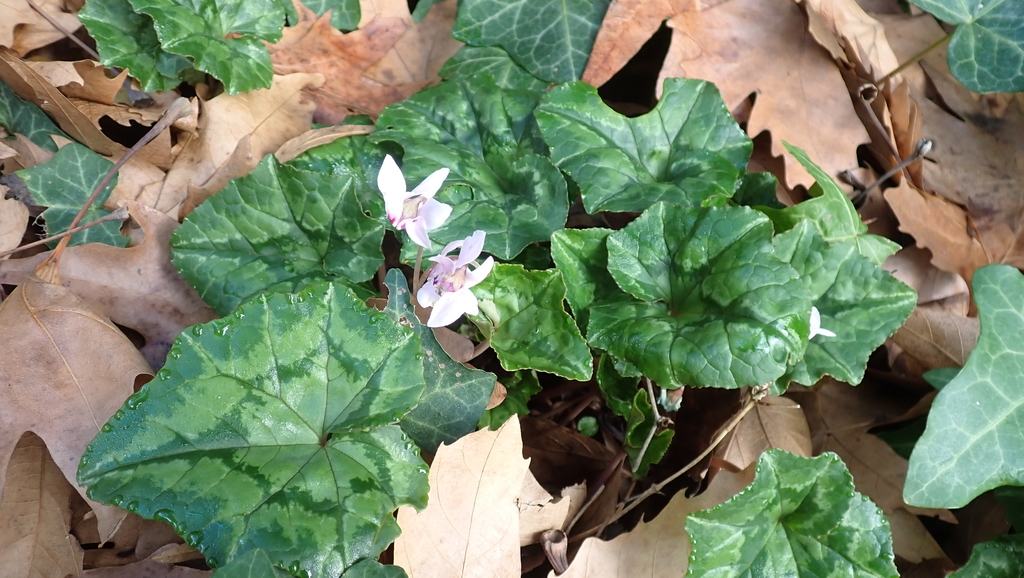
The ivy-leaved cyclamen is a charming tuberous perennial that wakes up in autumn. It produces lovely, swept-back flowers before its patterned leaves emerge. It's a fantastic choice for naturalizing under deciduous trees.

At a glance
- Care level
- Easy
- Plant type
- Herbaceous perennial
- Light
- Partial shade to full shade
- Indoor light
- Medium light
- Water
- Every 7 to 14 days
- Mature size
- 15cm height, 20cm spread
- Growth rate
- Slow
- Hardiness
- USDA 5 to 9
- Bloom time
- Late summer to mid autumn
Care
Plant your tubers in well-draining soil with the slightly concave side facing up. Keep the area relatively dry during their summer dormancy to prevent rot. Watch for yellowing leaves as the plant prepares to go dormant in late spring.
- Watering
- Water regularly during the active growing season in autumn and winter, but keep dry while dormant in summer.
- Feeding
- Apply a balanced liquid fertilizer once a month during the active growth phase.
- Pruning
- Simply remove any dead or damaged foliage after the plant has finished its growth cycle.
- Repotting
- Repot only when the tubers become too crowded in their container.
- Soil
- Well-draining, humus-rich soil
- Soil pH
- Neutral to slightly alkaline
- Temperature
- -15 to 30°C
- Humidity
- 40 to 70%
- Drought tolerance
- High
- Lifespan
- Perennial, can live for many decades.
- Fragrance
- Light
- Deer and rabbits
- High
Signs it needs repotting
- Roots circling the bottom of the pot
- Growth stalling during the active season
Safety
- People
- The tubers are poisonous and can cause severe digestive distress if eaten.
- Pets
- This plant is toxic to cats and dogs if ingested.
- Children
- Keep this plant away from children as the tubers are toxic if ingested.
- Contact allergens
- The sap may cause skin irritation in sensitive individuals.
- Airborne allergens
- There are no notable respiratory allergens associated with this plant.
- Edibility
- All parts of this plant contain cyclamin, which is toxic if ingested.
How to identify it
- Ivy-shaped leaves with silver marbling
- Reflexed petals in pink or white
- Flowers appear before foliage emerges
- Tuberous root system
- Compact, low-growing habit
- Height
- 0.1 to 0.15m
- Spread
- 0.15 to 0.25m
- Leaves
- dark green, silver, deciduous
- Flowers
- pink, white, 2 to 3cm
- Fruit
- brown, Late autumn
Problems to watch for
- Gray MoldCommon
- Slugs and SnailsCommon
- Vine WeevilCommon
- Cyclamen MiteUncommon
- Tuber RotUncommon
By symptom
Check your ivy-leaved cyclamen from a photo
Pocket Botanist looks at a photo of your plant and tells you what's wrong and what to try first.
Growing it
- Propagation
- seed, division
- When to plant
- late summer, early autumn
- Overwintering
- Mulch lightly with leaf mold to protect the tubers from extreme frost. Ensure the soil remains well drained to prevent rot during wet winters.
- In containers
- They grow well in shallow pots, provided the soil is gritty and drains very quickly.
Seed
- Collect seeds from the pods in late spring.
- Sow immediately in a gritty seed mix.
- Keep in a cool, shaded frame until germination.
Plant these under deciduous trees where they can enjoy spring sun and summer shade.
Grows well with
- Snowdrop — They share similar woodland conditions and bloom at different times.
- Hellebore — They provide beautiful foliage contrast in shaded garden beds.
Similar species
- Eastern sowbread — It is a similar small tuberous perennial that blooms in winter.
Science
- Family
- Primulaceae
- Genus
- Cyclamen
- Order
- Ericales
- Class
- Magnoliopsida
- Native range
- Southern Europe and the Mediterranean basin.
- Conservation
- This plant is not currently threatened, but wild collection should be avoided.
It thrives in the dappled shade of deciduous forests where it can go dormant during the dry summer months.
- Value to wildlife
- late season nectar source
- Pollinators
- bees
- Uses
- woodland gardens, rock gardens, ground cover
Through the year
Ecological indicators
- Salinity
- 1/9
- Soil reaction
- 6/9
- Light
- 3/9
- Temperature
- 5/9
- Moisture
- 4/9
- Nutrients
- 4/9
Taxonomy resolved against GBIF.
Questions people ask
- Do I need to water them in summer?
- No, they are dormant in summer and prefer to stay dry.
- Can I grow them in pots?
- Yes, they do well in shallow containers with excellent drainage.
Where the name comes from
The genus name comes from the Greek word kyklos, meaning circle, referring to the coiled flower stems, while hederifolium means ivy-leaved.
Good to know
- The leaves are shaped like ivy, which gives the plant its name.
- These plants can live for many decades in the right spot.
- They often bloom before the new leaves emerge.
Also in
Keep your ivy-leaved cyclamen growing
This page is a general guide. Save your plant in Pocket Botanist and you get care reminders timed for this plant, plus a care history that shows what worked.
This guide was generated with AI and checked against GBIF taxonomy. It is general information, not horticultural or veterinary advice. Read about how we build these guides.