 Pocket Botanist
Guide botanique
Cyclamen de Naples.
Cyclamen hederifolium
Prononciation SY-kla-men hed-er-ih-FO-lee-um
Aussi appelée Cyclamen de Naples, Cyclamen à feuilles de lierre, Sowbread


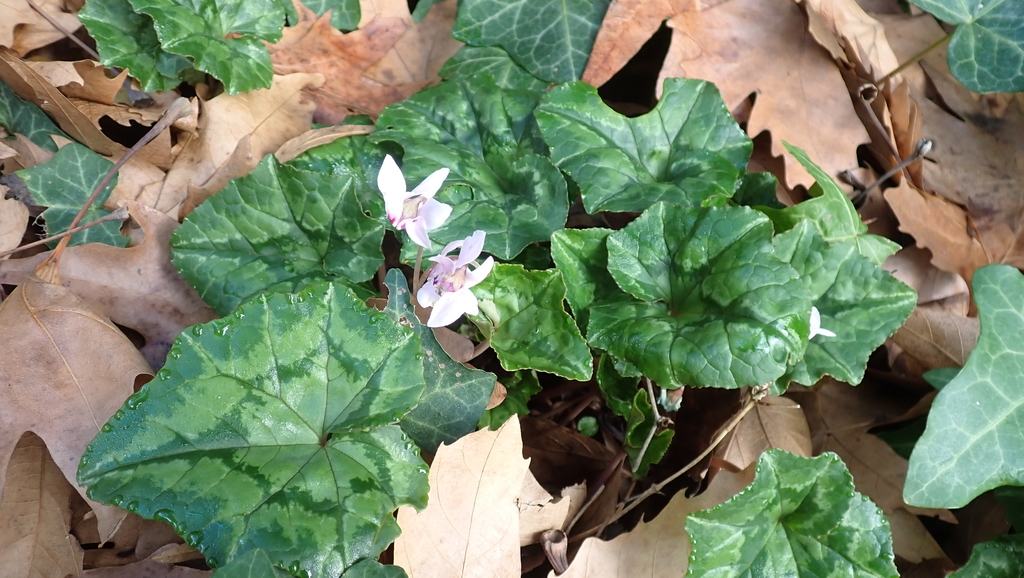
Le cyclamen de Naples est une charmante plante vivace à tubercules qui s'éveille à l'automne. Il produit de jolies fleurs aux pétales recourbés avant que ses feuilles marbrées n'apparaissent. C'est un excellent choix pour naturaliser sous les arbres à feuilles caduques.

En un coup d'œil
- Niveau d'entretien
- Facile
- Type de plante
- Vivace herbacée
- Lumière
- Mi-ombre à ombre totale
- Lumière en intérieur
- Lumière moyenne
- Arrosage
- Tous les 7 à 14 jours
- Taille adulte
- 15cm de hauteur, 20cm d'étalement
- Croissance
- Lente
- Rusticité
- USDA 5 à 9
- Floraison
- Fin d'été à mi-automne
Entretien
Plantez vos tubercules dans un sol bien drainé, le côté légèrement concave vers le haut. Gardez la zone relativement sèche pendant leur dormance estivale pour éviter la pourriture. Surveillez le jaunissement des feuilles lorsque la plante se prépare à entrer en dormance à la fin du printemps.
- Arrosage
- Arrosez régulièrement pendant la saison de croissance active en automne et en hiver, mais gardez au sec pendant la dormance en été.
- Engrais
- Appliquez un engrais liquide équilibré une fois par mois pendant la phase de croissance active.
- Taille
- Retirez simplement le feuillage mort ou abîmé une fois que la plante a terminé son cycle de croissance.
- Rempotage
- Rempotez uniquement lorsque les tubercules sont trop à l'étroit dans leur pot.
- Sol
- Sol bien drainé, riche en humus
- pH du sol
- Neutre à légèrement alcalin
- Température
- -15 à 30°C
- Humidité
- 40 à 70%
- Résistance à la sécheresse
- Élevée
- Durée de vie
- Vivace, peut vivre plusieurs décennies.
- Parfum
- Léger
- Résistance aux chevreuils et lapins
- Élevée
Signes qu'il faut rempoter
- Racines tournant en rond au fond du pot
- Croissance stagnante pendant la saison active
Sécurité
- Humains
- Les tubercules sont toxiques et peuvent causer de graves troubles digestifs s'ils sont ingérés.
- Animaux
- Cette plante est toxique pour les chats et les chiens s'ils l'ingèrent.
- Enfants
- Tenez cette plante à l'écart des enfants car les tubercules sont toxiques s'ils sont ingérés.
- Allergènes de contact
- La sève peut provoquer une irritation cutanée chez les personnes sensibles.
- Allergènes aéroportés
- Il n'y a pas d'allergènes respiratoires notables associés à cette plante.
- Comestibilité
- Toutes les parties de cette plante contiennent de la cyclamine, qui est toxique si ingérée.
Comment l'identifier
- Feuilles en forme de lierre avec marbrures argentées
- Pétales réfléchis roses ou blancs
- Les fleurs apparaissent avant le feuillage
- Système racinaire tubéreux
- Port compact et bas
- Hauteur
- 0,1 à 0,15m
- Envergure
- 0,15 à 0,25m
- Feuilles
- vert foncé, argent, caduc
- Fleurs
- rose, blanc, 2 à 3cm
- Fruits
- brun, Fin d'automne
Problèmes à surveiller
- Limaces et escargotsCourant
- Otiorhynque sillonnéCourant
- Pourriture griseCourant
- Pourriture des tuberculesPeu courant
- Tarsonème du cyclamenPeu courant
- Charançon de la vigne — Les larves se nourrissent des tubercules, ce qui peut affaiblir ou tuer la plante.
- Moisissure grise — Croissance fongique qui apparaît sur les feuilles dans un air humide et stagnant.
Par symptôme
Vérifie la santé de ta plante en photo
Pocket Botanist analyse une photo de ta plante et te dit ce qui ne va pas et quoi essayer en premier.
La cultiver
- Multiplication
- semis, division
- Quand planter
- fin d'été, début d'automne
- Hivernage
- Paillez légèrement avec du terreau de feuilles pour protéger les tubercules du gel extrême. Assurez-vous que le sol reste bien drainé pour éviter la pourriture pendant les hivers humides.
- En pot
- Elles poussent bien dans des pots peu profonds, à condition que le sol soit granuleux et draine très rapidement.
Semis
- Collectez les graines des gousses à la fin du printemps.
- Semez immédiatement dans un mélange de semis granuleux.
- Conservez dans un châssis frais et ombragé jusqu'à la germination.
Plantez-les sous des arbres à feuilles caduques où elles peuvent profiter du soleil de printemps et de l'ombre d'été.
Bonnes associations
- Perce-neige — Ils partagent des conditions forestières similaires et fleurissent à des moments différents.
- Helleborus orientalis — Ils offrent un beau contraste de feuillage dans les parterres de jardin ombragés.
Espèces similaires
- Cyclamen coum — C'est une plante vivace tubéreuse similaire de petite taille qui fleurit en hiver.
Science
- Famille
- Primulaceae
- Genre
- Cyclamen
- Ordre
- Ericales
- Classe
- Magnoliopsida
- Région d'origine
- Europe du Sud et bassin méditerranéen.
- Préservation
- Cette plante n'est actuellement pas menacée, mais la collecte sauvage doit être évitée.
Elle prospère à l'ombre tachetée des forêts décidues où elle peut entrer en dormance pendant les mois d'été secs.
- Intérêt pour la faune
- source de nectar de fin de saison
- Pollinisateurs
- abeilles
- Utilisations
- jardins boisés, jardins de rocaille, couvre-sol
Au fil des saisons
Repères écologiques
- Salinité
- 1/9
- Réaction du sol
- 6/9
- Lumière
- 3/9
- Température
- 5/9
- Humidité
- 4/9
- Nutriments
- 4/9
Taxonomie vérifiée avec le GBIF.
Ce qu'on demande souvent
- Dois-je les arroser en été?
- Non, elles sont dormantes en été et préfèrent rester au sec.
- Puis-je les cultiver en pots?
- Oui, elles se portent bien dans des contenants peu profonds avec un excellent drainage.
D'où vient le nom
Le nom du genre vient du grec kyklos, qui signifie cercle, faisant référence aux tiges florales enroulées, tandis que hederifolium signifie à feuilles de lierre.
Bon à savoir
- Les feuilles sont en forme de lierre, ce qui donne son nom à la plante.
- Ces plantes peuvent vivre plusieurs décennies au bon endroit.
- Elles fleurissent souvent avant que les nouvelles feuilles n'émergent.
Aussi dans
Garde ta plante en pleine forme
Cette page est un guide général. Enregistre ta plante dans Pocket Botanist et tu reçois des rappels d'entretien adaptés à cette plante, ainsi qu'un historique d'entretien qui montre ce qui a marché.
Ce guide a été généré par IA et vérifié avec la taxonomie du GBIF. Il s'agit d'informations générales, et non de conseils horticoles ou vétérinaires. Découvre comment nous concevons ces guides.