 Pocket Botanist
Plant guide
Arizona cypress.
Cupressus arizonica
Pronounced koo-PRESS-us air-ih-ZON-ih-kuh
Also known as Arizona cypress, Arizona smooth cypress, Cuyamaca cypress, Piute cypress, arizona-cypress



The Arizona cypress is a beautiful, drought tolerant evergreen that brings a touch of the desert to your landscape. It features a conical shape and striking foliage that ranges from gray green to blue. It is a fantastic choice if you want a sturdy, low maintenance tree.
At a glance
- Care level
- Easy
- Plant type
- Evergreen conifer
- Light
- Full sun
- Indoor light
- Direct sun
- Water
- Every 7 to 14 days
- Mature size
- 40 to 50 feet
- Growth rate
- Medium
- Hardiness
- USDA 6 to 9
- Bloom time
- Late winter to early spring
Care
Plant this tree in a spot with excellent drainage to prevent root issues. Watch for yellowing needles which often signal too much moisture in the soil. It is quite hardy once established and rarely needs extra attention.
- Watering
- Water deeply but infrequently once the tree is established to encourage deep roots.
- Feeding
- Apply a balanced fertilizer once in early spring to support healthy growth.
- Pruning
- Prune lightly in late winter to maintain shape or remove dead branches.
- Repotting
- Repot only if the tree is in a container and has become root bound.
- Soil
- Well draining, rocky, or sandy soil
- Soil pH
- 6.0 to 8.0
- Temperature
- -20 to 40°C
- Humidity
- 20 to 50%
- Drought tolerance
- High
- Lifespan
- Perennial, typically 50 to 100 years
- Fragrance
- Light
- Deer and rabbits
- High
Signs it needs repotting
- Roots growing out of the drainage holes
- Water running straight through the pot without soaking in
Safety
- People
- The plant is generally considered non-toxic but may cause mild skin irritation upon contact with sap.
- Pets
- This plant is generally considered non toxic to cats and dogs.
- Children
- The small, hard cones could pose a minor choking hazard if swallowed by very small children.
- Contact allergens
- Handling the foliage may cause minor skin irritation for sensitive individuals.
- Airborne allergens
- The pollen can be a significant allergen for those sensitive to conifer pollen during the spring.
- Edibility
- The foliage and cones are not for human consumption and can cause digestive upset if ingested.
How to identify it
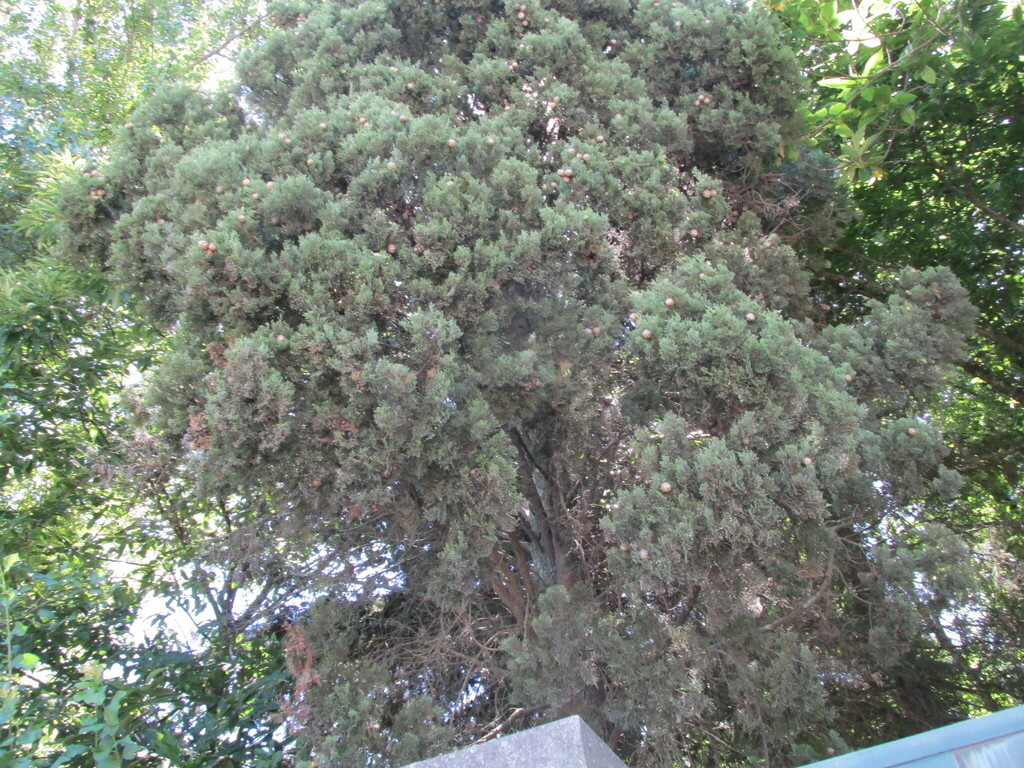
- Conical growth habit
- Gray green to blue foliage
- Scalelike leaves on rounded twigs
- Small woody cones
- Reddish brown peeling bark
- Height
- 6 to 15m
- Spread
- 3 to 6m
- Leaves
- blue-green, gray-green, evergreen
- Flowers
- yellow, 0.2 to 0.5cm
- Fruit
- brown, Autumn
Problems to watch for
- CankerCommon
- Spider MitesCommon
- BagwormsUncommon
- DehydrationUncommon
- Juniper ScaleUncommon
- Root RotUncommon
- Twig BlightUncommon
By symptom
Check your arizona cypress from a photo
Pocket Botanist looks at a photo of your plant and tells you what's wrong and what to try first.
Growing it
- Propagation
- seed, cuttings
- When to plant
- spring, autumn
- Overwintering
- No special winter care is needed as it is fully hardy in its recommended zones. Ensure the soil remains well-drained to prevent root rot during wet winters.
- In containers
- It is not well suited for long-term container growth due to its large mature size.
Seed
- Collect mature cones in autumn.
- Dry cones until they open to release seeds.
- Sow seeds in a well-draining mix and keep lightly moist.
Group this tree with other drought-tolerant plants that do not require frequent summer irrigation.
Grows well with
- Desert Sage — It shares similar water needs and provides a nice color contrast.
- Apache Plume — This shrub thrives in the same dry, sunny conditions as the cypress.
Similar species
- Leyland Cypress — It is a popular hybrid often used for screens but requires more water.
- Italian Cypress — It has a similar look but a much narrower, columnar growth habit.
Science
- Family
- Cupressaceae
- Genus
- Cupressus
- Order
- Pinales
- Class
- Pinopsida
- Native range
- Southwestern United States and Northern Mexico
- Conservation
- This species is not currently listed as endangered or threatened in its native range.
It grows naturally on rocky slopes and canyons where it thrives in thin, well-drained soils.
- Value to wildlife
- provides nesting cover, seeds feed small birds
- Pollinators
- bees
- Uses
- ornamental specimen, windbreak, privacy screen, xeriscaping
Through the year
Ecological indicators
- Salinity
- 2/9
- Light
- 8/9
- Temperature
- 6/9
- Moisture
- 3/9
- Soil reaction
- 6/9
- Nutrients
- 3/9
Taxonomy resolved against GBIF.
Questions people ask
- Does it need a lot of water?
- Once established, it is quite drought tolerant and prefers well-draining soil.
- Can I prune it?
- Light pruning is fine, but avoid cutting into old wood as it does not regenerate well.
Where the name comes from
The specific epithet arizonica refers to its native range in Arizona, while the genus name Cupressus is the classical Latin name for the cypress tree.
Good to know
- It is one of the few cypress species native to the southwestern United States.
- The wood is aromatic and has been used for fence posts and small woodworking projects.
- It can live for over 100 years in ideal conditions.
- The bark peels away in thin, papery strips as the tree matures.
Also in
Keep your arizona cypress growing
This page is a general guide. Save your plant in Pocket Botanist and you get care reminders timed for this plant, plus a care history that shows what worked.
This guide was generated with AI and checked against GBIF taxonomy. It is general information, not horticultural or veterinary advice. Read about how we build these guides.