 Pocket Botanist
Guide botanique
Cyprès d'Arizona.
Cupressus arizonica
Prononciation koo-PRESS-us air-ih-ZON-ih-kuh
Aussi appelée Cyprès d'Arizona, Arizona smooth cypress, Cyprès de Cuyamaca, Cyprès de Piute, Cupressus arizonica



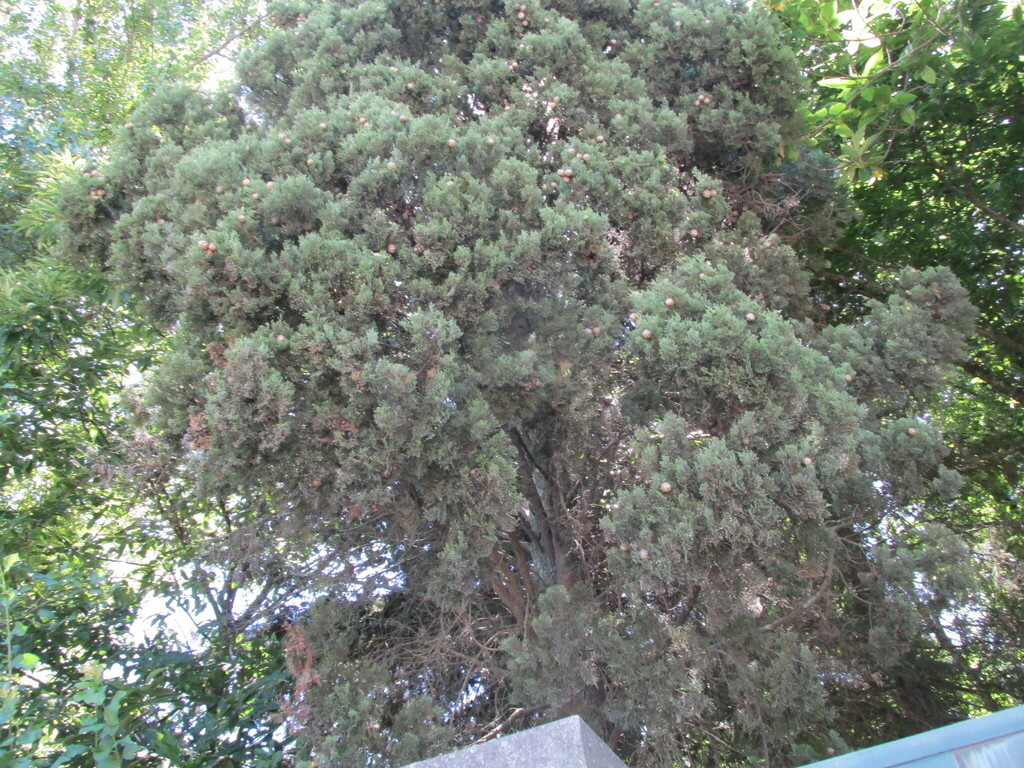
Le Cyprès d'Arizona est un conifère persistant magnifique et résistant à la sécheresse qui apporte une touche de désert à votre paysage. Il a une forme conique et un feuillage saisissant allant du vert gris au bleu. C'est un excellent choix si vous recherchez un arbre robuste et facile d'entretien.
En un coup d'œil
- Niveau d'entretien
- Facile
- Type de plante
- Conifère persistant
- Lumière
- Plein soleil
- Lumière en intérieur
- Soleil direct
- Arrosage
- Tous les 7 à 14 jours
- Taille adulte
- 40 à 50 pieds
- Croissance
- Moyenne
- Rusticité
- USDA 6 à 9
- Floraison
- Fin d'hiver à début de printemps
Entretien
Plantez cet arbre dans un endroit avec un excellent drainage pour éviter les problèmes de racines. Surveillez le jaunissement des aiguilles qui signale souvent un excès d'humidité dans le sol. Il est assez résistant une fois établi et nécessite rarement une attention supplémentaire.
- Arrosage
- Arrosez copieusement mais peu fréquemment une fois que l'arbre est bien établi pour encourager le développement de racines profondes.
- Engrais
- Appliquez un engrais équilibré une fois au début du printemps pour favoriser une croissance saine.
- Taille
- Taille légèrement à la fin de l'hiver pour maintenir la forme ou enlever les branches mortes.
- Rempotage
- Rempotez uniquement si l'arbre est en pot et que ses racines sont à l'étroit.
- Sol
- Sol bien drainant, rocheux ou sableux
- pH du sol
- 6,0 à 8,0
- Température
- -20 à 40°C
- Humidité
- 20 à 50%
- Résistance à la sécheresse
- Élevée
- Durée de vie
- Plante vivace, généralement 50 à 100 ans
- Parfum
- Léger
- Résistance aux chevreuils et lapins
- Élevée
Signes qu'il faut rempoter
- Les racines sortent des trous de drainage
- L'eau traverse le pot sans s'infiltrer
Sécurité
- Humains
- La plante est généralement considérée comme non toxique, mais peut provoquer une légère irritation cutanée au contact de la sève.
- Animaux
- Cette plante est généralement considérée comme non toxique pour les chats et les chiens.
- Enfants
- Les petits cônes durs pourraient présenter un léger risque d'étouffement s'ils sont avalés par de très jeunes enfants.
- Allergènes de contact
- La manipulation du feuillage peut provoquer une légère irritation cutanée chez les personnes sensibles.
- Allergènes aéroportés
- Le pollen peut être un allergène important pour les personnes sensibles au pollen des conifères au printemps.
- Comestibilité
- Le feuillage et les cônes ne sont pas destinés à la consommation humaine et peuvent provoquer des troubles digestifs en cas d'ingestion.
Comment l'identifier
- Port conique
- Feuillage vert gris à bleu
- Feuilles écailleuses sur des rameaux arrondis
- Petits cônes ligneux
- Écorce brun rougeâtre s'exfoliant
- Hauteur
- 6 à 15m
- Envergure
- 3 à 6m
- Feuilles
- bleu-vert, vert-gris, persistant
- Fleurs
- jaune, 0,2 à 0,5cm
- Fruits
- brun, Automne
Problèmes à surveiller
- ChancreCourant
- TétranyquesCourant
- Cochenille du genévrierPeu courant
- DéshydratationPeu courant
- Dessèchement des rameauxPeu courant
- Pourriture des racinesPeu courant
- PsychésPeu courant
- Chancre du cyprès — Une infection fongique qui provoque le dépérissement des branches et des lésions sur l'écorce.
- Acariens — Minuscules ravageurs qui provoquent des taches et le jaunissement du feuillage par temps chaud et sec.
Vérifie la santé de ta plante en photo
Pocket Botanist analyse une photo de ta plante et te dit ce qui ne va pas et quoi essayer en premier.
La cultiver
- Multiplication
- semis, bouturage
- Quand planter
- printemps, automne
- Hivernage
- Aucun soin hivernal spécial n'est nécessaire car il est entièrement rustique dans les zones recommandées. Assurez-vous que le sol reste bien drainé pour éviter la pourriture des racines pendant les hivers humides.
- En pot
- Il n'est pas bien adapté à la culture en pot à long terme en raison de sa grande taille à maturité.
Semis
- Récoltez les cônes mûrs en automne.
- Séchez les cônes jusqu'à ce qu'ils s'ouvrent pour libérer les graines.
- Semez les graines dans un mélange bien drainant et gardez-les légèrement humides.
Groupez cet arbre avec d'autres plantes résistantes à la sécheresse qui ne nécessitent pas d'irrigation estivale fréquente.
Bonnes associations
- Salvia dorrii — Elle partage des besoins en eau similaires et offre un joli contraste de couleurs.
- Fallugia paradoxa — Cet arbuste prospère dans les mêmes conditions sèches et ensoleillées que le cyprès.
Espèces similaires
- Cupressus x leylandii — C'est un hybride populaire souvent utilisé pour les écrans, mais il nécessite plus d'eau.
- Cyprès d'Italie — Il a une apparence similaire mais un port beaucoup plus étroit et colonnaire.
Science
- Famille
- Cupressaceae
- Genre
- Cupressus
- Ordre
- Pinales
- Classe
- Pinopsida
- Région d'origine
- Sud-ouest des États-Unis et Nord du Mexique
- Préservation
- Cette espèce n'est actuellement pas répertoriée comme menacée ou en danger dans son aire de répartition indigène.
Il pousse naturellement sur les pentes rocheuses et dans les canyons où il prospère dans des sols minces et bien drainés.
- Intérêt pour la faune
- fournit un abri de nidification, les graines nourrissent les petits oiseaux
- Pollinisateurs
- abeilles
- Utilisations
- spécimen ornemental, pare-feu, écran d'intimité, xéropaysagisme
Au fil des saisons
Repères écologiques
- Salinité
- 2/9
- Lumière
- 8/9
- Température
- 6/9
- Humidité
- 3/9
- Réaction du sol
- 6/9
- Nutriments
- 3/9
Taxonomie vérifiée avec le GBIF.
Ce qu'on demande souvent
- A-t-il besoin de beaucoup d'eau?
- Une fois établi, il est assez tolérant à la sécheresse et préfère un sol bien drainé.
- Puis-je le tailler?
- Une taille légère est acceptable, mais évitez de couper dans le vieux bois car il ne se régénère pas bien.
D'où vient le nom
Le nom spécifique arizonica fait référence à son aire de répartition indigène en Arizona, tandis que le nom du genre Cupressus est le nom latin classique du cyprès.
Bon à savoir
- C'est l'une des rares espèces de cyprès originaires du sud-ouest des États-Unis.
- Le bois est aromatique et a été utilisé pour des poteaux de clôture et de petits projets de travail du bois.
- Il peut vivre plus de 100 ans dans des conditions idéales.
- L'écorce se détache en fines lamelles papyracées à mesure que l'arbre mûrit.
Aussi dans
Garde ta plante en pleine forme
Cette page est un guide général. Enregistre ta plante dans Pocket Botanist et tu reçois des rappels d'entretien adaptés à cette plante, ainsi qu'un historique d'entretien qui montre ce qui a marché.
Ce guide a été généré par IA et vérifié avec la taxonomie du GBIF. Il s'agit d'informations générales, et non de conseils horticoles ou vétérinaires. Découvre comment nous concevons ces guides.