 Pocket Botanist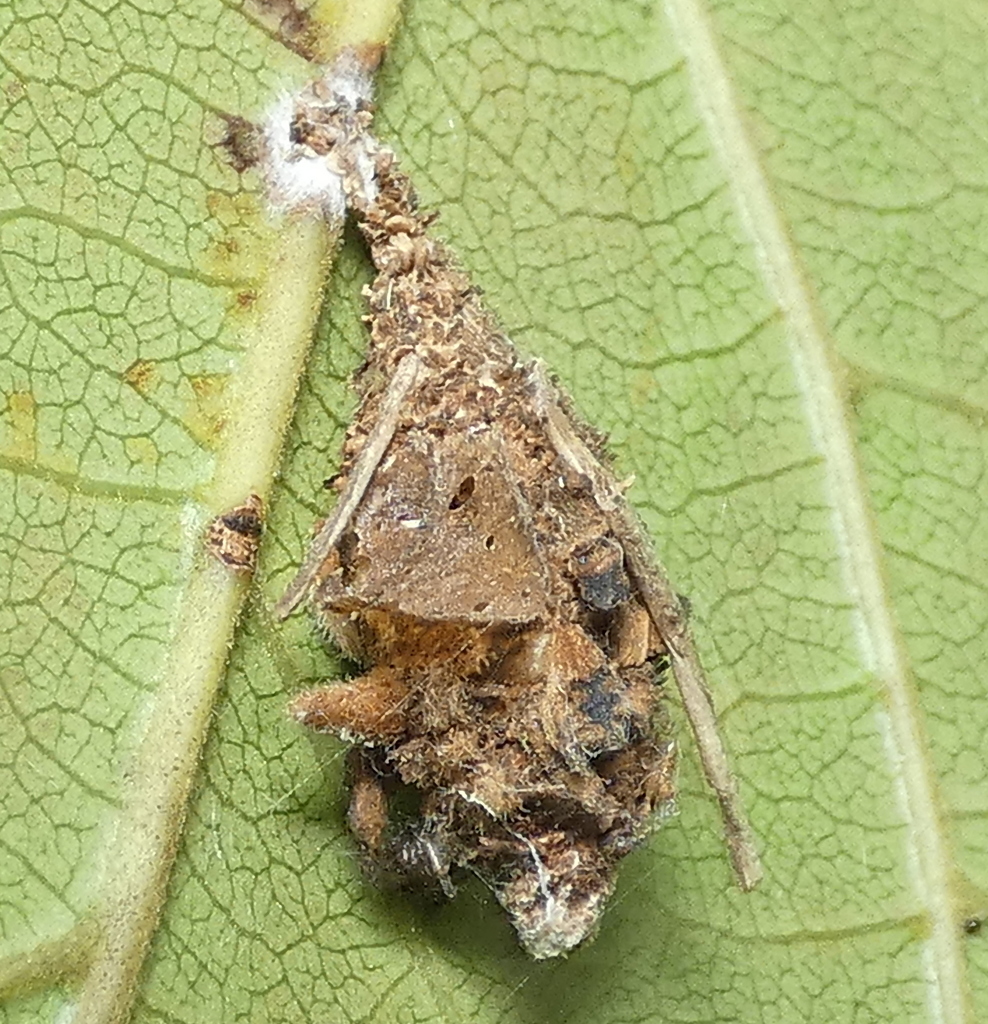
Symptoms by part
Leaves
You will see small, dangling, cone shaped bags hanging from branches that look like dried leaves or debris. The foliage around these bags often appears chewed, ragged, or completely stripped away, leaving behind bare stems.
Causes
- The presence of adult female moths laying eggs on the host plant during the late season.
- The natural tendency of young larvae to balloon on silk threads from infested plants to nearby healthy ones during windy weather.
Could be confused with
- Pine cones · Pine cones are woody and attached directly to the branch, whereas bagworm cases are made of silk and foliage and hang by a distinct, tough silk thread.
- Spider egg sacs · Spider sacs are usually round or oval, soft, and lack the bits of plant material woven into the exterior that characterize a bagworm case.
Treatment
- Hand pick the bags off the branches during the winter or early spring before the eggs hatch.
- Place all collected bags into a sealed container or bag and dispose of them in the trash to prevent larvae from returning.
- Apply Bacillus thuringiensis to the foliage when young larvae are actively feeding in late spring or early summer, follow the label.
Without chemicals
- Pruning out infested branches if the bagworm population is localized.
- Regularly inspecting the plant for the presence of bags to catch infestations early.
Chemical options
- Bacillus thuringiensis, spray onto foliage when larvae are small and actively feeding, follow the label.
Preventing it
- Inspect new plants thoroughly for any signs of bags before bringing them into your garden.
- Encourage natural predators like birds and parasitic wasps that feed on bagworm larvae.
- Keep plants healthy and vigorous to help them withstand minor feeding pressure.
Season
The warm growing season, starting when larvae hatch in late spring and continuing as they grow and feed through the summer.
Spread risk
Moderate
Severity
High
When to act
Act as soon as you spot the bags, as early intervention prevents the larvae from causing widespread damage. If a tree is too tall to safely reach the bags, contact a professional tree surgeon to handle the removal.
Think it's Bagworms?
This guide covers the general picture. Pocket Botanist looks at your actual plant from a photo and tells you what's really going on, how serious it is, and what to try first. Identification and a health check are free.


Questions people ask
- Will the plant recover if all the leaves are eaten?
- If the plant is completely defoliated, it may not recover, especially if it is a conifer like an arborvitae that cannot regrow needles from old wood.
- Can I just spray the bags with insecticide?
- No, the silk and foliage case protects the larvae from most sprays, which is why manual removal or timing treatments for when they are young and exposed is necessary.
Plants it affects
This guide was generated with AI and is general information, not horticultural advice. Read about how we build these guides.